Love Was Fake
They met in Bitola, on a rainy spring afternoon when the sky was weeping like it knew something Adrijana didn’t. She had just finished her shift at the textile factory, fingers raw from hours of stitching seams, and was hurrying to catch the last bus when her umbrella flipped inside out. That’s when she saw him—Marko, tall, well-dressed, with a calm confidence that made her feel small but protected. He rushed over without asking, covered her with his umbrella, and walked her to the bus stop. He introduced himself as an investor from Skopje, sent by his father to manage the expansion of their family’s business in the south. Adrijana, the factory girl who had grown up in a crumbling flat with a widowed mother and two younger brothers, was stunned that someone like him noticed her, spoke to her with warmth, looked at her like she was more than just another girl in a city of forgotten people.
Marko came back the next day. And the next. He brought coffee, burek from the bakery near the old stone bridge, and sometimes fresh tulips from the local flower market. They talked about everything—from their childhoods to their dreams. He told her he loved that she was humble, hardworking, and different from the fake girls he met in Skopje. “You’re real,” he would say. “You make me feel human again.” By the time the lilacs bloomed in May, Adrijana was in love.
When he proposed in front of Lake Ohrid, under a sky exploding with stars, she said yes with shaking hands. His parents didn’t attend the wedding, saying they were abroad finalizing business deals. She believed him. The wedding was small, traditional, held in her village church with her relatives bringing homemade rakija and trays of baklava. Marko looked happy. He whispered promises during their first dance and kissed her forehead like she was made of porcelain.
They moved into a house he bought in Skopje. He got her a job at his office as a receptionist “so we can always be close,” he said. And for a while, it was perfect. But slowly, things began to shift. Marko stopped coming home early. He became secretive. She wasn’t allowed to ask questions. He called her paranoid when she asked about the lipstick on his collar or the nights he didn’t answer his phone. She tried harder—cooked his favorite dishes, wore makeup more often, smiled even when her heart was breaking.
Then she found out she was pregnant. Her joy was so loud, she didn’t notice how quiet he had become. When she told him, he didn’t smile. He simply said, “Are you sure?” And for the first time, she felt like a stranger in her own home.
Adrijana hoped the baby would bring them closer. But things worsened. Marko started traveling again. He stopped touching her. He stopped talking. One night, while she lay awake beside him, she opened his phone. What she found cracked her soul in half—messages to another woman named Milena. Photos. I love you’s. Weekend plans. He had a second life. A better one. A freer one. She confronted him the next morning, but he didn’t even deny it. “I married you because my father said it would improve our reputation,” he said coldly. “You were the image of a good village girl. That’s all.”
Adrijana left. Pregnant and alone, she moved back to her mother’s house in Bitola. She gave birth to a baby boy—Nikola—on a cold January night. She raised him with her own hands, feeding him from what little she earned working at the school library. And slowly, she began to heal.
Four years passed. Then one summer afternoon, Marko returned. He found her after a school recital, standing with Nikola in the crowd. “He looks just like me,” he said softly, with tears in his eyes. “I made a mistake. Milena left. I lost everything. I just want to be part of his life. And maybe… yours again.”
Adrijana stared at him, remembering the girl with torn fingers and open dreams. She looked at her son, then back at the man who broke her heart so cleanly it never bled. “You had love, Marko,” she said. “But you used it like a mask. You made me believe in something that never existed. I thought I was lucky. I thought I was chosen. But the truth is… love was fake—with you.”
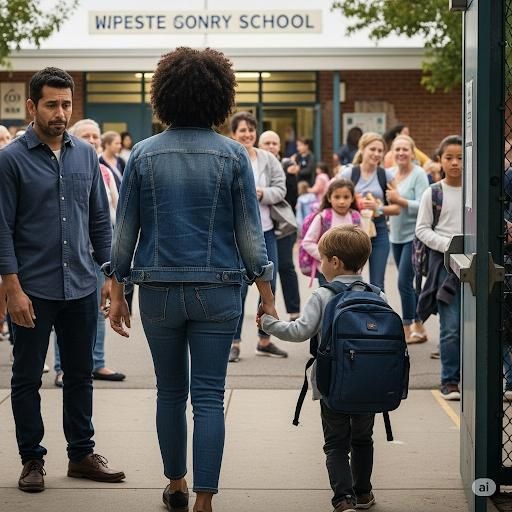
She walked away that day, her son’s tiny hand in hers. She didn’t look back. Because for the first time, she understood something deeply Macedonian—strength isn’t loud. It’s quiet. It’s surviving heartbreak in silence. It’s cooking ajvar for your son while the world forgets your name. It’s building a home out of ruin and refusing to let your child inherit your pain.
Adrijana never needed Marko. And she finally saw that. He had walked away from something real—and she had walked toward something stronger. Herself.