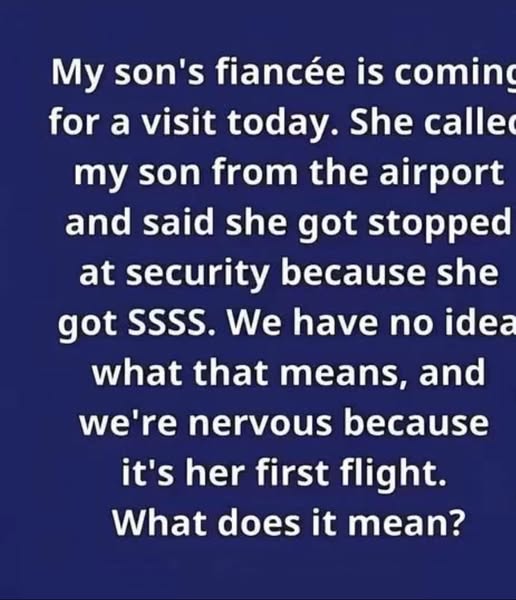
What “SSSS” on your boarding pass really means”
What “SSSS” Means on Your Boarding Pass — And Why It Happens
If you ever glance at your boarding pass and notice the letters SSSS, you might feel a moment of panic or confusion. But what exactly does it mean? The abbreviation SSSS stands for Secondary Security Screening Selection, a process put in place by the TSA (Transportation Security Administration) to provide additional security checks for certain passengers.
When you’re marked with SSSS, you’ll be flagged for extra scrutiny at the airport. Instead of moving through the standard security line like most travelers, you’ll undergo a more detailed inspection that could last anywhere from 15 to 45 minutes or even longer during busy travel periods.
What to Expect During the Screening
Here’s what usually happens if you get selected:
✅ Additional bag inspections — Your carry-on and personal items may be opened, checked by hand, and swabbed for traces of explosives or other hazardous materials.
✅ Thorough pat-downs — Expect a more detailed, hands-on screening by a TSA officer, which can feel intrusive but is part of the protocol.
✅ Document checks — Officers might ask additional questions about your travel plans, where you’re coming from, and where you’re staying.
✅ Possible delays — Because of the extra steps, you may need to allow much more time before your flight boards.
Why You Might Be Selected for SSSS
Many people wonder why they’re singled out. While it can feel random, there are several common reasons:
💡 Random chance — Sometimes it really is just luck (or lack of it). TSA’s algorithm periodically picks travelers at random to keep the screening system unpredictable and secure.
💡 Your travel itinerary — Certain travel patterns tend to raise red flags. One-way tickets, buying tickets last minute, or paying in cash can increase your chances of selection.
💡 Travel from or to specific regions — Flights coming from or passing through certain countries, especially those associated with higher security concerns, may prompt added checks.
💡 Name matches watchlists — If your name matches or is similar to someone on a government watchlist, you might be chosen even if it’s simply a case of mistaken identity.
💡 Frequent flight changes or unusual routes — Having a complex or irregular itinerary can also bring attention.
What You Can Do If You’re Selected
While you can’t always prevent being chosen, you can reduce stress by being prepared:
⏰ Arrive extra early — Aim to get to the airport at least 30 to 45 minutes earlier than you normally would to accommodate the extra screening.
🤝 Cooperate calmly — Remember, TSA officers are following standard protocols. Being polite and patient helps make the process smoother and faster.
📄 Apply for redress — If you’re repeatedly flagged and suspect it’s because of mistaken identity or other errors, you can apply for a Redress Control Number through the Department of Homeland Security’s Traveler Redress Inquiry Program (DHS TRIP). Once approved, this number can be added to future bookings to help reduce unnecessary extra screenings.
🎟️ Consider Trusted Traveler programs — Enrolling in programs like TSA PreCheck or Global Entry can sometimes lower your chances of being selected for SSSS, though it doesn’t guarantee exemption.
Final Thoughts
Having SSSS printed on your boarding pass can be an unwelcome surprise. It doesn’t mean you’ve done anything wrong or that you’re in trouble; it’s simply part of the TSA’s multi-layered security system to keep flights safe.
While it can feel inconvenient and time-consuming, approaching it with patience and preparation can make a big difference. Think of it as an extra layer of caution rather than a personal judgment.
The next time you travel, if you happen to spot those four letters, take a deep breath, arrive early, and know exactly what to expect — so you can get through security and on to your journey with as little hassle as possible. Safe travels!