Reason why Melania Trump wore such a massive hat to meet Kate Middleton
Donald and Melania Trump’s second state visit to the United Kingdom on September 17 drew widespread international attention, underscoring the enduring fascination with political figures and royal protocol. The event, hosted at the historic Windsor Castle, combined elements of ceremony, diplomacy, and cultural theater. While formal meetings emphasized the political partnership between the United States and the United Kingdom, much of the global conversation quickly shifted toward subtler aspects of the visit—particularly the First Lady’s fashion choices and a private exchange that appeared to reveal her personal sentiments.
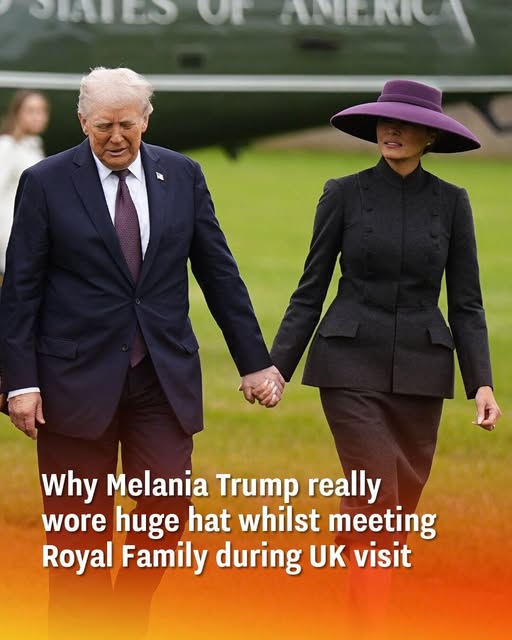
Melania Trump arrived in a tailored ensemble that commanded attention, most notably because of her striking wide-brimmed burgundy hat. The accessory, bold and unconventional for the occasion, became an immediate talking point across media outlets and social platforms. Comparisons, commentary, and memes emerged within hours, reflecting how fashion worn in political contexts rarely remains a matter of personal style. Instead, it often becomes a form of messaging, carrying cultural and even psychological weight.
Observers quickly dissected Melania’s wardrobe choice, pointing out that her diplomatic appearances had often included symbolic or calculated nods through clothing. Human behavior expert Inbaal Honigman offered an intriguing perspective, suggesting that oversized hats do more than create a dramatic silhouette. According to Honigman, the exaggerated style may serve as a subtle shield, obscuring parts of her face and concealing emotional expressions. In this sense, the accessory functions as a psychological barrier, providing Melania with both literal and figurative protection under the gaze of cameras and critics.
This layer of analysis highlights how public figures often use fashion not merely to impress but also to manage perception. For Melania, whose every move is scrutinized, clothing becomes a kind of armor, allowing her to control how much of her inner world is accessible to the public.
Beyond fashion, the visit also marked a historic moment in royal diplomacy: Melania Trump’s first official meeting with Catherine, Princess of Wales. The encounter was highly anticipated given both women’s influence on international fashion and their ability to shape cultural narratives through presence alone. Their interaction, though brief and largely private, generated widespread interest among royal watchers and media commentators eager to interpret body language and conversational snippets.
The intrigue deepened when a professional lip reader analyzed video footage of their exchange. According to the analysis, Melania remarked to Kate, “Sometimes when I come, I don’t want to go back.” The statement, though short, resonated with audiences who interpreted it as an expression of genuine admiration for the United Kingdom. Against the backdrop of political turbulence in the United States at the time, her words carried additional significance, hinting at a sense of longing or appreciation for the stability and tradition embodied by the British monarchy.
This combination of symbolic fashion, carefully observed gestures, and subtle comments demonstrates how state visits often transcend the formal agendas set by governments. In many ways, they become performances of soft power, where cultural diplomacy is enacted through personal style, demeanor, and interpersonal warmth. Even fleeting remarks or fashion accessories can dominate headlines, shaping public perceptions in ways that formal speeches or policy discussions rarely achieve.
By the time the Trumps departed Windsor Castle, analysts were less focused on the specifics of political dialogue and more absorbed in decoding the cultural signals embedded in the visit. For Melania, the wide-brimmed burgundy hat and her brief, heartfelt comment to the Princess of Wales became enduring symbols of the trip. Together, they underscored the idea that diplomacy is not only conducted through treaties and negotiations but also through clothing, expressions, and the quiet exchanges that resonate far beyond the walls of royal palaces.