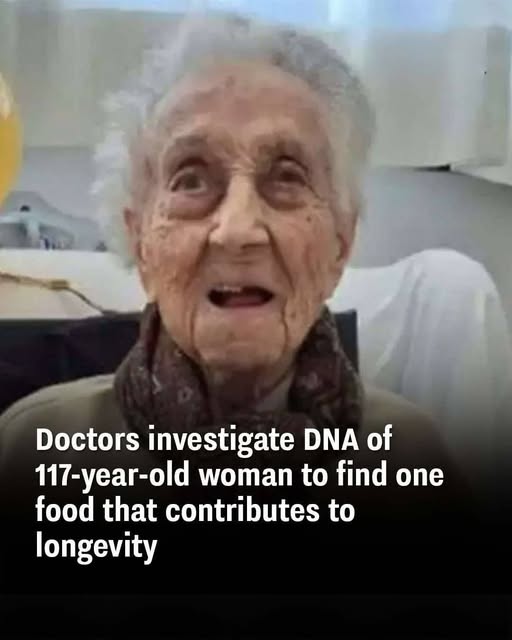
Doctors investigate DNA of 117-year-old woman to find one food that contributes to longevity
Maria Branyas Morera, a Spanish supercentenarian, lived to the extraordinary age of 117 years and 168 days before passing away last year, becoming one of the longest living people ever reliably documented. Born in the United States in 1907, she moved with her family to Catalonia in 1915 and spent the rest of her life there, quietly building a life that would one day draw the attention of scientists around the world.
Across her remarkable lifetime, Maria witnessed nearly the entire arc of modern history. She lived through two world wars, the Spanish Civil War, economic depressions, the space age, the digital revolution, and the terms of twenty one presidents of the United States. The world she was born into, filled with horse drawn transport and handwritten letters, transformed into one of satellites, smartphones, and artificial intelligence. Through all of it, she remained known among friends and family as gentle, humorous, and deeply grounded.
As her age continued to advance beyond anything most doctors ever see, her longevity became the focus of global scientific interest. Before her death, Maria expressed a clear wish that doctors study her body and DNA in the hope that her case might reveal new ways to help others live longer and healthier lives. Researchers from the University of Barcelona and the Josep Carreras Leukaemia Research Institute began an extensive study, collecting blood, tissue, and cellular samples to analyze her genetics, metabolism, immune system, and overall biological health.
Dr Manel Esteller, the lead investigator, explained that Maria challenged the conventional understanding of aging. In typical patterns, increasing age brings increasing disease. Maria broke that pattern. He described her case as the first clear example where scientists could separate the concept of being old from being sick. While her genetics played a major role, he added that future medicine may one day replicate these protective effects through new drugs and therapies.
The research revealed that despite her chronological age of 117, Maria’s biological age was estimated to be closer to that of a person between 100 and 105 years old. Her cardiovascular health was especially striking. She had extremely low levels of harmful cholesterol and triglycerides, while her beneficial cholesterol remained unusually high. In many ways, her internal profile resembled that of someone decades younger.
Lifestyle also proved to be a powerful contributor. Maria maintained regular physical movement, avoided both smoking and alcohol entirely, and placed great importance on emotional well being. She stayed socially engaged, surrounded by family, neighbors, and friends, believing that laughter and connection were essential to a good life. Each morning she drank a homemade smoothie containing eight different grains, a habit she followed for many years.
Another daily favorite was La Fageda yogurt, a probiotic product she firmly believed supported her health. Scientists later noted that the bacteria found in this yogurt likely helped regulate inflammation and strengthen her immune response, contributing to her resilience against illness.
One of the most surprising discoveries involved Maria’s telomeres, the protective caps at the ends of chromosomes. Normally, very short telomeres are linked to aging and higher mortality. In her case, however, they appeared to act in a protective manner, limiting the growth of cancer cells and possibly preventing certain diseases from developing.
Maria’s life leaves behind more than an impressive number. It offers scientists and the world a powerful example of how genetics, daily habits, emotional balance, and social connection can combine to shape human longevity. Her legacy continues not only through her family, but through the research that may one day help many others live longer, healthier lives.