Here’s a guide on how to choose the best oranges, with simple tips to help you pick the sweetest, juiciest fruit. Learn how to check for vibrant color, firm texture, fragrant aroma, and weight, ensuring every citrus bite is flavorful and refreshing.
Choosing a good orange may seem trivial, but it has a real impact on flavor, juiciness, and overall enjoyment. Oranges vary far more than they appear at first glance, and learning how to recognize quality differences can noticeably improve everyday grocery shopping. A small amount of attention at the produce section can mean the difference between a dry, bland fruit and one that is vibrant, sweet, and refreshing.
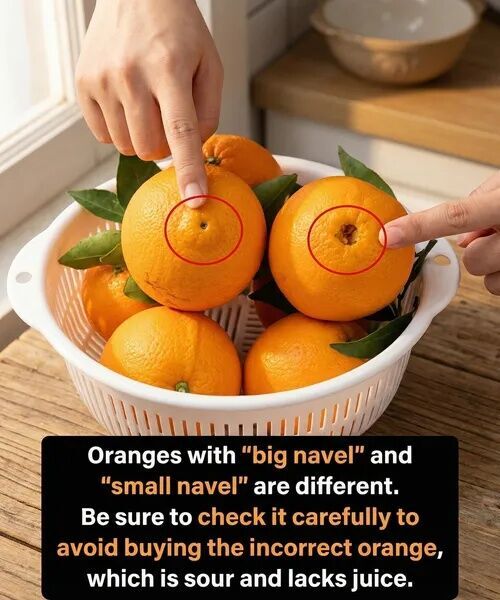
Navel oranges, which are among the most common varieties found in supermarkets, are easy to identify by the small circular mark on one end that resembles a belly button. This feature forms from a secondary fruit and is completely natural. What many people do not realize is that this navel can offer helpful clues about the orange’s maturity and eating quality.
The size and definition of the navel matter more than most shoppers expect. Oranges with larger, clearly defined navels are often more mature. They tend to be sweeter, juicier, and more flavorful, with thicker flesh and fewer seeds. These qualities make them especially well suited for eating fresh. In contrast, oranges with very small or barely visible navels may be less developed, which can result in a drier texture or a sharper, more acidic taste. While the navel is not a perfect indicator on its own, it becomes very useful when comparing fruits of similar size and appearance.
Beyond the navel, texture and weight provide some of the strongest signals of quality. A good orange should feel firm but not hard, with a slight springiness when gently pressed. The skin should look smooth and slightly glossy rather than dull or shriveled. Weight is particularly important. An orange that feels heavy for its size usually contains more juice. Lighter oranges or those with loose, wrinkled skin are often past their prime and may taste dry.
Color is often misunderstood when selecting oranges. While bright orange skin can be appealing, color alone does not guarantee ripeness or sweetness. Some excellent oranges retain green patches, especially early in the season or in cooler growing conditions. Judging by feel and weight is usually more reliable than relying on color alone.
Aroma is another useful but frequently overlooked factor. Ripe oranges often release a pleasant, fresh citrus scent, especially near the stem. This fragrance is a strong sign of good flavor and juiciness. Taking a brief moment to smell the fruit can help avoid disappointment later and sharpen your ability to choose well.
Applying these simple sensory checks leads to better results at home. Whether oranges are meant for snacking, juicing, or cooking, selecting fruit with the right balance of maturity, firmness, and aroma greatly enhances satisfaction. Over time, these habits build confidence and make produce shopping more intuitive.
Ultimately, choosing a good orange is about noticing subtle natural cues. With a little practice, shoppers can consistently select fruit that delivers excellent taste and quality, turning a routine errand into a more mindful and rewarding experience.