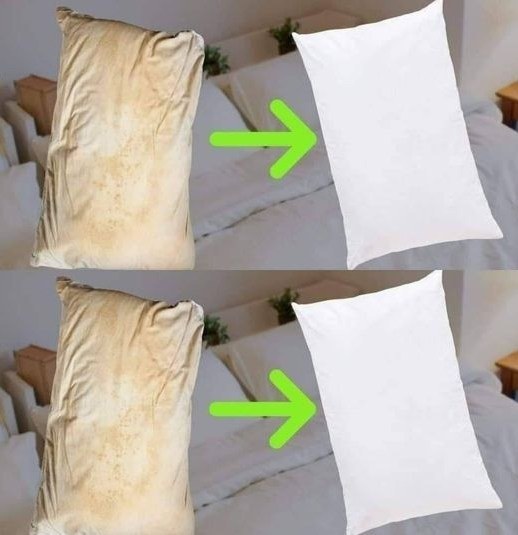
How to clean dirty bed pillows to leave them white and smelling sweet
Pillows can become stained and unhygienic over time, even when they are always covered with clean pillowcases. Sweat, natural body oils, skincare products, and hair treatments slowly seep through fabric and build up inside the pillow itself. This buildup does not just cause yellowing or unpleasant odors. It can also create an environment where dust mites, bacteria, and allergens thrive. For people with allergies, asthma, or sensitive skin, regular pillow cleaning is not optional. It is an important part of maintaining a healthy sleeping space.
Before cleaning, it is essential to check the care label on your pillow. Most synthetic and down pillows are machine washable, while some memory foam or latex pillows require spot cleaning only. For washable pillows, routine laundering every six months helps prevent long term buildup and keeps them supportive and fresh.
When washing pillows, use a simple but effective cleaning combination. Regular laundry detergent removes oils and dirt, while half a cup of baking soda helps neutralize odors and break down residue trapped deep inside the filling. Adding a few drops of lavender oil is optional, but it can leave pillows smelling clean and calming without being overpowering. Wash two pillows at the same time to keep the washing machine balanced and ensure even cleaning. Use warm water unless the label specifies otherwise, and select an extra rinse cycle to remove all detergent.
Drying is just as important as washing. Pillows must be completely dry to prevent mildew and mold. Tumble dry on low heat and add clean tennis balls or dryer balls to help restore fluff and prevent clumping. Check periodically and rotate the pillows to ensure even drying. Any lingering dampness can undo the benefits of cleaning.
Maintaining freshness between washes makes a noticeable difference. Opening windows daily allows sunlight and fresh air to circulate through the bedroom. Sunlight naturally reduces moisture and helps limit the growth of mold and bacteria. Regularly airing out pillows, even for a short time, keeps them from developing musty odors and extends their usable life. Fluffing pillows each morning also helps release trapped moisture and keeps the filling evenly distributed.
Some stains, especially yellowing caused by sweat, may not come out with a standard wash. For stubborn stains, pre soaking is highly effective. Mix warm water with lemon juice, white vinegar, or hydrogen peroxide and let the pillows soak for several hours before washing. These natural brighteners help break down discoloration and restore a cleaner appearance without harsh chemicals. Always rinse thoroughly after soaking to avoid residue.
Consistency matters more than intensity. Cleaning pillows every six months is usually enough for most households, though allergy sufferers may benefit from more frequent washing. Replacing pillows every one to two years is also recommended, as even clean pillows eventually lose support and accumulate material that washing cannot fully remove.
Clean pillows do more than look better. They support better sleep, reduce allergy symptoms, and contribute to overall hygiene. By washing them properly, airing them regularly, and treating stains early, you can keep your pillows fresh, comfortable, and safe for restful nights.