If You See a House With a Star on It, You’d Better Know What It Means…
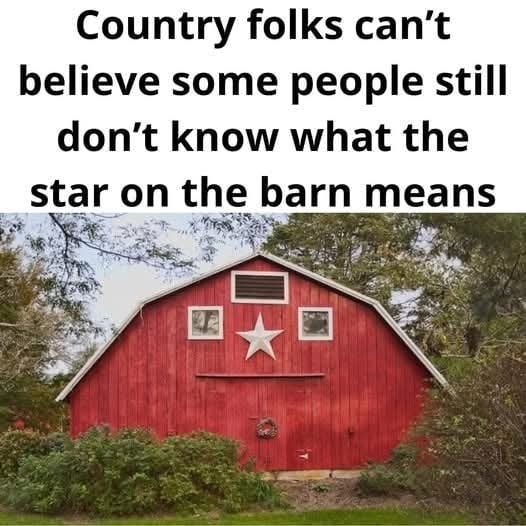
Long before they became trendy farmhouse decor, these stars were powerful folk symbols rooted in daily life and spiritual belief. German settlers who arrived in North America during the seventeen hundreds brought with them traditions shaped by hardship, faith, and a deep connection to the land. Among those traditions was the practice of painting or mounting large stars on barns, homes, and outbuildings. These were not decorative accents in the modern sense. They were symbols of protection, faith, and quiet resistance against the many dangers of frontier life. Families believed the stars invited blessings into the home and pushed away misfortune that could arrive in countless forms.
Life for these settlers was demanding and uncertain. Harsh winters could destroy crops and livestock. Illness traveled quickly through small communities with limited medical care. Isolation weighed heavily on families separated from the familiar rhythms of their old homeland. In this environment, symbols mattered. A simple star fixed to a barn wall became a quiet prayer made visible. It stood for protection over the animals that fed the family. It stood for prosperity in seasons when the harvest was never guaranteed. It stood for safe keeping over children who worked long hours near dangerous tools and animals. This was not about appearance or trend. It was about survival, hope, and the need to feel watched over in a strange and demanding new land.
Over time, the star also became a sign of identity. It quietly marked the homes of Pennsylvania Dutch and other German rooted families. It signaled shared values of hard work, faith, and close community ties. In areas where neighbors depended on one another for survival, these symbols helped create a sense of belonging. The star was both personal and communal. It protected the household while also connecting it to a larger cultural story.
Today, the meaning of the barn star has softened, but it has never fully disappeared. In modern settings, these stars often appear as rustic wall art, porch decor, or garden accents. Many people are drawn to their simple shape and old world charm without knowing their deeper origins. Yet for others, the symbolism still matters. A black star can whisper of strength and endurance. A white star can suggest peace and calm. A red star often carries associations of passion, good fortune, and protection. Each color adds a layer of meaning that echoes the beliefs of earlier generations.
For some families, displaying a star is a proud nod to Pennsylvania Dutch or Amish roots, a way of honoring the paths their ancestors walked. For others, it is an expression of values like faith, stability, and gratitude for the life they have built. Even when chosen for its rustic beauty alone, the star still carries a quiet message shaped by centuries of belief and tradition.
In many ways, the enduring appeal of these stars lies in their simplicity. They do not demand attention, yet they invite reflection. They remind us that homes were once not just places of comfort, but front lines of survival. They speak of people who faced uncertainty with courage and who placed their hopes in symbols that felt steady and protective. Even now, when life feels far removed from those early struggles, the star still seems to say the same gentle thing. This home is watched over. This family believes in something bigger than what the eye can see.
In that way, the barn star continues to bridge past and present. What once stood as a quiet prayer on a wooden wall now lives on as a connection to history, resilience, and the enduring human need for meaning and protection.