The Mystery of the Blue Stop Sign
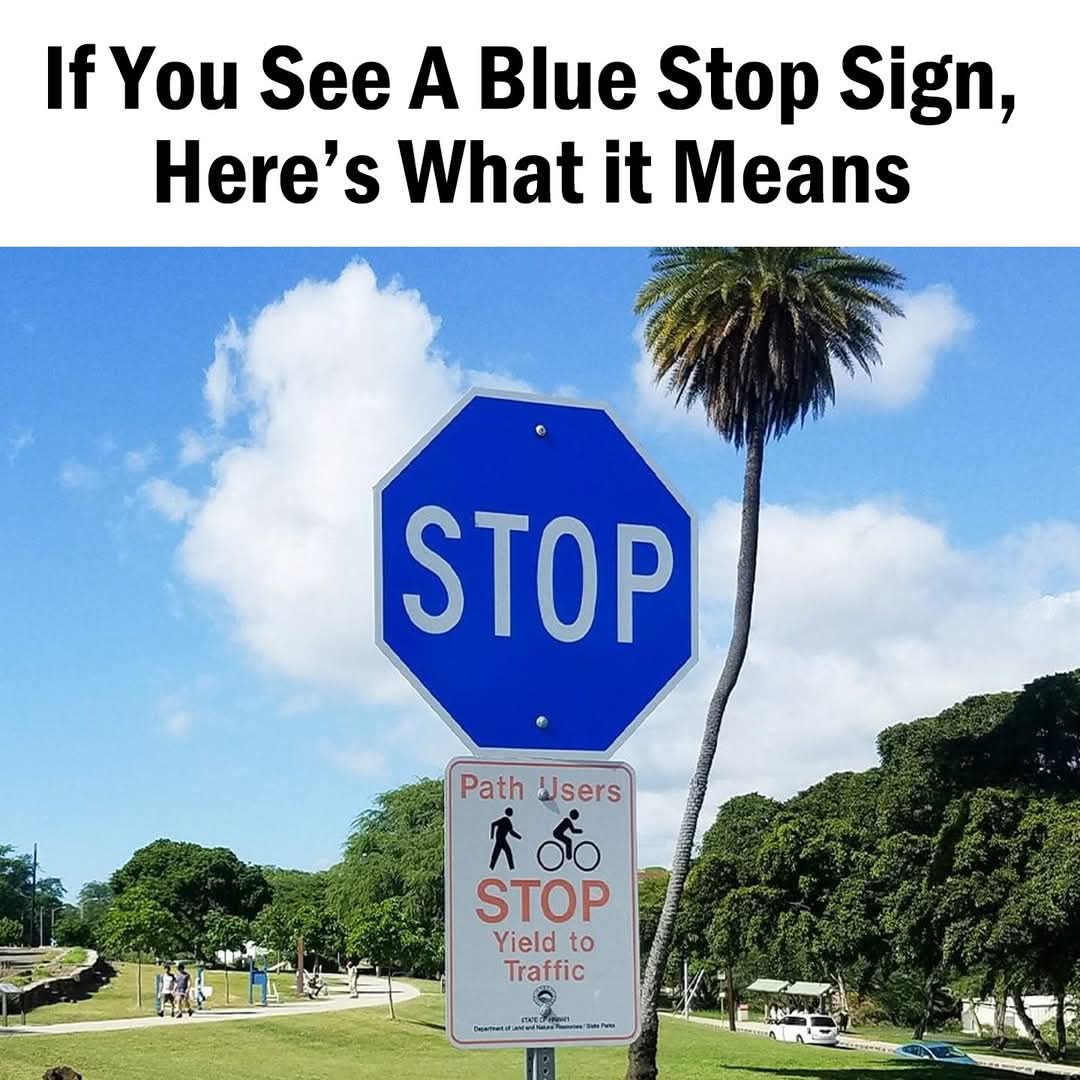
That blue stop sign is not a glitch in reality, but it is not there by accident either. On public roads in the United States, stop signs are required to be red by federal standards so that drivers encounter the same visual cue no matter where they are in the country. The uniform color is tied to visibility, recognition speed, and years of driver training built around one consistent signal. Blue versions usually live on private property, such as business parks, gated communities, industrial lots, or long rural driveways, where owners are free to bend the visual rules even if the law does not officially recognize the color on public streets.
Because private property sits in a gray zone between public regulation and personal control, unusual signs appear more often there. Property owners may choose blue because it fits a brand color, stands out against surrounding scenery, resists fading differently than red, or simply because someone found it visually appealing. In some cases, the sign was ordered in error and installed anyway. In others, it is a deliberate attempt to create distinction without fully copying government signage. Whatever the motivation, the result is something that looks familiar yet slightly wrong to the eye, enough to make drivers pause and wonder whether it truly counts.
Yet the responsibility on you as a driver does not change. A blue stop sign still marks a real intersection, with real people, real blind spots, and real consequences. The tires that move through that crossing, the pedestrians that step into it, and the vehicles that approach from the sides are not imaginary. The laws of motion do not adjust themselves based on paint color. If two cars reach the same point at the same time, the risk is identical whether the sign is red, blue, faded, rusted, or hand painted.
In some places, like Hawaii, blue is even used deliberately to distinguish private signs from government ones. This allows local authorities to maintain strict visual consistency on public roads while still acknowledging that private landowners need a way to manage traffic flow on their own property. It becomes a quiet signal that you are moving through a space governed more by private rules than by municipal ones. Still, from the driver’s seat, that distinction offers little practical comfort. The intersection still demands attention and a full stop.
Confusion arises because many drivers are trained to equate legality with color. A red stop sign feels official, enforceable, and absolute. A non red sign can feel optional, decorative, or symbolic. That assumption can be dangerous. While a blue stop sign may not be enforceable in the same way a public one is, failing to stop can still result in property damage, injury, or civil liability if a crash occurs. Insurance companies care very little about the shade of the metal when they assess fault.
There is also a psychological factor at play. Drivers rely heavily on pattern recognition. The faster the brain categorizes a visual signal, the faster it reacts. Anything that breaks the pattern, even slightly, introduces delay. A blue stop sign may take a fraction of a second longer to process than a red one, but on a busy driveway or blind corner, that fraction of a second matters. What feels like a novelty object is still demanding the same reflexive response.
Whether it is a legal technicality or a local quirk, the safest interpretation is always the simplest. If someone cared enough to put up a stop sign, no matter the color, you should care enough to stop. The color does not protect your bumper. The paint does not cushion impact. The sign exists because, at some point, a real risk was identified at that location.
In the end, a blue stop sign is a reminder that the road is not just governed by law, but by shared responsibility. Not every safety cue will fit perfectly into the textbook version you learned in driver’s education. Some will be improvised, faded, unconventional, or unofficial. Your job is not to debate their technical status while rolling forward. Your job is to recognize intention, reduce speed, and protect lives. When in doubt, stop first and question later.