The Real Meaning Behind the Phrase ‘Six-Seven’ Explained
TikTok creator and educator Mr. Lindsay explained, “It’s just a meme reference. There’s no meaning, it’s fun to say, especially with hand motions.” For many young users, that lack of logic is exactly what makes it funny. The phrase feels playful and nonsensical, easy to repeat and easy to exaggerate. It does not ask the listener to understand anything beyond the rhythm and the shared joke of saying it together. Its appeal lies in how low effort it is. You do not need context, background, or explanation. You just need to hear it once and join in.
That simplicity is part of why the phrase spreads so quickly among younger audiences. It becomes a kind of verbal fidget, something to fill silence or spark laughter without intention. The humor is not clever or layered. It is absurd on purpose. For kids and teens immersed in online culture, that absurdity signals belonging. If you know it, you are in on the joke. If you repeat it at the right moment, you get instant recognition from peers.
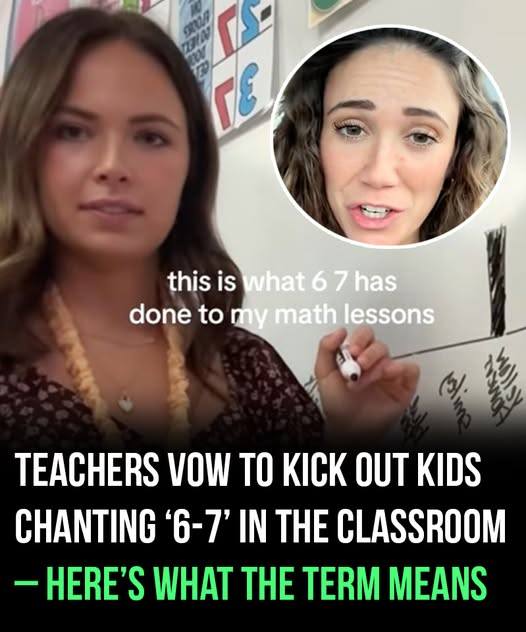
Teachers, however, are far less amused. Elementary teacher Kaitlyn Biernacki shared that her students began shouting “six” and “6 7” during math lessons, often without warning. What starts as a few giggles can quickly derail an entire class. One student tests it, another echoes it, and suddenly the room is buzzing. Lessons grind to a halt as more students join in, turning routine instruction into noise and confusion. In some classrooms, the phrase has been outright banned because of how disruptive it became. The joke may be harmless, but its timing rarely is.
Middle and high school teachers have reported similar experiences. Activities that rely on counting, such as attendance, warm ups, or group work, sometimes dissolve into students chanting “6 7” in unison. Even students who normally stay quiet may join in, drawn by the safety of collective humor. There is comfort in laughing together, especially when it briefly flips the power dynamic of the room. For educators trying to maintain focus and structure, the meme presents a familiar challenge. Online jokes do not stay online for long, and classrooms often become the testing ground for whatever is trending.
Despite the frustration it causes in schools, the phenomenon highlights how quickly humor spreads in the digital age. What begins as a throwaway lyric or sound clip can transform into a cultural reference almost overnight. Algorithms reward repetition, and repetition breeds familiarity. Familiarity then becomes funny in itself. Repetition, imitation, and exaggeration turn something meaningless into something instantly recognizable. The joke becomes less about content and more about participation. Saying it together matters more than what is being said.
This pattern is not new, but the speed is. Memes once took weeks or months to spread. Now they move in days, sometimes hours. By the time adults become aware of them, students have already cycled through the joke and pushed it into real world spaces. Schools, with their routines and structures, are especially vulnerable to this collision between online spontaneity and offline order.
If you are puzzled by the “6 7” craze, you are not alone. Its appeal lies precisely in its emptiness. It offers a moment of shared silliness in a world that often feels overly structured and serious. For students, it is a way to bond, release energy, and gently push boundaries without real risk. For adults, it is another reminder that internet culture moves faster than classrooms can adapt. Like many memes before it, the phrase will likely fade as quickly as it appeared, replaced by the next sound or phrase that makes no sense and somehow makes everyone laugh anyway.