What’s That Strange Toothy Part on Kitchen Scissors For? 🔪
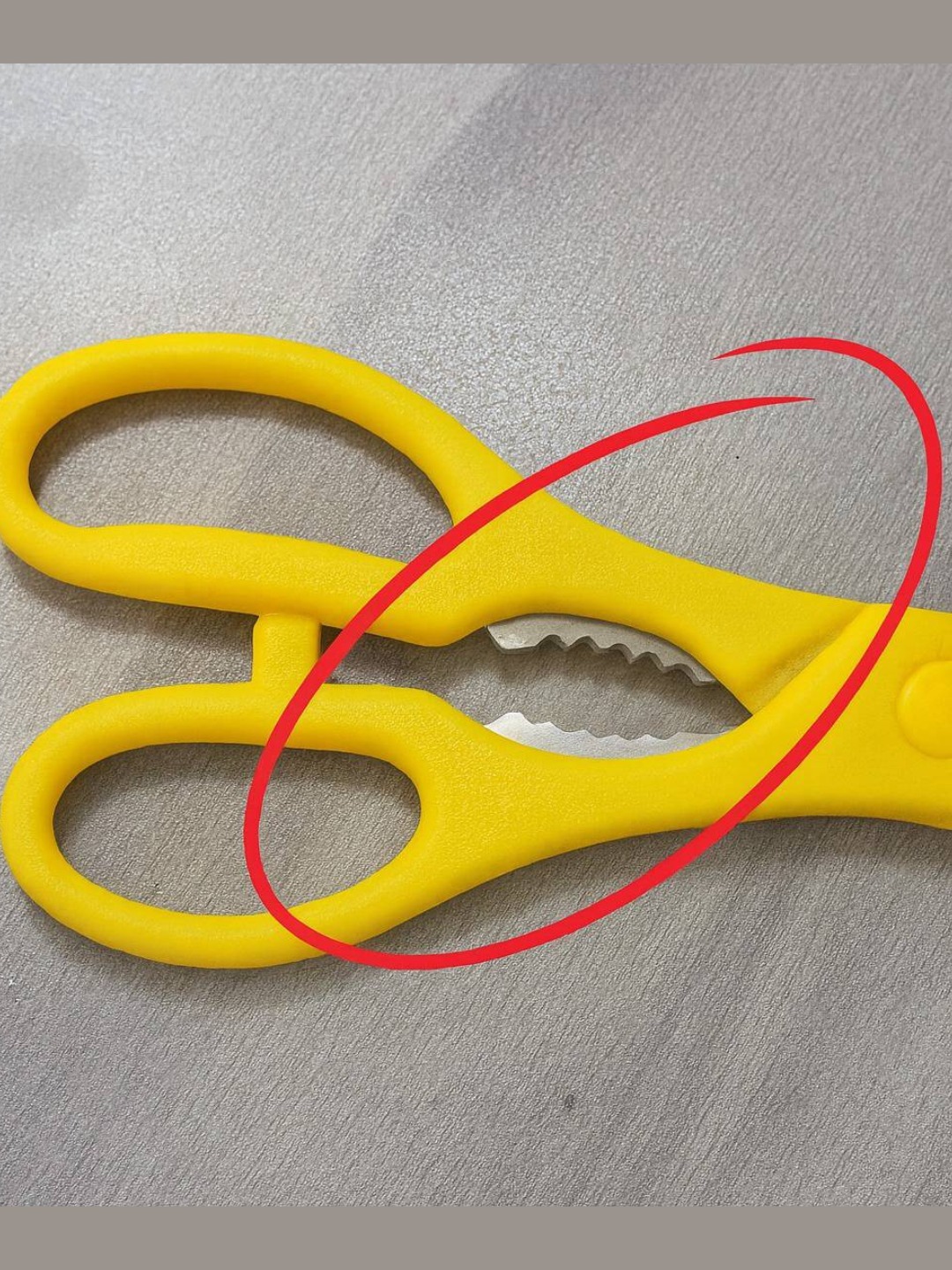
Most people grab their kitchen scissors only for cutting herbs, opening bags, or trimming meat. Few notice the small ridged notch near the hinge, and even fewer realize it is one of the most useful features in the entire kitchen. That little set of interlocking teeth can replace several tools, save time, reduce hand strain, and make difficult kitchen tasks feel almost effortless.
1. Open Stubborn Jars and Lids
That ridged notch is designed to grip round objects with serious strength.
Place the lid between the ridges.
Hold the scissors firmly with one hand and the jar with the other.
Twist the scissors while holding the jar steady. The grip and leverage often pop even the tightest seal.
This trick is especially helpful for anyone with arthritis, a weak grip, or tired hands after a long day. It often works better than rubber jar openers because the metal teeth physically bite into the lid instead of relying on friction alone.
2. Crack Nuts Without a Nutcracker
If you are in the middle of baking or snacking and realize you forgot the nutcracker, your scissors already have you covered.
Place a walnut, pecan, or hazelnut in the grooves.
Gently squeeze until the shell cracks. Do not crush the nut.
Rotate and repeat to loosen the shell fully.
The ridges apply pressure evenly around the shell, which prevents the nut inside from shattering. This makes it perfect for quick recipes or casual snacking when you only need a handful of nuts.
3. Break Small Poultry Bones
Heavy duty kitchen scissors are excellent for light butchery work.
Use sturdy poultry shears.
Grip the end of a chicken wing or drumette in the notch.
Apply firm, steady pressure to snap the bone cleanly.
This makes portioning chicken faster and safer than hacking with a knife. It is especially useful for spatchcocking whole birds or preparing bones for homemade stock.
4. Crack Seafood Shells
Crab legs, lobster claws, and shrimp shells can be slippery and hard to manage. The gripper holds them steady while you cut through or gently crack them open. You get better control, less mess, and fewer flying shell fragments across your counter.
5. Open Tough Packaging
Plastic milk caps, juice bottles, vacuum sealed bags, and stubborn safety seals can be frustrating. The ridges grab tightly and twist without slipping. No more broken fingernails or teeth marks in the plastic.
Safety and Care Tips
Avoid using excessive force on extremely hard items such as thick lobster claws or large bones unless your scissors are specifically rated for heavy duty use.
Keep your fingers clear of the teeth since they can pinch during use.
Clean thoroughly after food tasks. Rinse the hinge area well because raw meat and food debris can hide inside the grooves.
Use the feature only for kitchen tasks. Opening paint cans or hardware items can damage the scissors.
Do All Scissors Have This Feature
No. Look for it on poultry shears, heavy duty kitchen scissors, and many multi purpose utility scissors. Brands like OXO, KitchenAid, and Messermeister often include it. If your scissors close smoothly without interlocking ridges, they simply do not have this feature. But if you see those teeth near the hinge, you are holding a surprisingly powerful tool.
Why Manufacturers Include It
Kitchen space is precious. This small design element eliminates the need for a separate jar opener, a nutcracker, and some poultry prep tools. One tool performing multiple functions means less clutter and more efficiency.
Final Thought
Great design is not always flashy. Sometimes it is a small toothy notch that quietly solves everyday frustrations. Next time you reach for your kitchen scissors, give that overlooked ridge a try. You might wonder how you ever lived without it.