A Hidden Gem That Holds Centuries of Tradition
The story begins with necessity.
As early as Roman times, salt-curing pork legs was a method of survival—preserving protein through lean months. In regions like Parma, Italy, and Jabugo, Spain, this practice evolved into an art form, yielding hams aged for 12, 24, even 36 months.
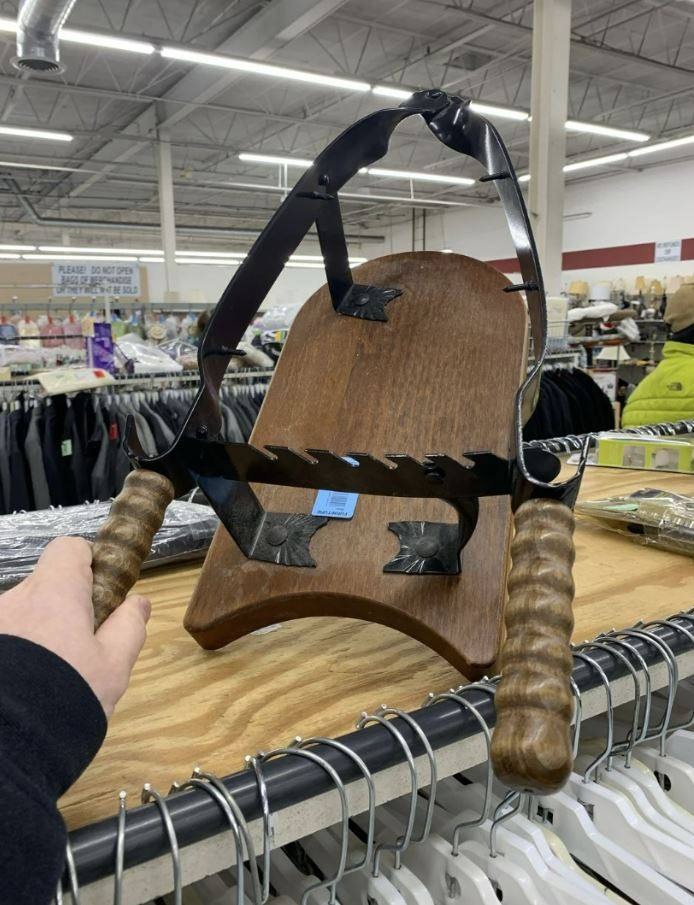
But a whole cured leg is unwieldy. Enter the stand:
Medieval butchers and home cooks needed a way to secure the ham while slicing it thinly—without waste, without danger, and without losing the precious fat that carries so much flavor.
By the 19th century, the prosciutto stand was a fixture in European homes and markets—a quiet emblem of self-sufficiency and culinary pride.
A Centerpiece of Community
In Mediterranean culture, food is never solitary.
The prosciutto stand invites gathering. At weddings, festivals, and Sunday lunches, it sits proudly on the table—not hidden in the kitchen—beckoning guests to slice, share, and savor together.
There’s something deeply human about watching someone carve ham by hand: the rhythmic motion, the glistening slices, the shared anticipation. It turns eating into ritual.
For Italian and Spanish immigrants, bringing a prosciutto stand to a new country wasn’t just practical—it was an act of cultural preservation. In a foreign land, that wooden rack became a piece of home, a way to say: “This is who we are. This is how we love.”
Why It Still Matters Today
In our age of pre-sliced deli packs and disposable kitchen gadgets, the prosciutto stand is a gentle rebellion.
It says:
Slow down
Honor your ingredients
Share food with intention
You don’t need a whole leg of prosciutto to appreciate its spirit. Even using a small stand for salami or cheese connects you to a lineage of mindful eating.
And if you’ve ever stood beside someone as they carved ham—watching those translucent slices fall like silk—you know:
Some traditions aren’t meant to be rushed. They’re meant to be passed hand to hand, heart to heart.
Final Thought
The next time you see a prosciutto stand—whether in a rustic trattoria, a family kitchen, or a market stall—don’t just see wood and metal.
See centuries of hands that cured, carved, and shared.
See Nonna’s smile as she offers you the first slice.
See the quiet beauty of a tradition that refuses to disappear.
“The best tools don’t just hold food—they hold memory.”
Do you have a family food tradition tied to a special tool? Share your story below—we’re keeping heritage alive, one slice at a time. 🥓🪵✨