Here’s what happens when bread goes into the freezer.
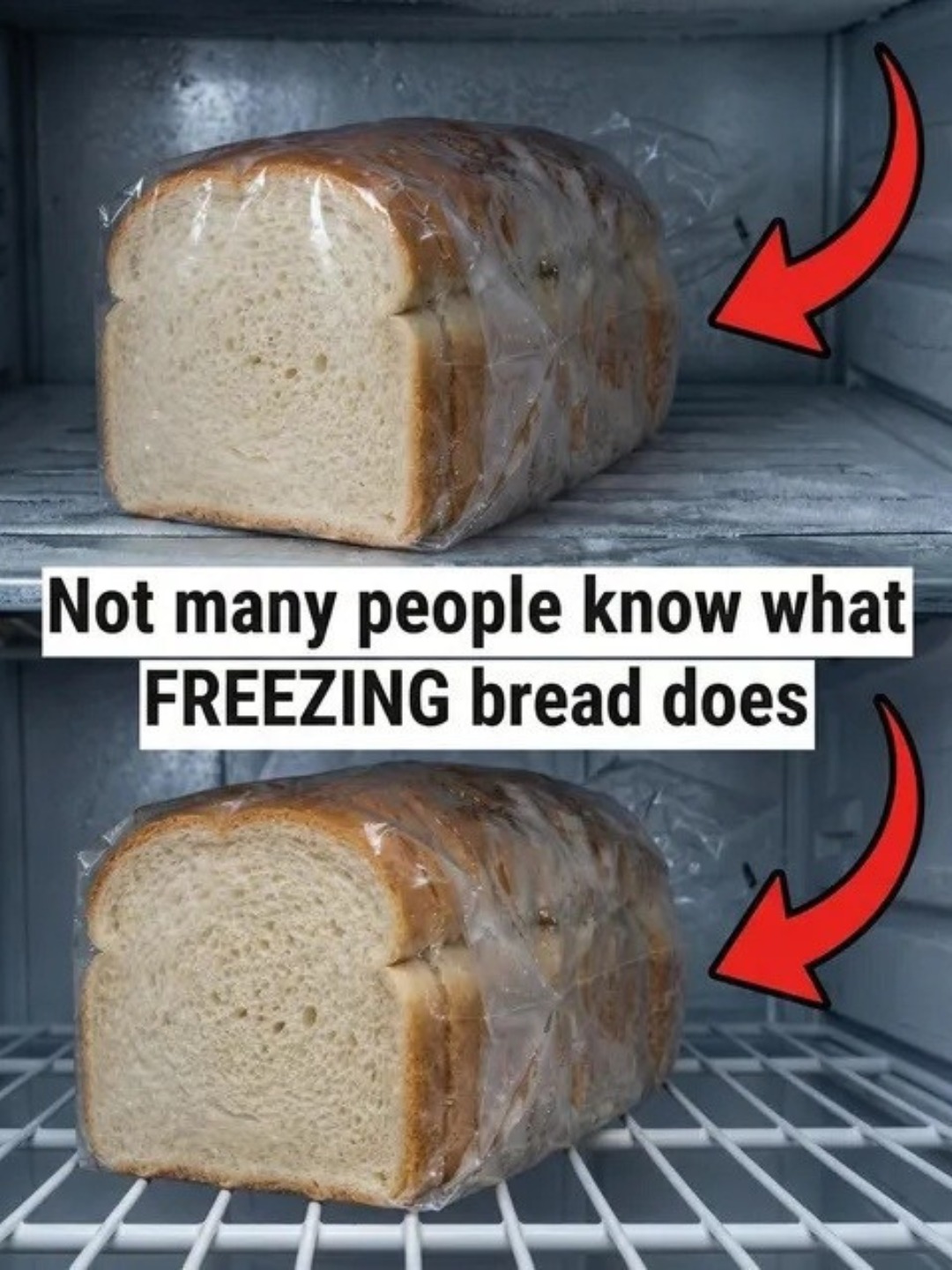
Freezing bread is one of those quiet kitchen habits that many people do without ever stopping to think about what it actually accomplishes. The image shows a simple loaf of bread sitting inside a freezer, wrapped and protected, with a bold message suggesting that freezing bread has effects most people do not realize. And that message is true. Freezing bread is not just about storage. It changes how bread behaves, how long it lasts, and even how it can benefit your body.
First and most obvious, freezing bread dramatically extends its shelf life. Fresh bread begins to stale almost immediately after baking or opening. Starch molecules slowly recrystallize, moisture redistributes, and the soft crumb becomes dry and firm. Mold is another enemy, especially in warm or humid kitchens. By placing bread in the freezer, both staling and mold growth are essentially paused. Low temperatures slow chemical reactions and microbial activity to a crawl, allowing bread to stay usable for weeks or even months instead of days.
What surprises many people is that freezing does not ruin bread when done correctly. In fact, frozen bread often tastes fresher than bread left on the counter for several days. The key is proper wrapping. Keeping the loaf tightly sealed prevents freezer burn and moisture loss. When thawed at room temperature or lightly toasted, the bread regains much of its original texture and flavor.
There is also a lesser known health benefit connected to freezing bread. When bread is frozen and then thawed, some of its starch becomes resistant starch. Resistant starch is digested more slowly and behaves more like fiber in the body. This can help reduce blood sugar spikes after eating and may improve gut health. While freezing bread does not turn it into a health food miracle, it can slightly lower its glycemic impact compared to fresh bread eaten immediately.
Freezing bread also adds convenience to everyday life. It allows households to buy bread in bulk, take advantage of sales, or bake homemade loaves without worrying about waste. Slices can be removed one at a time, toasted straight from frozen, and used exactly when needed. This makes frozen bread especially useful for busy mornings, packed lunches, or quick meals.
Another overlooked benefit is flexibility. Frozen bread can be repurposed easily. Slightly stale or thawed bread works beautifully for French toast, bread pudding, stuffing, or croutons. Instead of throwing bread away, freezing gives it a second life and opens the door to creative cooking.
The image also subtly highlights something important. Bread belongs in the freezer more often than people think. Many store bought loaves already spend time frozen during transportation or storage before reaching shelves. Freezing bread at home is simply continuing a process that helps preserve quality.
Of course, not all bread behaves exactly the same. Dense breads like sourdough, rye, or whole grain loaves freeze exceptionally well. Soft sandwich bread freezes well too, especially when sliced first. Delicate pastries may lose some texture, but even they are often better frozen than left to go stale.
In the end, freezing bread is a practical habit rooted in common sense. It saves money, reduces food waste, preserves freshness, and even offers small health advantages. That loaf in the freezer is not forgotten food. It is bread waiting patiently, protected from time, ready to be enjoyed when you are.