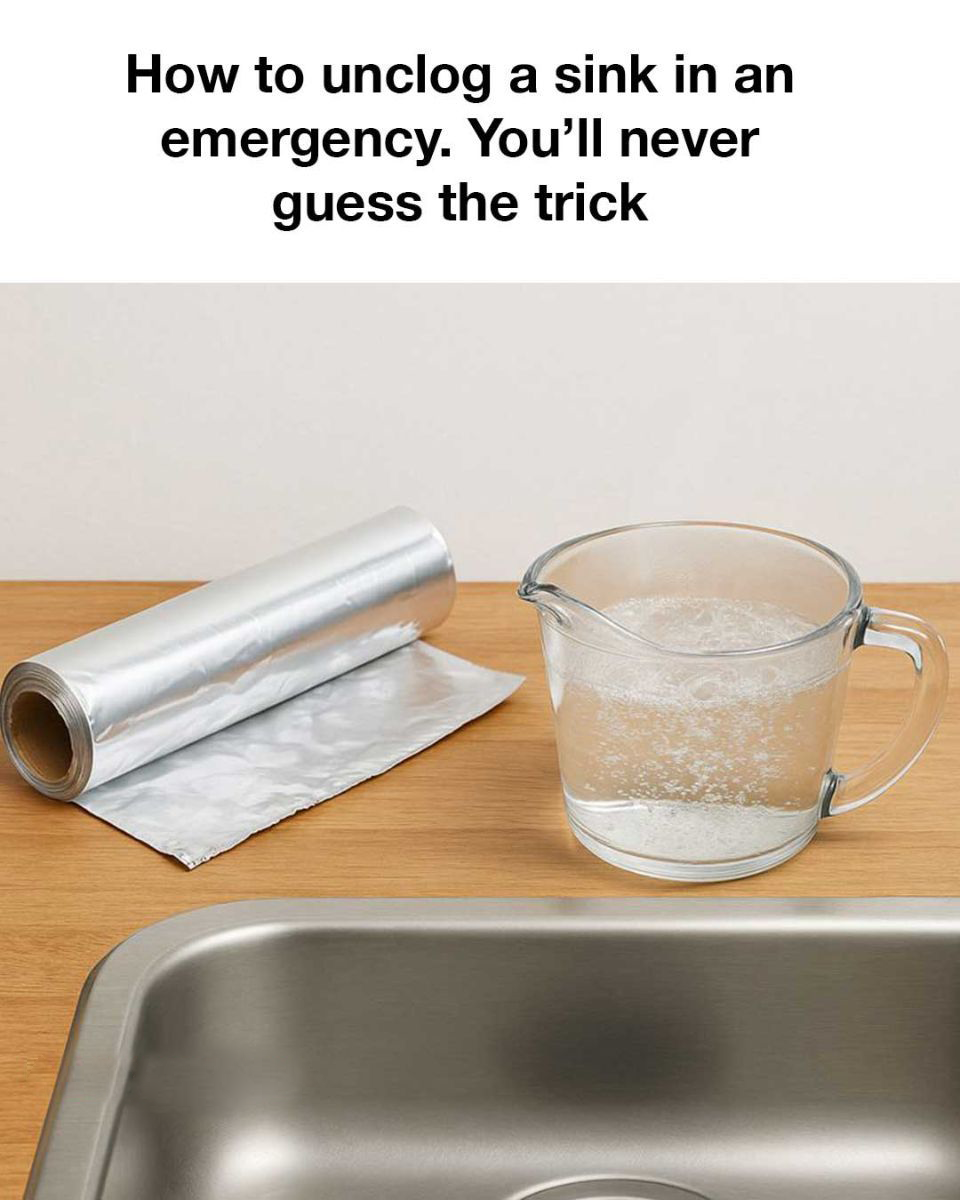
How to unclog a sink in an emergency. I had no clue about this
How to Unclog a Sink in an Emergency. I Had No Clue About This
Almost everyone has experienced this moment. You are preparing dinner, washing vegetables, or getting ready to host guests when suddenly the sink starts filling with water instead of draining. The clock is ticking, stress is rising, and to make matters worse, there is no plunger or drain cleaner in sight. Situations like this always seem to happen at the worst possible time.
What many people do not realize is that the solution may already be in the kitchen. Aluminum foil, a simple everyday item, can become a surprisingly effective emergency tool for clearing certain types of clogs. With a little creativity and understanding of how the drain works, this trick can help restore water flow quickly without expensive tools or harsh chemicals.
Why sinks clog so easily
Kitchen sinks clog for several common reasons. Grease and oil solidify inside pipes, food particles accumulate, soap residue builds up, and small debris collects over time. Eventually these materials restrict the passage of water until drainage becomes painfully slow or stops altogether. Bathroom sinks face similar problems from hair, toothpaste, soap, and mineral deposits.
When the clog is not too deep and the blockage is caused by surface debris near the drain opening, a simple physical tool can often dislodge it. That is where aluminum foil comes in.
The aluminum foil emergency trick
This method works best for clogs close to the drain opening and for slow draining sinks.
Start by tearing off a piece of aluminum foil about the size of your forearm. Crumple it tightly into a rough ball. The surface should be firm with textured ridges and edges. These ridges create friction that helps grip debris inside the drain.
Remove any visible debris from the drain opening. Then insert the foil ball into the drain and gently push it down until it meets resistance. Add a small amount of warm water to the sink. While the water sits in the basin, move the foil ball up and down and twist it slowly. The textured surface scrapes the inside of the pipe and helps break apart grease and loosen trapped food or soap buildup.
After about thirty to sixty seconds of movement, pull the foil ball out. Turn on the faucet and observe the drainage. In many cases the water will begin to flow freely again. If the drain is still slow, repeat the process once or twice.
Why this works
The foil acts as a flexible scrubbing tool. Unlike rigid objects, it conforms to the shape of the pipe while maintaining enough firmness to scrape buildup from the sides. The ridges catch debris that smooth tools cannot grip. This combination allows the foil to disturb clogs and restore flow without damaging the plumbing.
Extra emergency tips
If you have baking soda and vinegar available, you can follow the foil method with a natural cleaning flush. Pour half a cup of baking soda down the drain, followed by one cup of vinegar. Let it fizz for fifteen minutes, then rinse with hot water. This helps dissolve lingering residue and deodorizes the pipe.
Avoid using boiling water on plastic pipes, as extreme heat can weaken them. Warm to hot water is sufficient.
Final thoughts
Plumbing emergencies do not always require specialized tools. Sometimes the most effective solutions come from ordinary household items used in clever ways. The aluminum foil trick is fast, inexpensive, and surprisingly powerful. The next time your sink clogs at the worst possible moment, you will know exactly what to do.