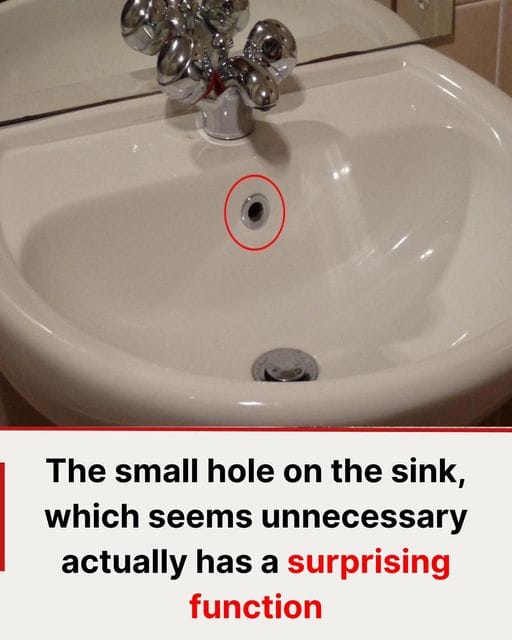
That Small Hole
The small hole located beneath a sink’s faucet, commonly known as the overflow hole, quietly serves an important protective purpose in everyday use. Although many people rarely think about it, this simple feature plays a major role in preventing water damage inside the home. Its primary function is to stop water from spilling over the edge of the sink by providing an alternate route for excess water when the basin becomes too full.
When water rises beyond a safe level, the overflow hole redirects it into the internal drainage system of the sink. This hidden channel guides water downward, joining the main drain and carrying it away before it can reach the rim of the basin. The design is especially valuable in moments of distraction, such as when someone leaves the tap running while answering a phone call or stepping away briefly. Without this backup system, many ordinary household accidents could quickly become expensive disasters.
The overflow hole becomes even more important when the main drain is partially or completely blocked. Hair, soap scum, food particles, and everyday debris can gradually slow water flow, allowing water levels to rise unexpectedly. In these situations, the overflow feature acts as a second line of defense. By providing a controlled escape path for the water, it significantly reduces the risk of flooding that could damage cabinets, flooring, walls, and nearby fixtures.
Beyond protecting against water damage, the overflow hole also supports better hygiene and overall sink performance. Standing water trapped in a sink creates an environment where bacteria and mold can thrive. This can lead to unpleasant odors and potential health concerns. By encouraging more efficient circulation and drainage, the overflow system helps prevent water from remaining stagnant for long periods, contributing to a cleaner and fresher sink area.
However, like any part of a plumbing system, the overflow hole itself requires occasional attention. Because it is narrow and hidden from view, soap residue, grease, toothpaste, hair, and other debris can accumulate inside its channel over time. When buildup occurs, it may reduce the effectiveness of the overflow function and allow unpleasant smells to escape into the room. In severe cases, the channel can become partially blocked, preventing it from doing its job when it is most needed.
Fortunately, routine cleaning is simple and highly effective. A small brush, pipe cleaner, or cotton swab can be used to loosen and remove debris from inside the opening. Flushing the channel with boiling water helps dissolve grease and soap scum. For deeper cleaning and odor control, pouring baking soda into the overflow hole followed by vinegar creates a natural reaction that breaks down residue and neutralizes odors. A final rinse with hot water leaves the channel fresh and clear.
This modest design feature dates back to early sink engineering and remains a standard element in modern plumbing. Its continued use reflects how thoughtful design can quietly protect homes from costly damage while improving daily convenience. When properly maintained, the overflow hole provides reliable protection, supports better hygiene, and ensures sinks function safely and efficiently for years to come.