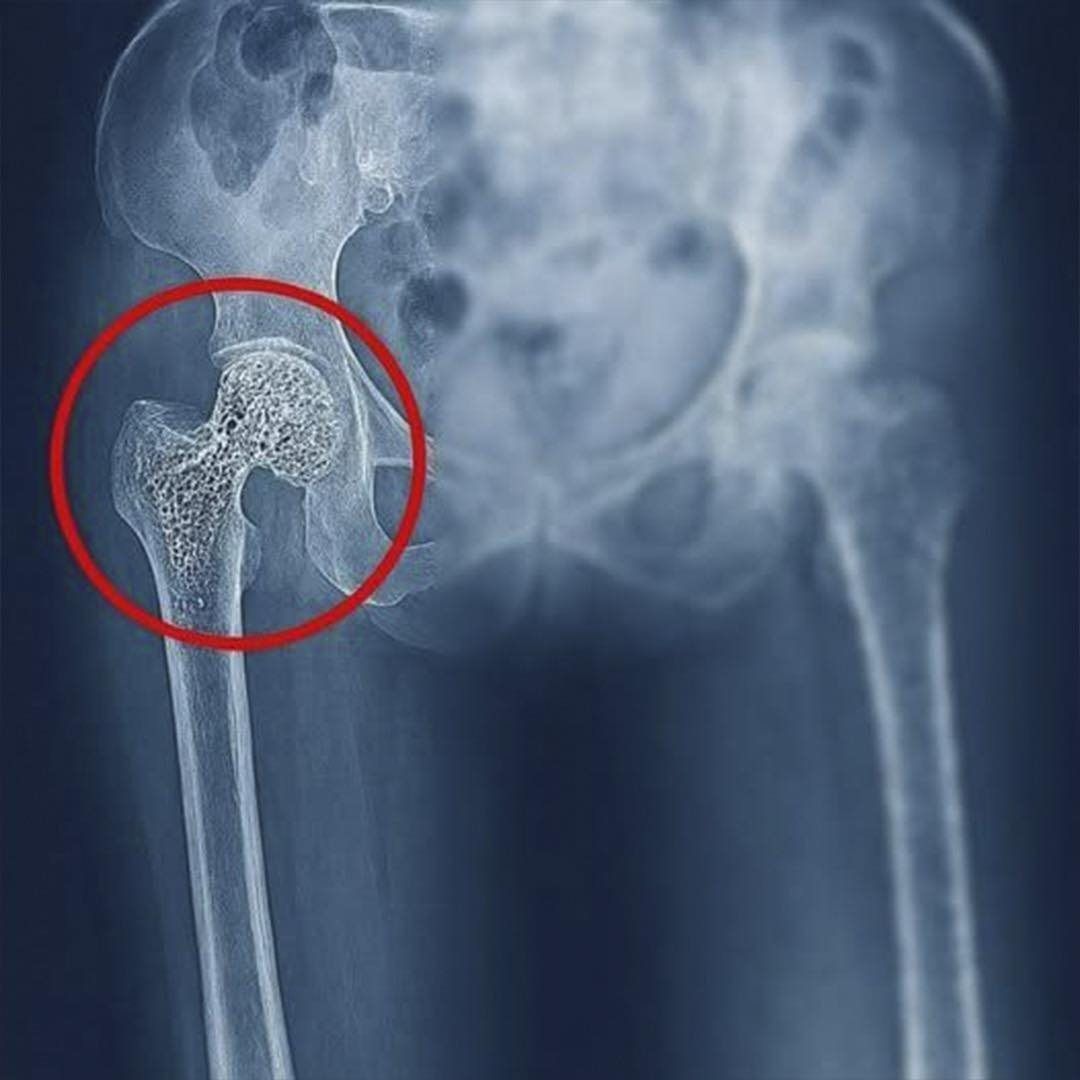
The image of a damaged hip
The image of a damaged hip, like the one accompanying this story, often has an immediate impact. You don’t need to be a doctor to sense that something is wrong. That red circle highlighting the hip joint is a visual warning that encapsulates a problem much larger than it appears at first glance. Behind that image lies pain, physical limitations, fear of movement, and, in many cases, a radical change in the life of the person affected.
Talking about the hip means talking about one of the key parts of the human body. It’s the joint that allows us to walk, sit, stand, turn, maintain our balance, and basically move freely. When the hip fails, everything becomes complicated. Everyday activities like getting out of bed, climbing a step, or even standing for a few minutes can become a real challenge.
Many people associate hip problems solely with old age, but the reality is that this isn’t always the case. While it’s true that bones lose density and strength with age, there are many factors that can affect this area of the body. These range from diseases like osteoporosis to injuries, falls, overuse, poor posture, or even a poor diet over time.
Osteoporosis, for example, is one of the leading causes of hip fractures, especially in older adults. It is a silent disease that gradually weakens bones without obvious symptoms until a fracture occurs from minimal movement or a slight fall. In many cases, the person was unaware of their fragile bones until it was too late.
A hip fracture is not just any injury. It’s not simply a broken bone that needs rest. In most cases, it requires surgery, prolonged rehabilitation, and a recovery process that can be long and complex. Furthermore, it has a significant emotional impact: fear of falling again, loss of independence, and sometimes depression or anxiety.
But not every hip problem is a fracture. There are also conditions such as osteoarthritis, avascular necrosis, bursitis, and wear and tear. Osteoarthritis, for example, occurs when the cartilage that covers the joint deteriorates, causing pain, stiffness, and loss of mobility. It is common in people who have subjected their hips to excessive strain for years, whether from intense physical work, high-impact sports, or excess body weight.
Being overweight is another often overlooked factor. Every extra pound puts additional strain on the joints, especially the hips and knees. Over time, this constant pressure accelerates joint wear and tear and increases the risk of injury. Many people don’t connect their weight to hip pain until the problem is already advanced.
Hip pain doesn’t always present itself clearly. Sometimes it begins as a mild discomfort, an occasional twinge, or a feeling of stiffness when standing up after sitting for a long time. The most common mistake is ignoring these signs, thinking it will “go away on its own.” However, the body usually gives warning signs before the damage becomes more serious.
Another important aspect is the impact these problems have on quality of life. When a hip hurts, a person starts to move less. By moving less, they lose muscle strength. Losing strength increases the risk of falls. It’s a vicious cycle that can progress rapidly if not addressed promptly. That’s why prevention and early diagnosis are key.
The good news is that today there are multiple options for treating hip problems, depending on the cause and severity. These range from conservative treatments such as physical therapy, specific exercises, weight management, and medication, to surgical procedures like hip replacement in more severe cases. Medicine has advanced considerably, and in many cases, it is possible to restore mobility and significantly reduce pain.