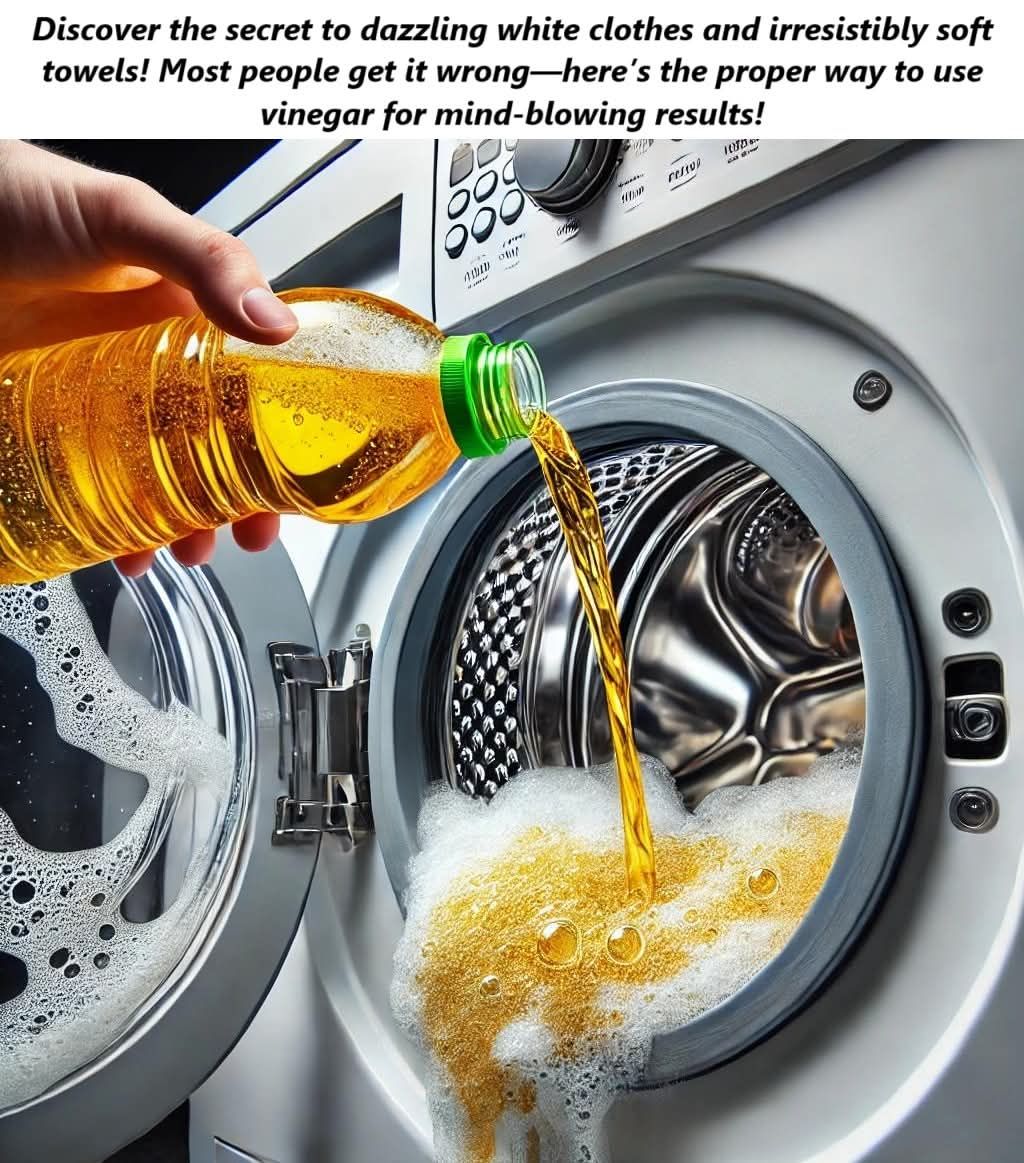
Vinegar is the key to whiter whites and softer towels, but most use it wrong. Here’s the right way to use it
Vinegar has been a trusted household staple for centuries. Most people associate it with cooking, pickling, and basic cleaning, yet its usefulness reaches far beyond the kitchen. One of vinegar’s most impressive and underappreciated applications is in laundry care. This simple liquid, found in nearly every home, has the power to transform your laundry routine by making whites brighter, towels softer, and fabrics fresher without relying on harsh commercial chemicals.
Many conventional laundry products contain synthetic fragrances, optical brighteners, and residue forming agents that slowly damage fibers and irritate sensitive skin. Over time, these substances accumulate inside fabrics, causing dullness, stiffness, and lingering odors. Vinegar offers a natural alternative that works at the fiber level, gently breaking down detergent buildup, mineral deposits, and odor causing bacteria. The result is clothing and linens that look cleaner, feel softer, and last longer.
One of vinegar’s most noticeable benefits is its ability to whiten and brighten fabrics. Hard water minerals and detergent residue often cause whites to appear gray or yellow. Adding vinegar to the rinse cycle dissolves these deposits and restores the fabric’s original brightness. Instead of masking discoloration, vinegar removes the source of the problem. This makes it especially valuable for white shirts, socks, towels, and bed linens that tend to lose their crisp appearance over time.
Towels benefit tremendously from vinegar. Many people notice that new towels become stiff and less absorbent after repeated washes. This happens because detergent and fabric softener leave behind a waxy coating that prevents fibers from fully opening. Vinegar strips away this coating and allows the fibers to breathe again. The result is towels that feel softer, absorb moisture better, and dry more efficiently.
Vinegar also acts as a powerful odor neutralizer. Rather than covering up smells with artificial fragrance, it neutralizes the bacteria that cause them. This makes vinegar especially helpful for gym clothes, kitchen towels, pet bedding, and clothing exposed to smoke or mildew. Even stubborn odors that survive multiple washes often disappear after a single vinegar rinse.
Another overlooked benefit of vinegar is its ability to reduce static and soften fabrics naturally. Commercial fabric softeners leave residues that weigh down fibers and reduce breathability. Vinegar softens by removing buildup instead of adding new substances, leaving clothes comfortable, flexible, and free of chemical coatings. This is particularly beneficial for people with sensitive skin or allergies.
Vinegar is also gentle on washing machines. It cleans soap scum, mineral buildup, and mold inside the machine, helping it operate more efficiently and extending its lifespan. Regular use reduces the need for specialized machine cleaners and prevents unpleasant odors from developing inside the drum.
Using vinegar in laundry is simple. Add about half a cup to one cup of white distilled vinegar to the rinse cycle. The vinegar smell completely disappears as the load dries, leaving clothes fresh and neutral. For heavily soiled loads or strong odors, vinegar can also be added directly during the wash cycle.
Beyond performance, vinegar offers environmental and financial benefits. It reduces reliance on multiple specialty products, cuts packaging waste, and costs a fraction of commercial fabric treatments. By replacing several laundry products with a single natural solution, households save money while minimizing chemical exposure.
By the end of adopting this method, many people are surprised by how much better their laundry feels and smells. What once seemed like an unconventional trick becomes a permanent part of their routine. Vinegar does not merely improve laundry results. It simplifies the entire process while supporting healthier fabrics, healthier skin, and a healthier home.
How Vinegar Works to Whiten Whites and Soften Towels
1. Natural Bleaching Agent:

Vinegar has acetic acid, which helps break down dirt and stains on fabric. Unlike bleach, vinegar is much less harsh, ensuring that your fabrics are not damaged in the process.
2. Fabric Softener Alternative:

Vinegar acts as a natural fabric softener by breaking down detergent residues left in the fabric, which can make towels feel stiff. Your towels will come out of the wash feeling softer and fluffier.
3. Odor Elimination:

Vinegar neutralizes odors effectively. It helps remove any lingering smells in your laundry, ensuring that your whites and towels smell fresh and clean.
4. Color Brightening:

While it is particularly effective on white fabrics, vinegar also helps keep colors bright by dissolving alkaline deposits left by detergents.
How to Use Vinegar in Your Laundry
1. For Whiter Whites
How to Use Vinegar in Your Laundry
1. For Whiter Whites

Add one cup of distilled white vinegar to your washing machine during the rinse cycle. This will allow the vinegar to act on any residue or stains, making your whites appear brighter.
2. For Softer Towels:
Add half a cup of vinegar during the rinse cycle when washing towels. This will help to break down residues and restore fluffiness.
3. Stain Removal:

For particularly stubborn stains, pre-treat the fabric with a mixture of vinegar and water before washing.
4. Removing Mildew:

To get rid of mildew on towels, soak them in a solution of one part vinegar and one part water before laundering as usual.
By following these simple steps, you can significantly improve the quality of your laundry without needing to rely on commercial products full of chemicals. Vinegar is an affordable, eco-friendly, and highly effective way to achieve whiter whites and softer towels. Try incorporating it into your laundry routine and see the difference for yourself.