What are floaters? Here’s what you should do if you see them.
Eye Floaters: What They Are and When to Worry
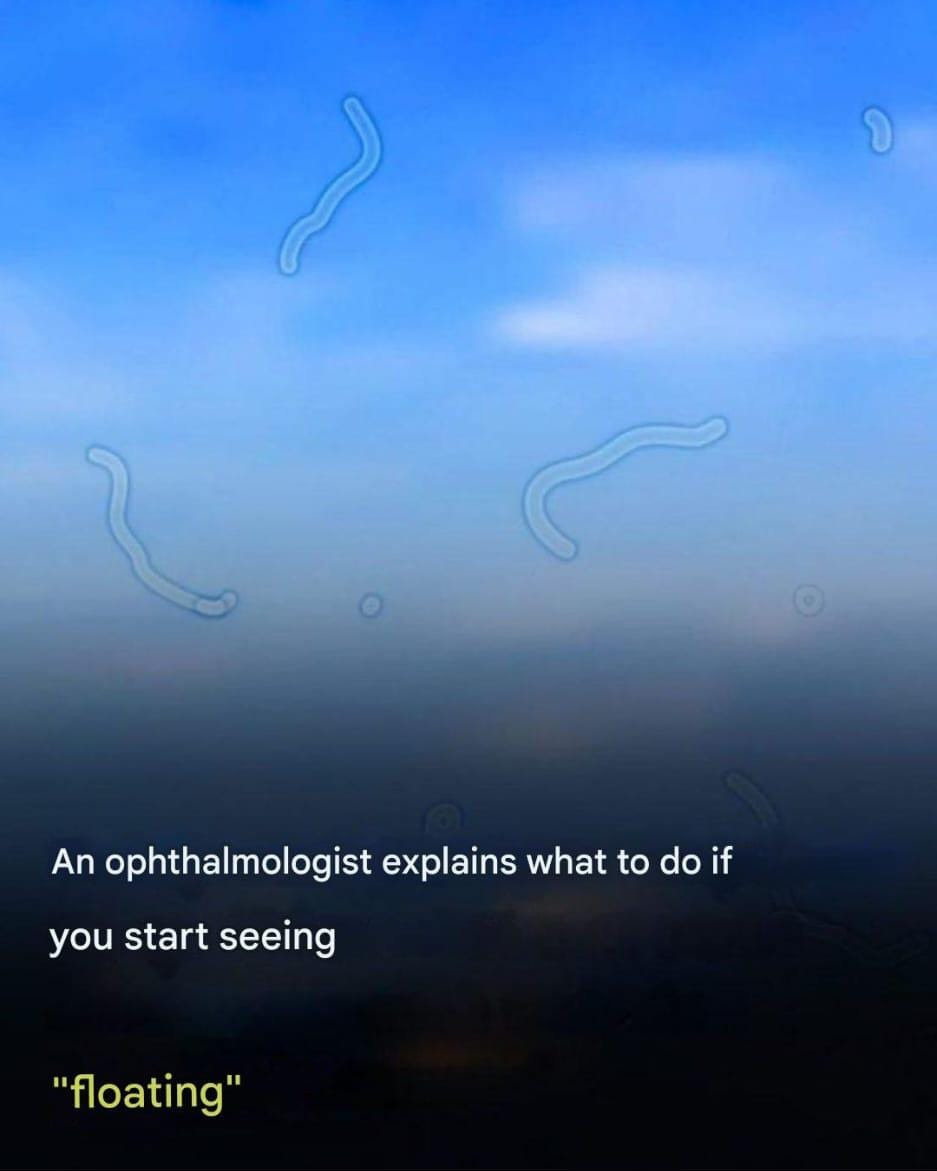
You look at a bright sky or a blank wall and notice them: little specks, cobwebs, or squiggly lines drifting across your vision. You blink, but they don’t go away. These are eye floaters, and while they are usually harmless, understanding them is key to knowing when to seek help.
What Are Floaters, Exactly?
Floaters are tiny shadows that you see in your field of vision. They are not on the surface of your eye but inside it. Your eye is filled with a gel-like substance called the vitreous humor.
As we age, this gel becomes more liquid, and microscopic collagen fibers within it can clump together. These clumps cast shadows on your retina (the light-sensitive layer at the back of your eye), and your brain interprets these shadows as the drifting shapes we call floaters.
Who Is Most Likely to Get Them?
While anyone can experience floaters, they are more common in:
-
People over 50 (due to natural changes in the vitreous)
-
Those who are nearsighted (myopic)
-
Individuals who have had cataract surgery
-
People with diabetes (which can affect eye health)
-
Those who have experienced eye inflammation or injury
The Critical Question: When Should You See a Doctor?
In most cases, floaters are a normal part of aging and are not a cause for alarm. However, they can sometimes be a warning sign of a serious eye emergency.
You should see an ophthalmologist immediately if you experience any of the following:
-
A Sudden Shower of New Floaters: Especially if dozens appear at once.
-
Flashes of Light: Seeing brief, lightning-like streaks in your peripheral vision, even in a well-lit room.
-
A Shadow or Curtain in Your Vision: A dark area that seems to encroach on your side (peripheral) vision.
-
A Sudden Increase in Floaters after an eye injury.
These symptoms could indicate a retinal tear or detachment, which is a medical emergency that requires prompt treatment to prevent permanent vision loss.
What Are the Treatment Options?
For the vast majority of people, no treatment is needed. Your brain learns to ignore the floaters over time, and they often become less noticeable on their own.
However, if floaters are so dense that they significantly impair your vision, two main options exist:
-
Laser Vitreolysis: A laser is used to break up large floaters, making them less noticeable. This is a non-invasive procedure, but it is not suitable for all types of floaters and carries some risks.
-
Vitrectomy: A surgical procedure where the vitreous gel (and the floaters within it) is removed and replaced with a saline solution. This is highly effective but is typically reserved for severe cases due to the potential for serious complications like cataract, infection, or retinal detachment.
-