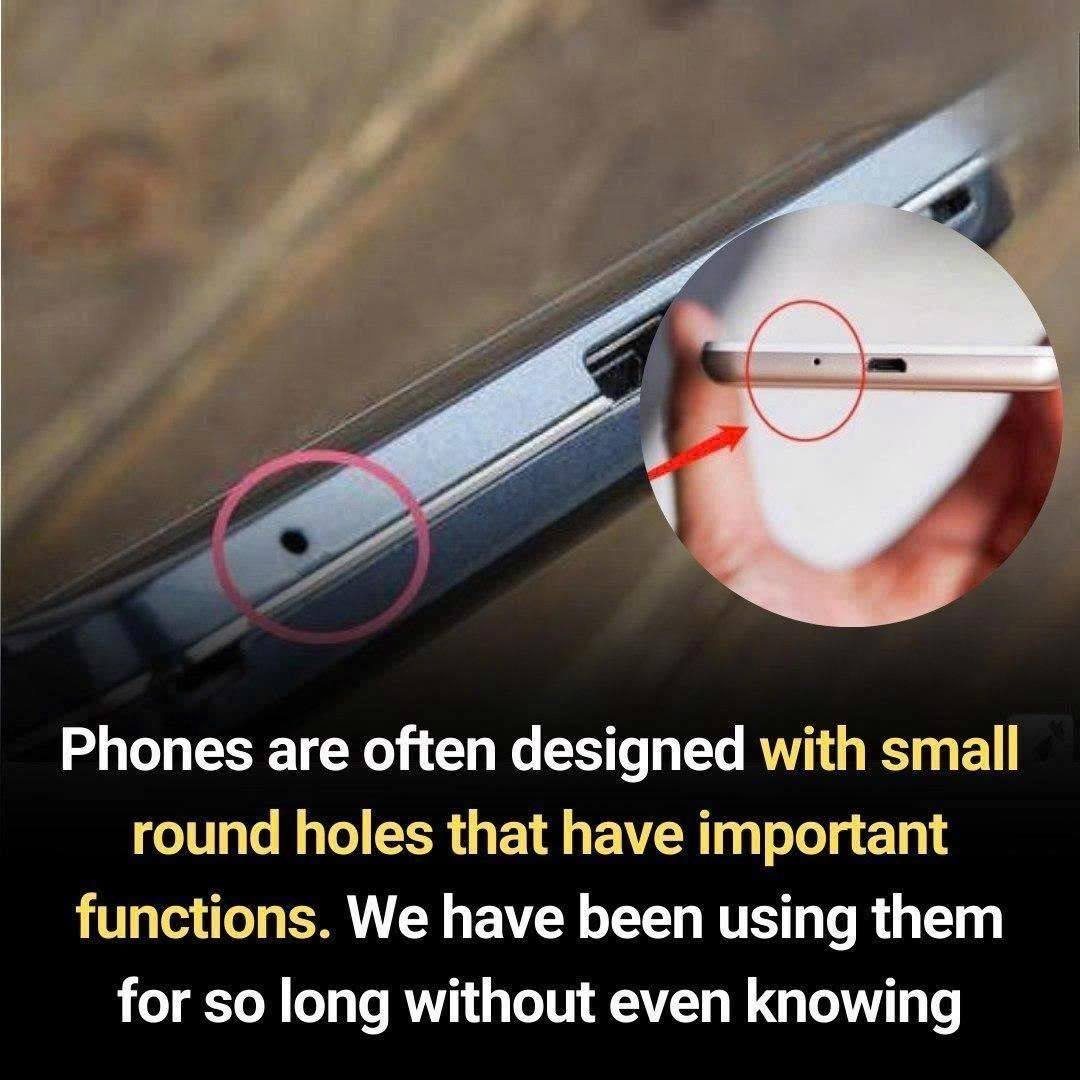
What is the purpose of the small hole next to the charging port on a smartphone — and why is it so important?
That tiny hole next to your phone’s charging port may look like a random design detail, but it plays a surprisingly important role in how your device functions every day. Far from being decorative or accidental, this small opening houses a secondary microphone that helps your smartphone deliver clear sound, accurate voice recognition, and smooth communication.
Modern smartphones rely on more than one microphone to perform well. While the main microphone captures your voice during calls, the secondary microphone works alongside it to reduce background noise. By comparing sounds picked up from different positions on the phone, the device can distinguish your voice from surrounding noise. This process, known as noise cancellation, allows calls to sound clearer even in busy environments like streets, cafés, or public transport.
The secondary microphone also improves audio quality when recording videos or voice notes. It helps create a fuller, more balanced sound by capturing ambient audio and spatial detail. Without it, recordings may sound flat, muffled, or uneven. Voice assistants also depend on this microphone to better understand spoken commands, especially when there is background noise. Accurate speech recognition relies on clean audio input, and this tiny component plays a major role in making that possible.
Because the opening is so small, it is often misunderstood. Many users mistake it for the SIM card tray eject hole and insert pins, paperclips, or needles into it. This is one of the most common causes of accidental microphone damage. Inside the hole is a delicate membrane designed to pick up sound vibrations. Even light pressure from a sharp object can puncture or deform it, leading to permanent damage.
When the secondary microphone is damaged, the effects may not be obvious at first. Calls may sound distorted to the person on the other end, background noise may overpower your voice, or noise cancellation may stop working altogether. Video recordings can lose clarity, and voice assistants may struggle to recognize commands. These issues are often frustrating because they affect everyday phone use without an immediately visible cause.
Fortunately, caring for this component is simple. If dust or debris builds up, it can usually be removed by gently brushing the area with a soft, dry brush or using a light burst of compressed air. The key is to avoid inserting anything into the hole. Liquids should also be kept away, as moisture can interfere with the microphone’s function.
This tiny opening works quietly in the background, ensuring that your voice is captured clearly and your device performs as expected. It is a good example of how modern smartphones rely on carefully engineered details that users rarely notice unless something goes wrong.
Though easy to overlook, the secondary microphone highlights how thoughtful design turns small features into essential tools. Even the smallest hole can carry a big responsibility, helping your phone sound smart, responsive, and reliable every time you use it.