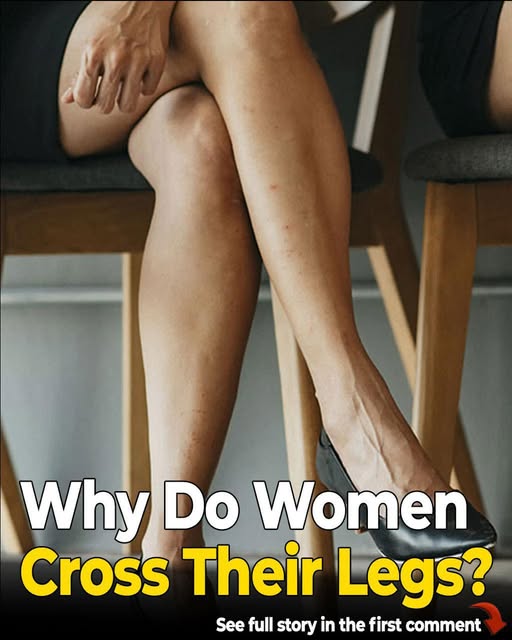
Why do women cross their legs when sitting? Psychological perspectives
Crossing one’s legs while sitting may seem like a simple, unconscious habit, but it is deeply shaped by cultural and social expectations. Posture has long been used as a way to signal identity, values, and belonging, particularly for women. Historically, female body language was closely monitored and regulated to reflect ideals of modesty, elegance, and self control. In parts of Europe during the eighteenth century, crossing the legs at the ankle or knee was associated with refinement and good breeding. It suggested composure and grace, qualities that were strongly encouraged in women of higher social standing. In contrast, in several Eastern cultures, showing the sole of the foot or crossing one’s legs toward another person has traditionally been viewed as disrespectful. These differences show that posture is never neutral. It is interpreted through cultural lenses that assign meaning to even the smallest physical gestures.
In modern society, expectations around femininity and posture have evolved, but they have not disappeared. Fashion plays a role, as skirts, dresses, and restrictive clothing often encourage leg crossing as a practical solution. Media also reinforces certain images of poise and attractiveness, frequently portraying crossed legs as graceful or elegant. As a result, many women adopt this posture without conscious thought, internalizing it as a socially appropriate way to sit. What feels like a personal choice is often shaped by years of subtle messaging about how bodies should appear in public.
From a psychological perspective, leg crossing can communicate a range of emotional states. It can signal confidence, but it can also suggest vulnerability or a desire for protection. Crossing the legs often creates a physical barrier, which may provide comfort in unfamiliar or stressful situations. Some psychological interpretations view closed postures as signs of anxiety or defensiveness, while open postures are associated with ease and self assurance. However, these interpretations are not universal. Cultural background, personal comfort, and situational context all influence how such gestures should be understood. A posture that feels calming to one person may appear guarded to another.
Leg position also plays an important role in nonverbal communication, especially in social and professional settings. Crossed legs can be perceived as creating distance, while uncrossed legs may signal openness and engagement. The direction of the crossing can matter as well. Crossing toward someone may indicate interest or attentiveness, while crossing away can suggest discomfort or disinterest. These signals are often subtle, yet they can influence how interactions unfold. Importantly, women’s body language is frequently scrutinized more closely than men’s, which adds another layer of pressure and interpretation to these everyday movements.
The social consequences of leg crossing are tied closely to perception and stereotype. In some contexts, crossed legs are seen as feminine, polite, or refined. In others, they may be interpreted as passive or lacking authority. In professional environments, posture can influence how competence and confidence are judged. Open, grounded postures are often associated with leadership and assertiveness, while closed ones may be unfairly linked to insecurity. These assumptions can shape how women are treated and evaluated, even when they are not consciously acknowledged.
As gender norms continue to shift, questioning these ingrained expectations becomes increasingly important. No single posture should define confidence, professionalism, or worth. Encouraging awareness around body language allows individuals to choose how they sit and move based on comfort rather than obligation. Breaking away from outdated ideas about how bodies should appear supports greater authenticity and equity. In the end, leg crossing is not just about posture. It reflects history, psychology, and social values, all intersecting in a simple everyday gesture.