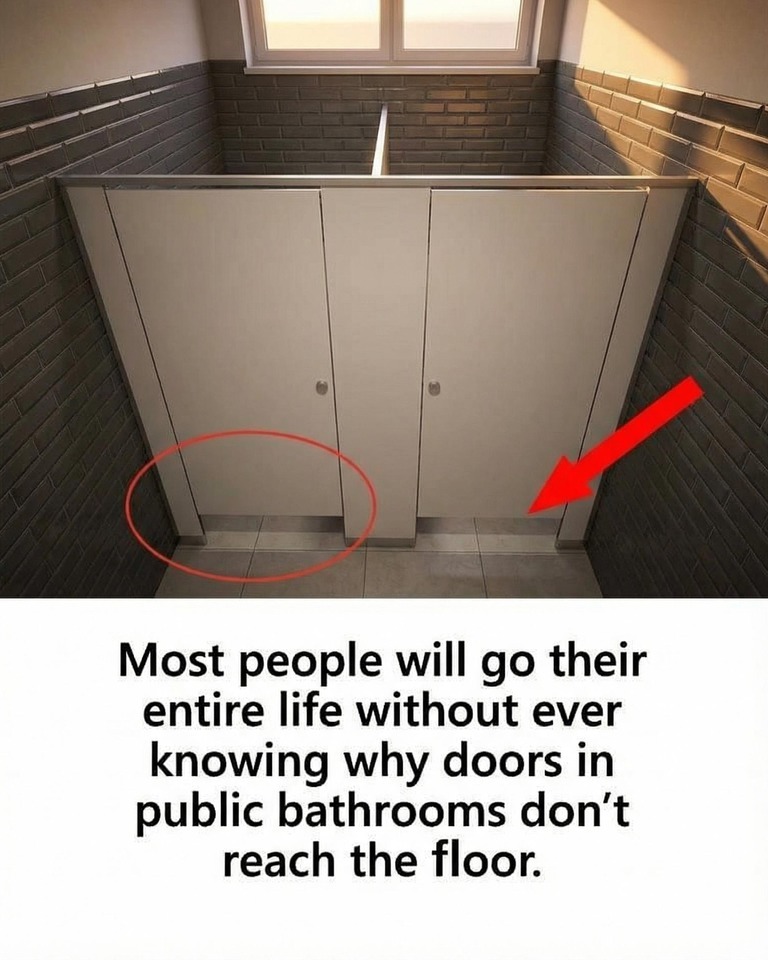
Why Public Bathroom Doors Don’t Reach the Floor: The Surprising Truth
If you have ever used a public restroom, you have probably noticed the noticeable gap between the bottom of the stall door and the floor. At first glance, it can feel awkward or even uncomfortable, especially when privacy is expected. However, this design choice is far from accidental. It exists to balance privacy with safety, hygiene, and practical maintenance needs, all of which are essential in high traffic public spaces.
One of the most important reasons for the gap is safety. Public restrooms are shared environments, and emergencies can happen unexpectedly. Someone inside a stall may feel faint, become ill, or need immediate assistance. The open space beneath the door allows staff, security, or emergency responders to quickly check whether a stall is occupied and whether someone inside might need help. This visual access can save critical time without forcing responders to open the door right away.
In addition to visibility, the gap makes communication easier in urgent situations. If assistance is needed, items such as paper towels, water, or medical supplies can be passed through quickly. This small opening can significantly reduce response time and help resolve situations more efficiently and discreetly.
Ventilation is another major factor. Public restrooms experience constant use, which leads to moisture, heat, and odors building up quickly. The gap under the door allows air to circulate more freely throughout the space. Better airflow helps reduce lingering smells and limits excess humidity, which can otherwise contribute to discomfort and poor hygiene conditions.
Good ventilation also supports overall cleanliness. When moisture is reduced, surfaces dry faster, lowering the chance for bacteria and mold to develop. This creates a healthier environment for users and makes restrooms more pleasant to use throughout the day.
Maintenance and cleaning are also key reasons behind this design. Cleaning staff can mop and sanitize floors efficiently without opening every stall door. This saves time and reduces physical strain while ensuring the entire restroom floor is properly cleaned. Fewer door openings also mean less wear and tear on hinges, locks, and handles, helping facilities stay functional longer and reducing repair costs.
Beyond functionality, the gap reflects thoughtful planning in public space design. While full privacy may seem ideal, designers must consider the realities of shared environments. The goal is not to make users uncomfortable, but to create a space that works safely and efficiently for everyone, including visitors, staff, and maintenance crews.
Ultimately, the gap beneath restroom stall doors is much more than a strange design quirk. It is a practical solution that supports safety, hygiene, ventilation, and maintenance. This small detail shows how subtle design choices can have a meaningful impact on how public spaces function and how comfortable and secure people feel using them.