# Limescale and stains on pans: how to remove them easily without detergent
Food scraps , grease and burnt stains can quickly become a nightmare when it comes to washing pots and pans. Fortunately, it is not necessary to spend endless minutes and considerable effort on it. There are home remedies that will allow you to clean your pots and pans naturally, quickly and cheaply. Let’s see how.
Removing residues, stains and scale from kitchen utensils is essential for good hygiene, but also to prolong their life. In addition to promoting the growth of bacteria and food debris that can compromise food safety, scale can damage utensils and make them more difficult to clean. Rest assured: there are products that will allow you to remove tartar in no time.
Baking soda and vinegar to remove limescale
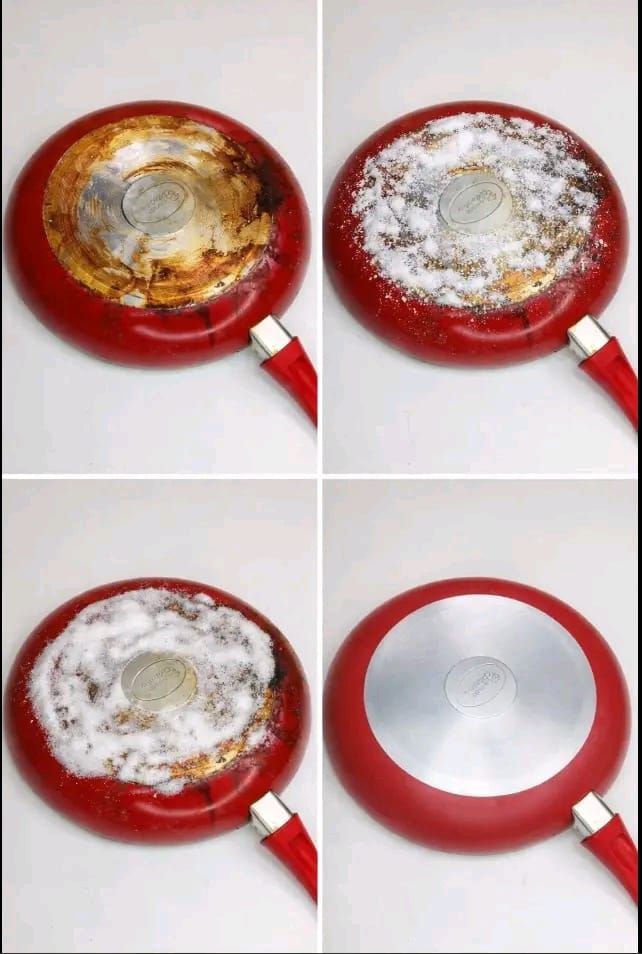
Both substances are renowned for their cleaning and degreasing properties. To descale a pan with vinegar and baking soda, simply pour vinegar into the pan and heat it up. Once the vinegar is hot , remove the pan from the heat and add two tablespoons of baking soda.
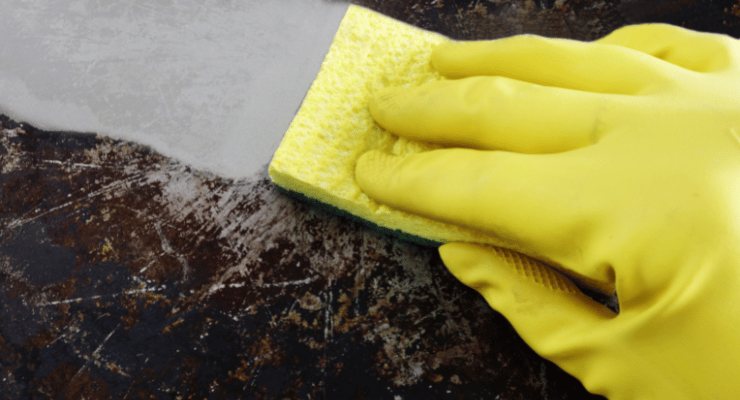
At this point, our degreasing mixture will need a few hours to work. In the meantime, it will have cooled down and we can move on to the actual cleaning. Using a soft sponge, scrub the inside of the pan. It is advisable to choose a soft, non-abrasive sponge, avoiding the use of a scouring sponge, as it could scratch the pan.
Thanks to the action of vinegar and baking soda, limescale will be softened and its removal will be easier. This method is also effective in removing burnt stains from the bottom of pans.
Removing tartar with citric acid
Citric acid is an effective detergent with anti-limescale properties , making it a very effective remedy for removing limescale from pans. To use it, fill a saucepan with water and pour a citric acid solution into it. Generally, the dosage is adjusted by mixing 150 g of citric acid with one liter of hot
Again, the degreasing solution should work for a few hours, or even a whole night. Meanwhile, the citric acid will soften the incrustations, which will then come off much more easily with a sponge . However, be careful with the material of the surface to be cleaned: citric acid is not suitable for natural stone or marble.
Lemon to degrease the pans
Excellent natural degreaser, lemon will delicately flavor your clean pots and pans. It is very simple to use: just pour a little water into the saucepan to be degreased and add the lemon juice.
This remedy does not waste anything: lemon zest can also be added to this degreasing solution. So, let’s boil it all up. Once the water is boiling, let’s turn off the heat and let it cool. Then, mechanical cleaning can be carried out with a sponge.
An alternative to water is to use coarse salt. To degrease very dirty pans, simply sprinkle coarse salt on the surface to be degreased, add lemon juice and wait for the solution to work.
Remove limescale and stains from pans with Marseille soap
Fans of simplicity will be delighted to discover this method. Indeed, to degrease stubborn grease from pans, all you need is soap and water. Marseille soap, of course. How to proceed? It’s simple: fill a saucepan with water, add a little Marseille soap and bring to a boil.
The high temperature of the boiling water, combined with the degreasing power of Marseille soap, will naturally dissolve the limescale. For optimal results, after letting the solution act and cool, remove the water and clean the surface with a sponge to remove the slightest traces of dirt.
Just like lemon, Marseille soap has the advantage of being particularly fragrant; it will therefore not only remove limescale from pans, but also bad smells.