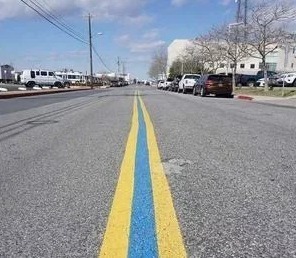
The Hidden Message of That Blue Line on the Pavement
A new type of road marking has recently appeared in several U.S. communities: a thin blue line painted between the traditional double yellow center lines. While subtle in appearance, this feature carries significant symbolic meaning. First introduced in Maryland, the blue line was designed as a public gesture of appreciation for local police departments and their role in ensuring community safety.
One of the most notable examples can be found in Ocean City, Maryland. There, the line was painted along 65th Street, leading directly to the town’s police station. Local officials explained that the decision served two purposes. Practically, it helps motorists locate the department with ease. Symbolically, it acts as a highly visible sign of gratitude, acknowledging the dedication of law enforcement officers who serve residents and visitors alike.
The placement in Ocean City carries particular importance because the town experiences dramatic seasonal changes. During the summer months, thousands of tourists flood the area, bringing heavy traffic and large crowds. Officials emphasized that law enforcement plays a critical role in maintaining order and safety under these challenging conditions. The blue line, therefore, is more than decorative; it is intended as a constant reminder of the essential services provided by officers during both routine days and peak tourist seasons.
Supporters of the initiative describe it as a simple but powerful gesture. In their view, painting a thin blue line requires little effort yet delivers a meaningful message of public recognition. By adding this small but symbolic feature to the roadway, communities demonstrate solidarity with law enforcement officers and strengthen the bond between police departments and local residents. For many, the blue line also represents reassurance—a visible indication that public safety remains a top priority.
Other municipalities across the country have begun exploring similar measures, considering whether the thin blue line might be adopted in their own towns. Each new marking reflects an ongoing national conversation about how communities express their values and show visible support for public service institutions. Proponents argue that these efforts foster awareness of police work while highlighting the often-overlooked daily responsibilities of officers.
While modest in its physical form, the blue line carries undeniable symbolic weight. For supporters, it represents respect, gratitude, and an acknowledgment of the personal sacrifices made by members of law enforcement. The line is meant to serve as a quiet yet steady reminder that behind everyday routines—whether commuting, shopping, or enjoying community events—public safety officers stand ready to respond.
However, as with many symbolic gestures, the initiative has not been without its critics. Some observers caution that painting road markings with overt associations may blur the line between public infrastructure and advocacy. Others suggest that while symbolic acts are meaningful, they do not address broader and more complex conversations about policing, public trust, and community relations. These concerns reflect the larger national dialogue about the role of law enforcement and the ways communities choose to express support or critique.
Still, in many towns where the line has appeared, the response has been overwhelmingly positive. Residents often describe feelings of pride when they see the blue line, interpreting it as a visible expression of unity and community strength. For police departments, the gesture serves as a morale boost, affirming that their work is recognized and valued by the people they protect.
As more municipalities evaluate the idea, the thin blue line may become an increasingly familiar feature on American roadways. Whether seen as a symbol of gratitude, a point of civic pride, or a reminder of ongoing debates, it has already sparked meaningful discussion. For now, its presence stands as both a navigational aid and a public statement—representing appreciation, respect, and acknowledgment of law enforcement’s enduring role in community life.