Mystery of Red and Yellow Dots on Your Tires
Why Are There Red and Yellow Dots on Your Tires? The Answer Might Surprise You
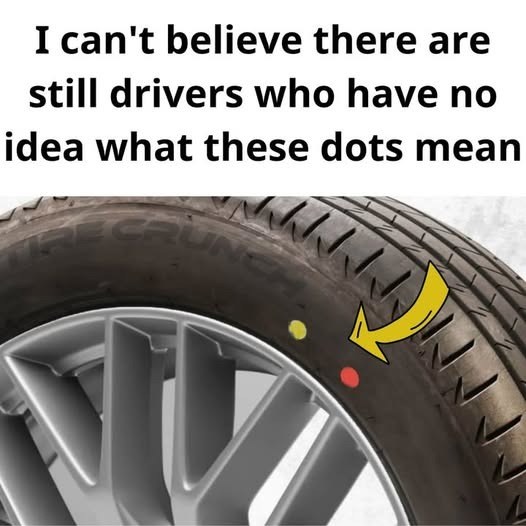
When you take a close look at your car’s tires, you might notice something unusual—small red and yellow dots strategically placed on the sidewalls. For many drivers, these markings seem random or purely decorative, but in reality, they serve an important purpose. Tire manufacturers don’t add these dots for fun; they are indicators that help ensure your tires are mounted correctly, balanced properly, and perform safely on the road. Understanding what they mean can give you a new appreciation for the science and precision behind something as simple as a round piece of rubber.
The Yellow Dot: Indicating the Light Spot
The yellow dot is perhaps the most commonly seen marking on tires. It indicates the lightest point of the tire’s weight. No tire is perfectly balanced from the factory—slight differences in rubber thickness and construction create tiny variations in weight distribution.
When mounting a tire, technicians align the yellow dot with the valve stem of the wheel, which is usually the heaviest point due to the metal components of the valve. By pairing the tire’s lightest spot with the wheel’s heaviest spot, the overall balance of the tire-and-wheel assembly is improved. This reduces the amount of additional wheel weights needed later during balancing, leading to a smoother ride and even wear.
The Red Dot: Indicating the High Point
The red dot serves a different purpose. It marks the tire’s highest point of radial runout, which is a fancy way of saying the part of the tire that sticks out the most during rotation. Wheels also have markings—often a dimple or small sticker—that indicate their lowest point. When mounting a tire, aligning the red dot with the wheel’s low point ensures the roundest possible assembly, minimizing vibration and maximizing ride comfort.
In short:
-
Yellow dot → lightest part of the tire (align with valve stem).
-
Red dot → highest part of the tire (align with wheel’s low point).
Technicians choose which dot to prioritize based on manufacturer instructions, but if both red and yellow dots are present, the red dot typically takes precedence.
Why This Matters for Drivers
At first glance, this might seem like unnecessary over-engineering, but tire balancing and proper mounting have a huge impact on driving experience. A tire that isn’t mounted correctly can cause:
-
Noticeable vibrations at higher speeds
-
Uneven tread wear
-
Reduced fuel efficiency
-
Added strain on suspension components
By following these simple dot indicators, tire shops can minimize these issues, save drivers money on maintenance, and extend the lifespan of the tires.
Should You Worry About the Dots on Your Tires?
If you’ve recently bought new tires, you don’t need to worry about these markings yourself. Professional tire technicians are trained to understand and use them during installation. However, if you notice the dots and wonder whether they’ve been aligned properly, it never hurts to ask your tire shop how they handled the markings. A quick question can give you peace of mind that your tires were installed with precision.
Conclusion
The next time you’re washing your car or checking your tire pressure, take a moment to look for those tiny red and yellow dots. Far from being meaningless markings, they are evidence of the careful engineering and meticulous installation practices that keep your vehicle running smoothly and safely. While most drivers may never give them a second thought, these little dots play a big role in ensuring comfort, efficiency, and safety every time you hit the road.