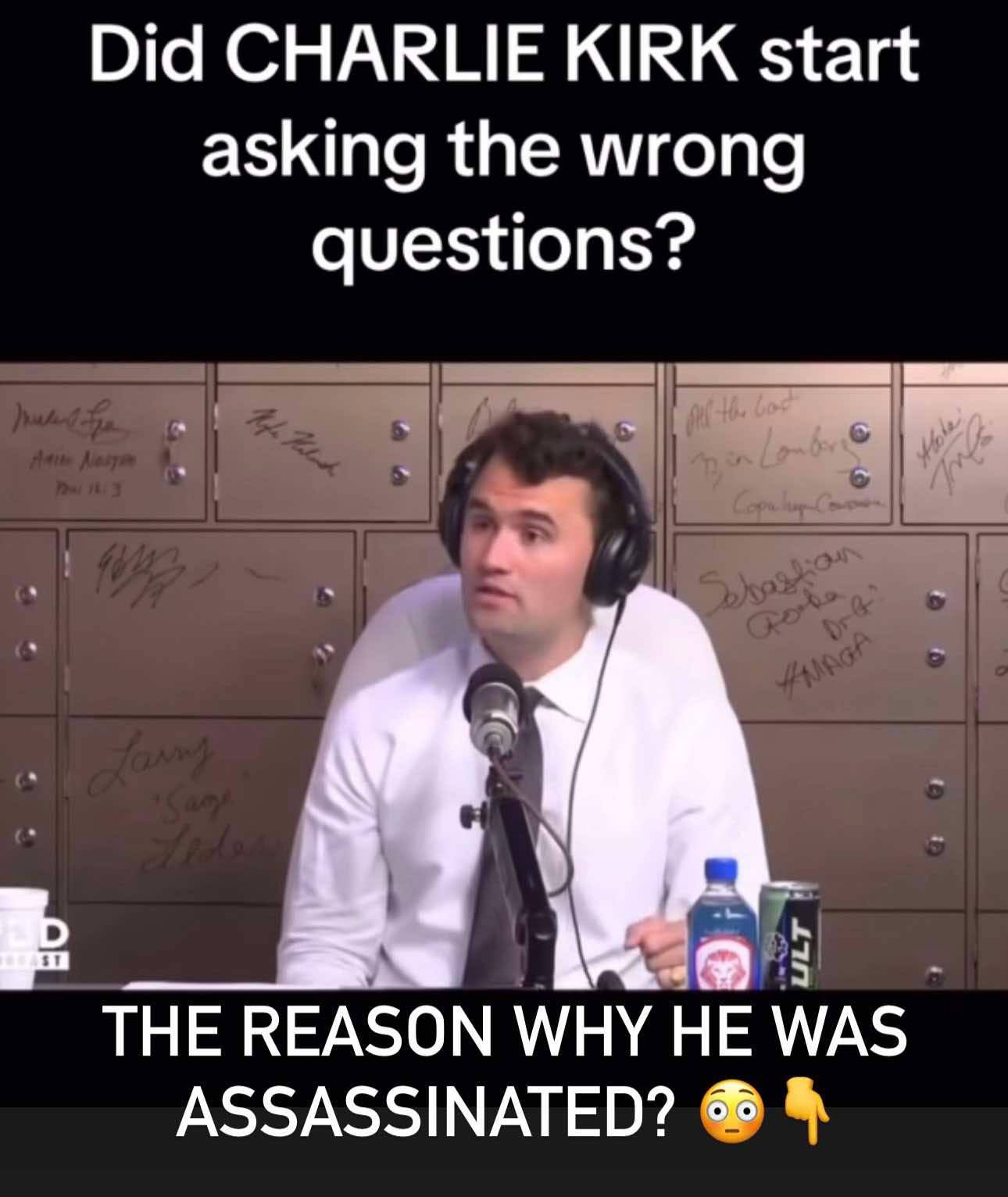
Did Charlie Kirk start asking the wrong questions?
Charlie Kirk, the right-wing activist and co-founder of Turning Point USA, was fatally shot during an appearance at Utah Valley University, an event that has set off waves of speculation both in the United States and abroad. The 31-year-old had built a reputation as one of the most outspoken voices of the conservative youth movement, but his assassination has prompted questions about whether he had begun “asking the wrong questions” in the months leading up to his death.
Kirk was no stranger to controversy. A fierce opponent of liberal policies on gun control, climate change, civil rights, and 2SLGBTQ+ issues, he drew both passionate support and intense criticism. Beyond his activism, he hosted a nationally syndicated radio show and a popular podcast, giving him direct access to young voters across the country. His ability to mobilize college students into political action made him one of the most influential conservative figures of his generation.
His advocacy also extended to foreign policy, particularly the U.S. relationship with Israel. A staunch supporter of the Jewish state, Kirk was praised by Israeli Prime Minister Benjamin Netanyahu as a “lion-hearted friend of Israel” following his assassination. Yet Kirk’s recent comments suggested he was navigating more complicated terrain on this issue.
In July, Kirk sparked attention by defending Israel’s handling of the war in Gaza, dismissing accusations that the Israeli government was deliberately starving civilians. But shortly after, he raised eyebrows with a video questioning the Israeli military’s delayed response to the October 7 Hamas attacks. “Six hours, I don’t believe it,” Kirk remarked, speculating aloud about whether there had been a “stand down order.” He stressed that he was raising a “legitimate non-conspiracy question,” but the comment triggered heated debate and drew backlash even from within his conservative base.
His willingness to broach sensitive topics continued into August. On the 7th of that month, Kirk appeared on The Megyn Kelly Show, where he revealed that some critics had begun labeling him anti-Semitic after he moderated a fiery debate at the Student Action Summit. The panel, featuring comedian Dave Smith and commentator Josh Hammer, focused on U.S. foreign policy, neoconservatism, and the future of the U.S.–Israel alliance. Smith argued for a non-interventionist approach rooted in Ron Paul’s vision, while Hammer defended the traditional bipartisan support for Israel. The exchange, later dubbed “The Debate Heard Around the World,” highlighted ideological fractures within the conservative movement itself.
Not long afterward, Kirk hinted that his growing outspokenness was drawing dangerous attention. In late August, he warned his audience that “strong forces” were after him, a comment that has taken on ominous weight in the wake of his killing.
Following the assassination, theories multiplied online. Some framed it as a “professional hit,” comparing it to the JFK assassination in both execution and political significance. Others speculated that his questioning of Israel’s military response may have made him a target. While no evidence has been presented to confirm such claims, the speculation has fueled a sense of unease among his supporters.
For many, Kirk’s death feels like more than just the loss of a political organizer. To his allies, it represents a chilling message to the broader movement. As one viral post put it: “If they can kill the face of the resistance, they hope the body will shut down.”
Whether his assassination was politically motivated or the act of a lone gunman remains under investigation. What is certain is that Charlie Kirk’s voice, polarizing though it was, will continue to echo in debates over free speech, foreign policy, and the boundaries of dissent within American politics.