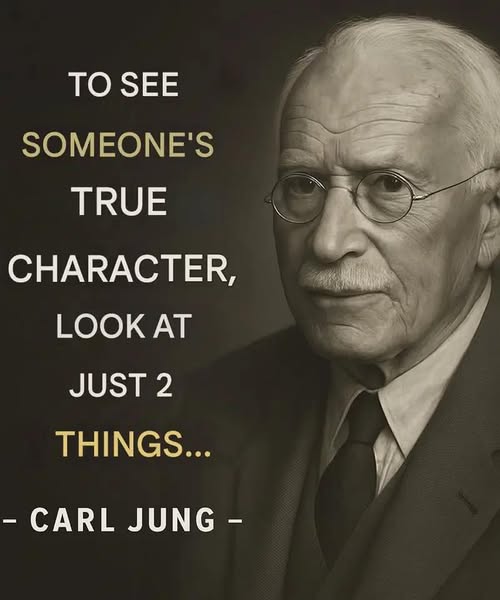
To see someone’s true character, look at just these 2 things
Truly understanding someone can take years—or just minutes—if you know where to look. It’s not about judging appearances or relying solely on what people claim about themselves. Words can be misleading, and first impressions often reflect what people want you to see rather than who they truly are. The deeper truth is found in subtle behaviors and instinctive reactions—moments when a person forgets to “perform.” These unguarded glimpses often speak louder than any carefully crafted image.
Carl Jung, the renowned Swiss psychiatrist and founder of analytical psychology, dedicated much of his career to studying the complexities of human nature. He believed that a person’s character is not best measured by achievements, possessions, or public persona, but by how they behave in ordinary, unfiltered situations. According to Jung, if you want to uncover someone’s true nature, there are two key areas of behavior worth paying close attention to. His insight remains profoundly relevant today, offering a clear way to see beyond surface impressions and into a person’s authentic self.
Two Subtle Clues That Reveal True Character
1. How a person treats those who can offer nothing in return
Jung argued that true kindness and integrity are not displayed in grand gestures or public acts of generosity, but in how we treat people who hold no power over us. This includes service workers, strangers, or individuals who are vulnerable. Someone who is polite to their boss but rude to a waiter is revealing something important about their values. When people show respect and compassion in these unnoticed interactions, it suggests empathy, humility, and a consistent moral compass. By contrast, arrogance, dismissiveness, or rudeness toward those “below” them often signal entitlement or a lack of depth in character.
2. How a person handles frustration
Life inevitably presents us with delays, failures, and unexpected challenges. According to Jung, these stressful moments are far more revealing than comfortable ones. How someone reacts under pressure demonstrates their level of self-control, patience, and maturity. A person who lashes out in anger, blames others, or crumbles at minor setbacks is showing fragility beneath the surface. On the other hand, someone who remains calm, adapts gracefully, and takes responsibility shows resilience and emotional intelligence. Jung noted that character is revealed not in comfort, but in crisis.
Other Ways to Understand Someone Deeply
While Jung highlighted these two behaviors as the most telling, there are other subtle cues that can offer insights into who someone truly is:
-
Their sense of humor: Jokes often reflect what people really think or feel. Humor can reveal compassion, playfulness, insecurity, or even hostility, depending on its tone.
-
How they speak about others: Consistent gossip, criticism, or judgment usually signals inner dissatisfaction or unresolved insecurity. By contrast, speaking well of others—even in their absence—reflects generosity of spirit.
-
How well they listen: Genuine listening is increasingly rare. Someone who gives full attention, without interrupting or steering the conversation back to themselves, demonstrates respect and empathy.
-
Their use of power: Few things test character more than authority. The way a person behaves when in a position of influence—whether they exploit it or use it responsibly—offers a direct window into their values.
The Art of Paying Attention
Getting to know someone deeply doesn’t require years of interaction. It requires attentiveness. By watching how people behave in small, unguarded moments—when kindness is optional, when frustration strikes, when no one is watching—we can glimpse their authentic selves. These details may seem minor, but together they form a much clearer picture than words or appearances ever could.
As Jung emphasized, character is not revealed in what is loudly declared, but in what is quietly done. If we train ourselves to notice these subtleties, we not only understand others better but also learn more about our own values, patience, and integrity. After all, just as we observe others, they too are observing us.