My Neighbor Copied Everythin
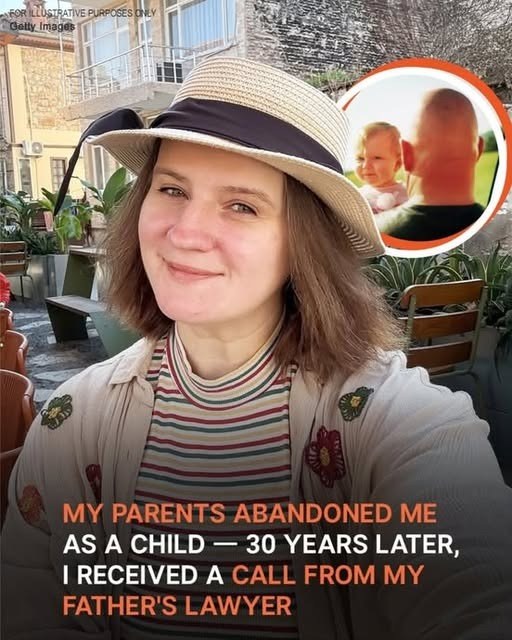
She quietly handed me a box. Inside were dozens of letters. All of them addressed to me. One for every year of my life. My hands trembled as I lifted the first envelope, yellowed slightly with age. The handwriting was uneven, looping and small, like someone unsure whether they were allowed to take up space.
“I’m your mother,” she said, her voice trembling just above a whisper. “I… I watched from here. I never stopped.”
The air seemed to thicken between us. I could hear the faint rustle of leaves outside, the creak of her old porch swing swaying with the wind. She explained that she was autistic—sensitive, easily overwhelmed, and at the time of my birth, unable to raise a child on her own. My father had placed me in foster care, and she hadn’t fought him. Her voice broke when she said that. For years, she’d lived next door, watching me grow from a distance, always present but invisible, too frightened to step forward.
She told me about the letters, how she wrote one every year on my birthday. Some were full of joy and hope, others soaked in guilt and grief. She had tucked them into the box, keeping them safe as if one day I might be ready to read them. She had written me stories about the birds that nested near her kitchen window, the garden she tended each spring, the small victories and heartbreaks of her life. Every letter was a piece of her she had saved for me, even when I didn’t know she existed.
I was stunned. Hurt. Confused. But curiosity anchored me in that moment. As I read her words—some shaky, some smudged with tears, some written in steady, confident strokes—I began to feel something unfamiliar yet deeply human. Her love. Her regret. Her hope that maybe, someday, I would understand.
It wasn’t the reunion I’d imagined in my most secret daydreams. There were no dramatic embraces or movie-perfect forgiveness. Just two awkward people, sitting in mismatched lawn chairs, drinking tea that had already gone cold, trying to find words for years that could never be reclaimed. She apologized, not for her autism or her limitations, but for her silence—for the distance she thought was kindness.
Over time, I learned to see her differently. I began to visit her garden, to help her trim the vines climbing our shared fence. She would talk about the herbs she grew, how lavender calmed her nerves and mint made her smile. Sometimes we would sit quietly, saying nothing at all, just breathing the same air that once divided us.
We’re still learning—how to speak without fear, how to listen without resentment. It’s not easy. She forgets small details sometimes; I lose patience more often than I’d like. But there’s a quiet rhythm to our new connection. We’ve got yoga on Sunday mornings, warm mugs between our hands, and that yellow fence between us—once a symbol of separation, now a gentle reminder that love can survive even in silence.
I used to hate that fence. It felt like a barrier, a constant reminder of everything I didn’t know. Now I see it differently. The paint is chipped, the wood uneven, but when the sun hits it just right, it glows a soft, forgiving gold. It reminds me that healing doesn’t have to be loud or perfect. Sometimes it’s simply two people showing up, awkwardly but honestly, and deciding that this—this strange, quiet closeness—is enough.