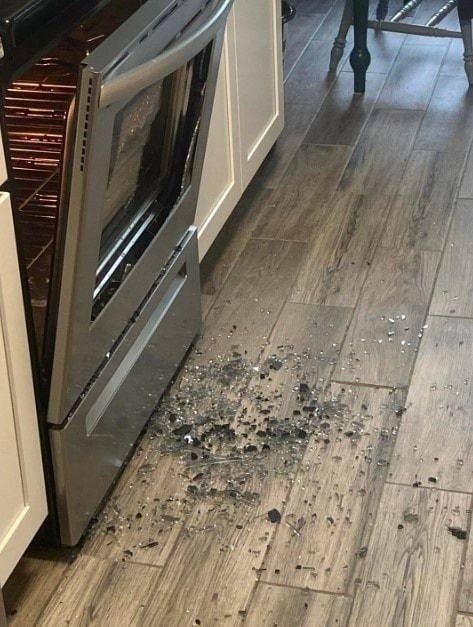
Why Do Oven Doors Shatter and How to Prevent It?
Oven doors can shatter for a variety of reasons, and the causes are often a mix of material properties and small imperfections that are invisible to the eye. Most people assume that something dramatic must have happened for an oven door to break, but in reality, the explanation is usually more subtle. Understanding why this occurs can help homeowners prevent accidents and keep their appliances functioning safely.
The glass used in oven doors is not ordinary household glass. Manufacturers typically rely on two main types. One is tempered soda lime glass. It is strong and heat resistant, but it has a lower tolerance for sudden changes in temperature. The other is borosilicate glass, which is known for its durability and superior ability to withstand rapid shifts in heat. Although both types are engineered for high temperatures, neither is completely immune to stress. Whenever an oven heats up and cools down, the glass expands and contracts. Over time, these small movements can create internal pressure.
Invisible imperfections can play a major role in unexpected breakage. The most commonly discussed flaw is a nickel sulfide inclusion. This tiny particle can become trapped inside the glass during manufacturing. While it may be microscopic, it can expand slowly over time, especially when exposed to repeated heat. During high temperature cycles such as the self cleaning mode, the stress placed on the glass increases. If an inclusion grows large enough, the glass may shatter without warning. Although this is rare, it is a known issue and one of the main reasons why some oven doors break spontaneously.
Daily habits can also affect the condition of the oven door. Something as simple as closing the door with too much force can weaken the structure. Placing heavy pans or leaning on the door while loading dishes can also increase stress on the glass. Cleaning methods matter as well. Abrasive pads, metal scrapers, or harsh tools can create micro scratches. While these marks may not be noticeable, they can compromise the surface and make breakage more likely over time.
Inside the oven, overcrowding can create problems too. If a baking dish is pushed too close to the glass panel, the direct contact may expose the glass to uneven heating. Even a slight difference in temperature across the surface can create a weak point. Sudden exposure to cold water or cold air right after cooking can also cause a temperature shock. This abrupt change can cause the glass to contract too quickly, increasing the chance of a crack or full break.
Fortunately, simple precautions can greatly reduce the risk. Using gentle cleaning tools helps protect the integrity of the surface. Allowing the oven to cool completely before wiping or rinsing the door prevents sudden temperature shifts. Making sure cookware does not touch the glass and treating the door with care during everyday use both help maintain its strength. Avoiding heavy pressure and keeping the area clean also contribute to the longevity of the glass.
With thoughtful use and regular care, the chances of an oven door shattering become very small. By understanding how the glass behaves and how small imperfections can affect it, homeowners can take easy steps that keep their kitchens safer and their appliances working well for many years.