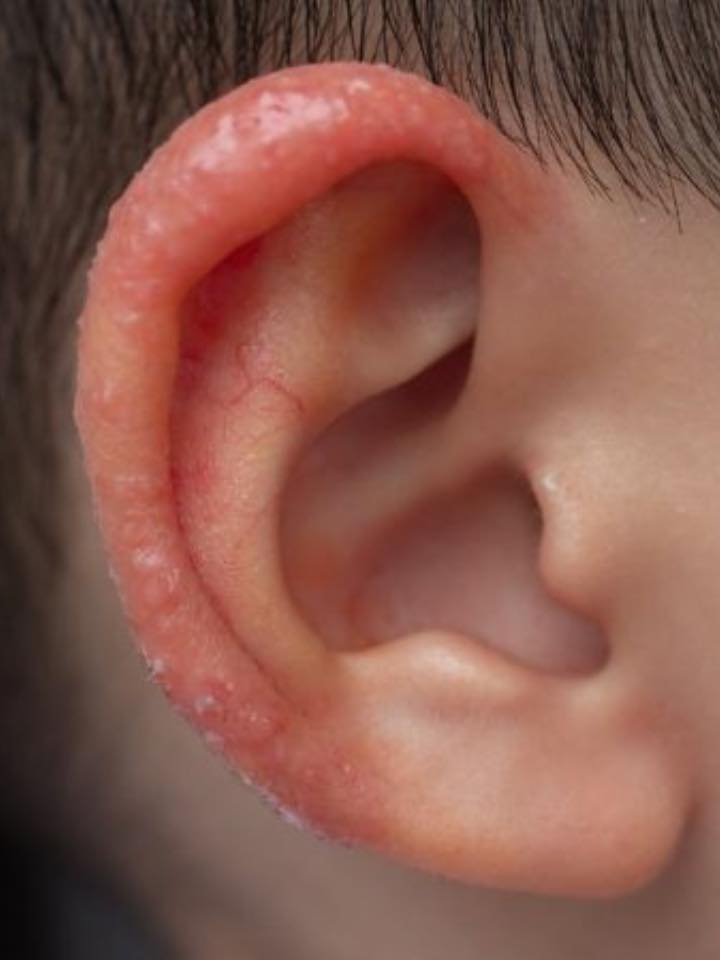
I noticed a strange patch of skin on my son’s ear this morning. His doctor appointment is still a week away — what should I do in the meantime?
When you first notice unusual skin on your child’s ear, the most important thing you can offer is steady calm. Children sense tension in an instant. The quieter and more composed you remain, the safer they feel. Begin by taking a gentle look at the area in bright, natural light. Observe the skin slowly and patiently. Look for redness, swelling, dryness, flaking, tiny bumps, or areas that seem crusted or irritated. Pay attention to whether the ear feels warm to the touch or if your child winces when you get close to the spot. These small details help you understand what might be happening and also give your doctor clearer information later.
If your child is scratching or rubbing the ear, speak softly and reassure them that you are going to help with the discomfort. Scratching can be almost impossible for a child to resist, yet it can turn a mild problem into something far more painful. Repeated rubbing can break the skin, invite bacteria into the area, and create an infection where none existed before. Gently guiding their hands away and offering a distraction can reduce the damage while you plan the next steps.
During this waiting period, the goal is simple care rather than complicated treatments. Keep the ear clean and dry. Use only lukewarm water and avoid strong soaps or fragranced products that can inflame delicate skin. Sometimes the mildest approach offers the most relief. You can apply a cool compress if the ear feels warm or irritated. This settles inflammation and brings immediate comfort. A bland, fragrance free moisturizer can soothe dryness and create a protective barrier. If the skin appears inflamed or your child reports itchiness, a short course of over the counter hydrocortisone used exactly as directed may help ease the symptoms until your appointment.
While you care for the ear, remain alert for warning signs that require timely attention. Redness that spreads beyond the original spot, swelling that becomes firm or tender, the presence of pus, foul odor, or increasing warmth are all signs of infection. If your child develops a fever, becomes unusually tired, or complains of strong pain, seek urgent care quickly. These symptoms suggest that the body is struggling with something more than simple irritation, and early treatment is always safer than waiting.
As you monitor the ear, take a few moments each day to record what you see. Note when symptoms appear, whether they change, and what seems to help or worsen the problem. Write down any possible triggers. These may include new soaps, shampoos, hats, earphones, swimming, cold wind, pollen, or even recent viral illnesses. This small act of documentation does two important things. First, it gives your doctor a clear picture of the issue, which can speed up diagnosis. Second, it reminds your child that you are paying attention and that their comfort matters to you.
Through all of this, the emotional environment you create is just as important as the physical care. When a parent approaches a strange or uncomfortable symptom with steady reassurance, the child feels protected rather than frightened. They learn that their body can change, become irritated, heal, and return to normal. They learn that uncertainty can be handled with patience and care. Most of all, they feel supported during a moment that might otherwise feel confusing or scary.
By observing closely, acting gently, and preparing well for the doctor’s visit, you guide your child through the experience with confidence. In the end, they feel safe, seen, and comforted, which is often the most powerful medicine you can give.