“The Meaning Behind the Three Dots — and Why It Sparks So Much Fear”
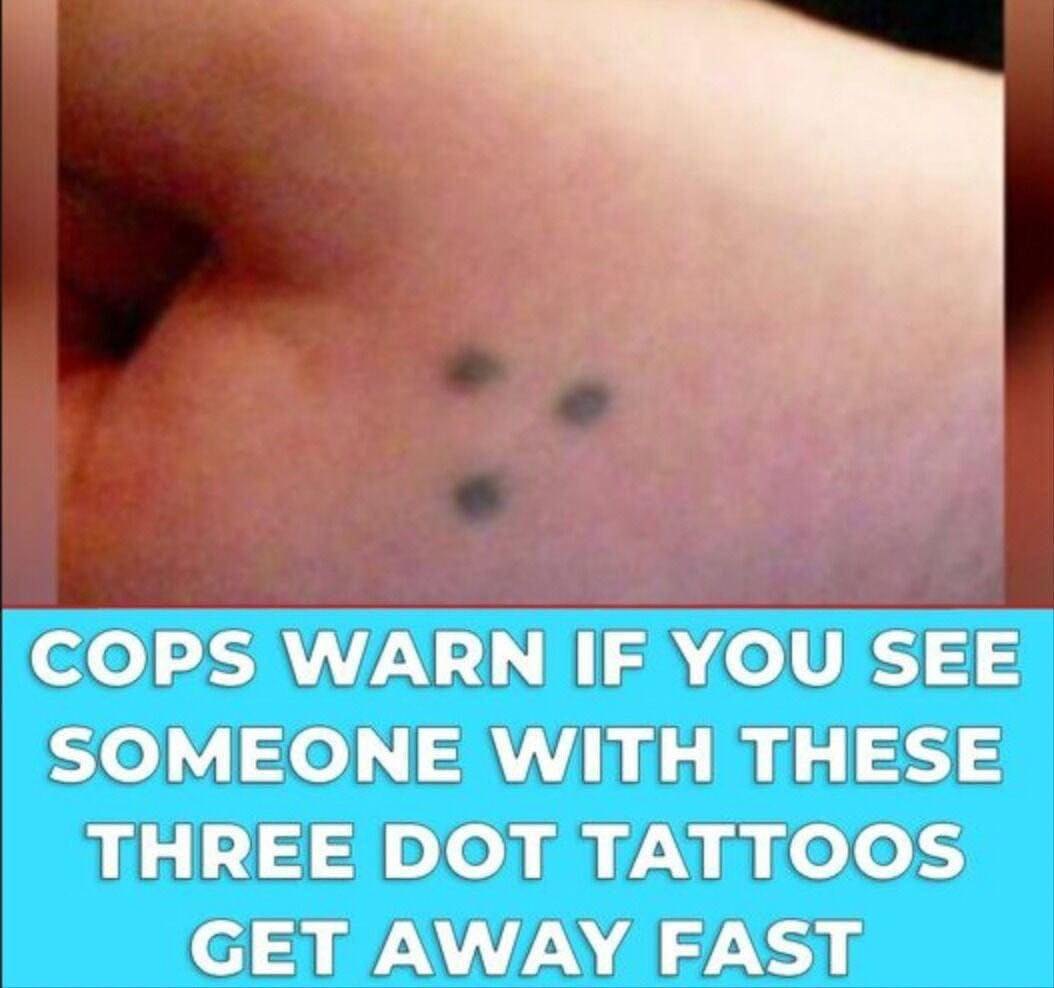
For years, a small tattoo made of three dots arranged in a triangle has circulated through rumors, warnings, and viral posts online. Many people have heard it described as a sign of danger or a marker of criminal activity. The tattoo, often called mi vida loca, which translates to my crazy life, does have historical ties to certain groups, yet its meaning is more layered than most internet claims suggest.
Traditionally, the symbol appeared in some gang cultures or among individuals who had lived through difficult or chaotic experiences. It sometimes expressed hardship or rebellion, or a sense of stepping outside conventional rules. Even then, interpretations varied from person to person. Importantly, the tattoo was never a universal or reliable marker of violence or organized criminal involvement. Many people within those environments wore it as a personal emblem rather than a statement about illegal activity.
Over time, the design moved far beyond its earlier settings. People from many walks of life adopted it for reasons that had nothing to do with gangs. Some appreciated the minimalist geometry. Others felt the three dots represented important events or personal turning points. The simple shape could also symbolize faith, family, or friendship. Quite a few people received the tattoo because they liked how it looked, unaware of any deeper or older associations.
Despite dramatic social media claims that the symbol always signals danger, real world perspectives differ. Law enforcement professionals who focus on gang identification rely on context. Clothing, behavior, documented affiliations, and additional symbols paint a clearer picture. A single tattoo seldom tells a full story, and officers do not treat every three dot design as a warning sign.
This is why it is important to avoid snap judgments about someone based solely on a small tattoo. Symbols change meaning as they move across cultures and generations. What once represented one idea in a specific community may feel entirely different to someone today. A mark that once hinted at rebellion can evolve into a symbol of resilience or creativity.
Awareness still has value. Knowing that the tattoo has a varied history encourages thoughtful observation rather than fear or stereotyping. When trying to understand any symbol, the surrounding context matters. Where the tattoo is placed, what other imagery appears with it, and what the person says it means often reveal far more than the design alone.
In daily life, the simplest approach remains the most useful. Trust your instincts, stay attentive to your surroundings, and remember that appearances are only one piece of a larger picture. Most people choose tattoos for reasons that are personal and meaningful, not to send coded warnings.
Ultimately, tattoos reflect individual identity. A pattern of three small dots may carry memories of struggle, expressions of independence, or nothing more than an appreciation of clean, understated design. Like people themselves, tattoos often hold deeper stories than we first imagine.