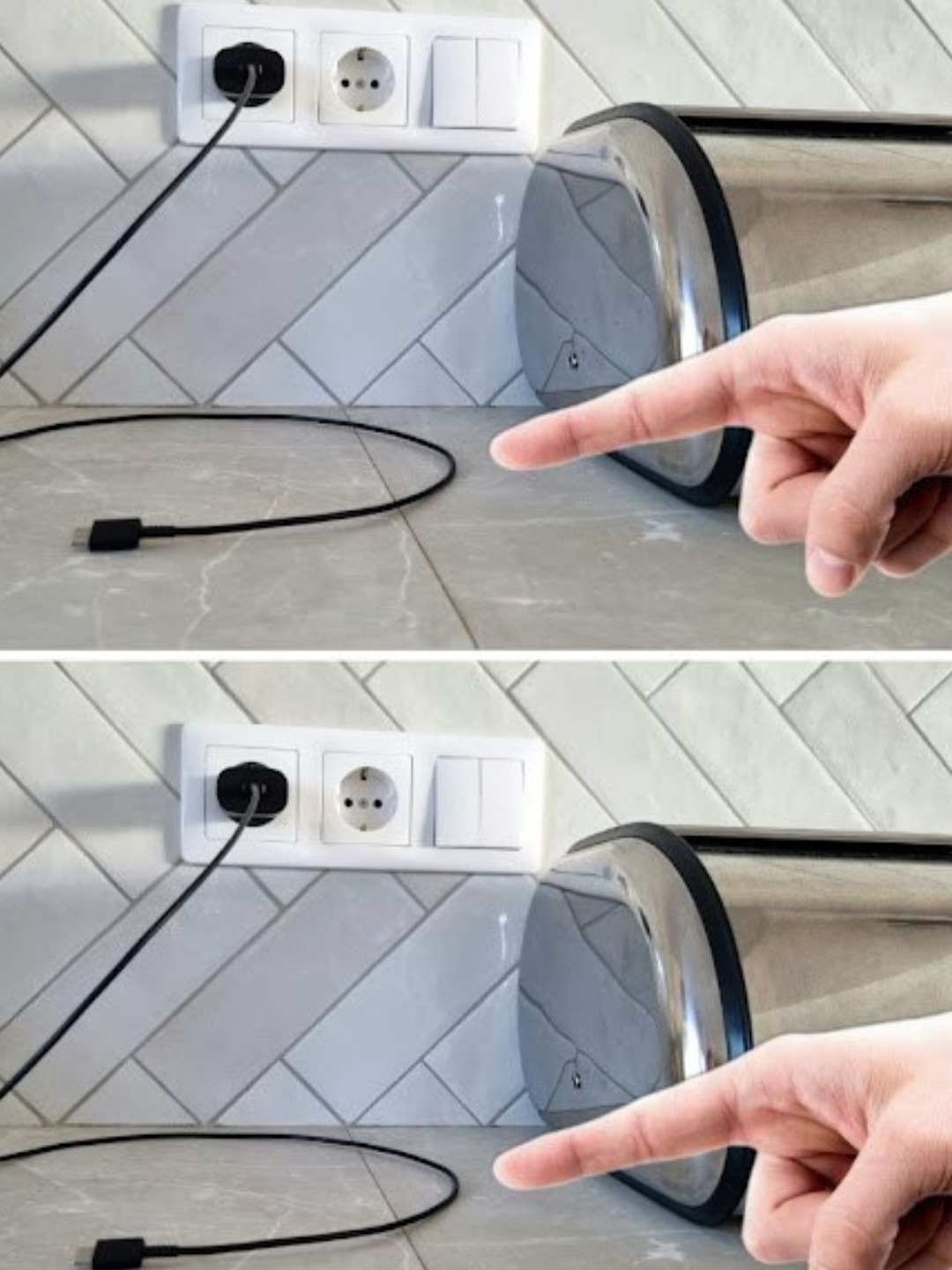
🔌 NEVER Leave a Charger in an Outlet Without Your Phone: I’ll Reveal the 3 Main Reasons (It’s Riskier Than You Think)
🔍 The Hidden Truth: Chargers Are Never “Off”
Even when a charger is not connected to a phone or device, it usually remains in standby mode, quietly pulling a small but continuous flow of electricity. This invisible drain is known as phantom load or vampire power, and it exists in almost every modern home.
💡 Fact: A single phone charger typically draws between 0.1 and 0.5 watts while idle. On its own that seems insignificant, but when you multiply that number by every charger, television, game console, speaker, router, and adapter in your home, the waste becomes very real over the course of a year.
⚠️ The Three Main Reasons You Should Never Leave a Charger Plugged In
- It Wastes Electricity and Money
Chargers draw power twenty four hours a day even when doing absolutely nothing. One charger may only waste about ten to fifty cents of electricity per year. However, the average household easily contains ten or more chargers, power bricks, and adapters. Together they can quietly cost five to fifteen dollars or more every year with no benefit at all.
💬 Real impact: In the United States, phantom power accounts for roughly ten percent of household energy use according to the Department of Energy.
✅ Fix: Unplug chargers when they are not in use, or connect multiple devices to a power strip with an on off switch so everything can be shut down at once.
- It Can Overheat and Damage the Charger
Even while idle, a charger’s internal components such as capacitors and transformers continue to generate heat. When this heat exposure continues day after day, it gradually weakens the materials inside the charger. Plastic becomes brittle or cracked, wiring degrades, and the overall lifespan of the charger is shortened.
🔥 In worst case scenarios, excessive heat can melt insulation, expose internal wires, or produce sparks, especially in low quality or already damaged chargers.
⚠️ Warning signs include warmth when nothing is charging, discoloration, buzzing or humming sounds, and a burnt or chemical smell.
✅ Fix: After charging, allow the unit to cool completely and then unplug it. Giving chargers regular rest significantly extends their life and lowers risk.
- It Increases Fire Risk
While fires caused by chargers are not extremely common, they do occur every year. In 2022, the Consumer Product Safety Commission reported hundreds of fires linked to plugged in phone chargers. Most incidents involved counterfeit or uncertified chargers, overloaded outlets, or dust buildup around heating elements.
🔥 The chain of events is simple. Poor materials overheat, an internal short circuit forms, and sparks ignite nearby dust, fabric, or paper.
🚨 High risk zones include under pillows, under beds, behind furniture, and in dusty or humid locations such as bathrooms.
✅ Fix: Use only UL certified chargers, keep vents and outlets clear, avoid placing chargers near flammable materials, and unplug them when not in use.
💡 Safer Charging Habits: Five Simple Rules
Unplug after charging to stop energy waste and reduce heat buildup.
Use only quality chargers from reputable brands.
Never charge under pillows or blankets where heat becomes trapped.
Replace frayed, hot, or damaged chargers immediately.
Plug important devices into surge protectors to guard against voltage spikes during storms.
❤️ Final Thought: Great Safety Starts With Small Choices
You do not need fear to protect your home. Sometimes all it takes is one extra second, one hand on the plug, and the decision to care. Real security is built from quiet habits repeated every day.
When you walk past that outlet tonight and see it empty, you will know you did more than unplug a charger. You prevented a problem.