🚨 Why This Matters: What the Crystals Reveal
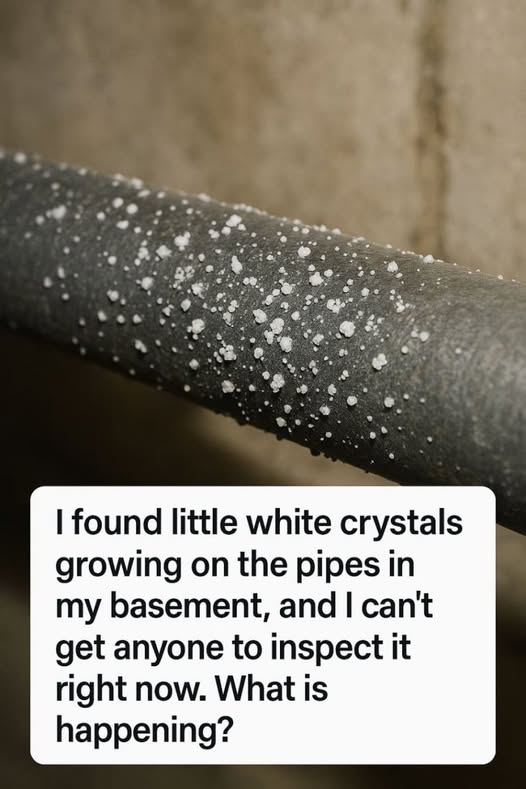
When you see white crystalline buildup on pipes or basement walls, you are looking at more than just a cosmetic issue. These deposits, commonly known as efflorescence, are physical evidence that water is moving through your home’s structure and leaving minerals behind. Understanding what they reveal can help you prevent serious damage before it becomes expensive or dangerous.
Crystals forming on metal pipes usually indicate condensation or small, slow leaks. As moisture repeatedly forms and evaporates, it carries minerals that eventually harden into visible crust. Over time, this moisture accelerates corrosion, weakening the pipe from the outside in.
When crystals appear on concrete walls near pipes, the cause is typically moisture wicking through the foundation. Concrete is porous, and groundwater can travel through it, carrying dissolved salts to the surface where they crystallize. If the buildup becomes heavy and begins flaking, it points to chronic water intrusion and requires urgent attention.
If these signs are ignored, the risks grow steadily. Corroded pipes can eventually leak or burst. High humidity creates ideal conditions for mold growth on walls, insulation, and stored items. Repeated moisture exposure can also lead to concrete spalling, where the surface of the foundation slowly crumbles and loses strength.
What You Can Do Right Now Safely and Effectively
The first step is cleaning the existing crystals. This is a temporary fix but important for monitoring. Wear gloves and eye protection. Scrub gently with a stiff brush and a solution of equal parts white vinegar and water. Rinse with clean water and dry thoroughly. Removing the deposits makes it easier to see if new crystals form and how quickly they return.
Next, focus on reducing basement humidity. Run a dehumidifier and aim to keep relative humidity below fifty percent. Improve airflow by opening vents, adding a fan, or cracking a window if outdoor humidity is low. Check for standing water and make sure gutters and downspouts direct rainwater away from your foundation.
You can also perform a basic pipe inspection safely. Look for dripping, damp spots, rust streaks, loose pipe joints, cracked insulation, and musty odors that may indicate hidden mold. Never poke, hammer, or remove pipe insulation, since this can worsen existing leaks and release contaminants.
Monitoring is essential. Take clear photos today and compare them in one or two weeks. Place paper towels near suspect areas overnight. If they are damp in the morning, you have active moisture that needs further attention.
What Not to Do
Do not ignore the problem. Efflorescence always means water movement. Do not paint over it, since this traps moisture inside walls and accelerates deterioration. Do not use bleach. Bleach does not stop mineral deposits and can worsen corrosion on metal surfaces.
When to Call a Professional
Even if waitlists are long, contact a plumber or home inspector immediately if you see green or blue crust on copper pipes, rust flakes or bubbling paint on metal pipes, wet spots that do not dry after twenty four hours, or musty smells and visible mold nearby. While waiting for an appointment, send photos to a professional. Many will offer a preliminary assessment that helps you prioritize next steps.
Final Thought
Those white crystals are not an emergency, but they are your home’s early warning system. By reducing humidity, monitoring closely, and addressing moisture at its source, you are actively protecting your foundation, your plumbing, and your long term investment. Most basement moisture issues are completely fixable, especially when they are caught early.