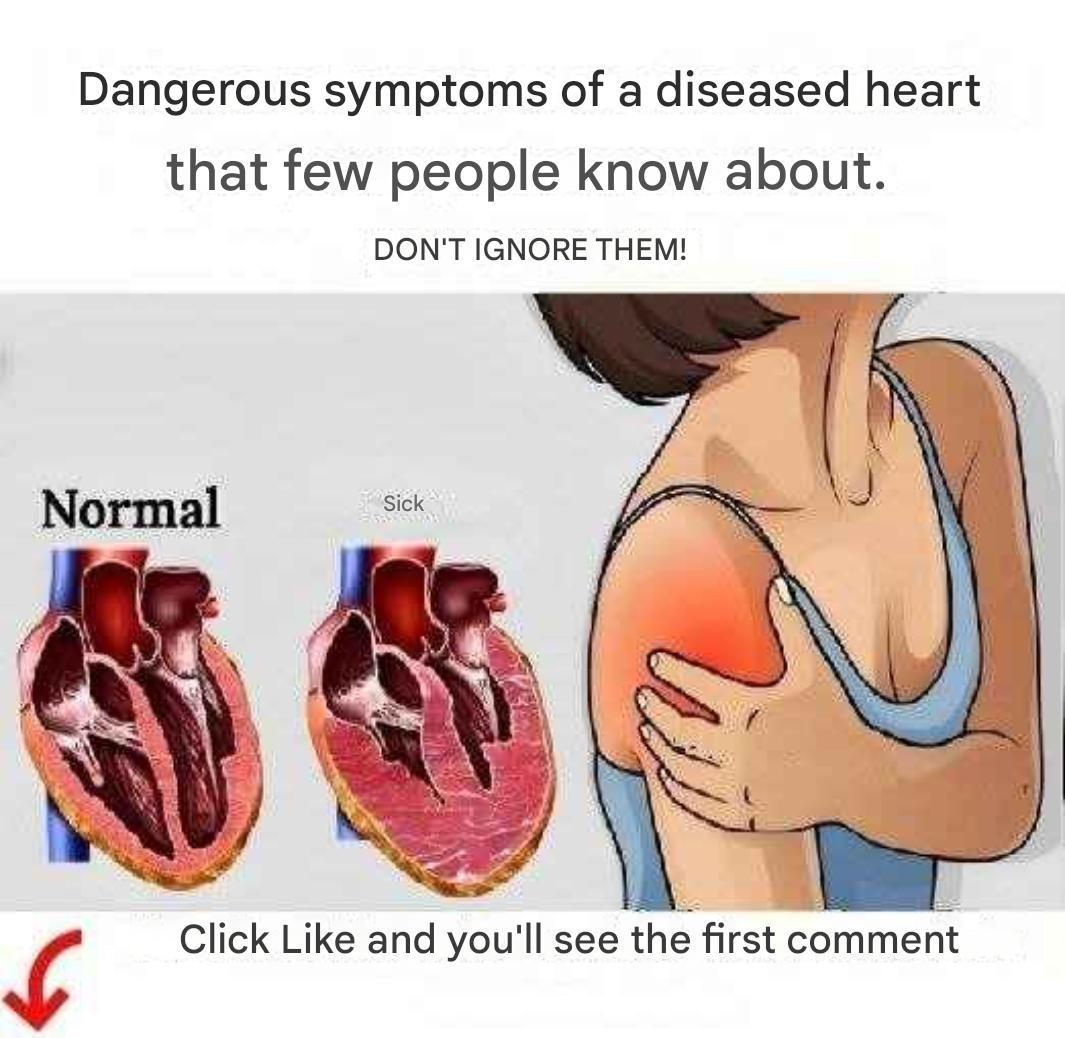
6 signs your body could give you weeks before a heart attack
Heart disease remains one of the leading causes of death worldwide.
What makes it especially dangerous is how easily the early warning signs are ignored, misunderstood, or blamed on stress, aging, or everyday fatigue. Many people believe that heart problems arrive suddenly, yet in most cases the body begins sending quiet signals long before a serious event such as a heart attack occurs. Learning to recognize these early messages can truly save lives, allowing people to seek medical care before irreversible damage takes place and before symptoms become overwhelming.
🌿 Six possible warning signs to pay close attention to
Unusual fatigue
Feeling deeply exhausted even after a full night of sleep, or becoming extremely tired after simple tasks like walking, cleaning, or climbing a few stairs, may signal that the heart is under strain. This kind of fatigue often feels different from normal tiredness and can appear without any clear explanation.
Difficulty breathing
Shortness of breath during normal activities, while resting, or when lying down can indicate that the heart is struggling to pump blood efficiently. Some people also experience waking up at night feeling unable to breathe comfortably. These changes should never be ignored.
Chest discomfort
Pressure, tightness, heaviness, burning, or mild pain in the chest that appears and disappears may be an early sign of heart trouble. Many people delay seeking help because the discomfort is not severe. However heart related sensations are not always dramatic and may come and go quietly.
Pain in other areas of the body
Discomfort in the arms, shoulders, back, neck, jaw, or upper stomach can sometimes be linked to heart problems. This type of pain may feel dull, aching, squeezing, or simply uncomfortable. Because it does not always stay in the chest, many people do not recognize it as a heart related symptom.
Dizziness or lightheadedness
Feeling faint, unsteady, confused, or as though you might pass out may be caused by reduced blood flow to the brain. This can happen when the heart is not pumping strongly enough to meet the body’s needs and should be evaluated promptly.
Swelling in the feet, ankles, or legs
Fluid buildup in these areas may be a sign that the heart is having difficulty circulating blood effectively. Swelling that persists, increases, or appears without injury deserves medical attention.
💡 Why these signs matter
These symptoms are often subtle and easy to dismiss.
They can appear days, weeks, or even months before a heart attack or serious cardiac event.
Recognizing them early allows time for testing, treatment, and lifestyle changes that can prevent further damage and greatly improve long term health.
🌿 Helpful tips for everyday life
Pay close attention to changes in your body and do not ignore persistent or unusual symptoms.
Eat a balanced diet rich in fruits, vegetables, whole grains, healthy fats, and lean proteins.
Stay physically active with movement that fits your age and abilities.
Manage stress through relaxation, breathing exercises, hobbies, and meaningful connection with others.
Get enough high quality sleep each night.
Schedule regular medical checkups, especially if you have risk factors such as high blood pressure, diabetes, smoking history, high cholesterol, excess weight, or a family history of heart disease.
🌿 Now we would love to hear from you
Have you or someone you know experienced any of these warning signs
What steps do you take to protect your heart health
Do you believe people pay enough attention to these early signals
📢 Please help spread this knowledge
Share this post with your family and friends so more people can learn about the early warning signs of heart problems.
Like this post if you believe heart health is one of the most important parts of overall wellbeing.
Leave a comment and tell us about your own experiences or thoughts on heart health and prevention.
Follow our page for more long, practical, and easy to understand posts about health, home tips, and natural wellness.
Your heart works for you every moment of your life. Treating it with care, respect, and attention is one of the most powerful choices you can make for your future health and happiness.