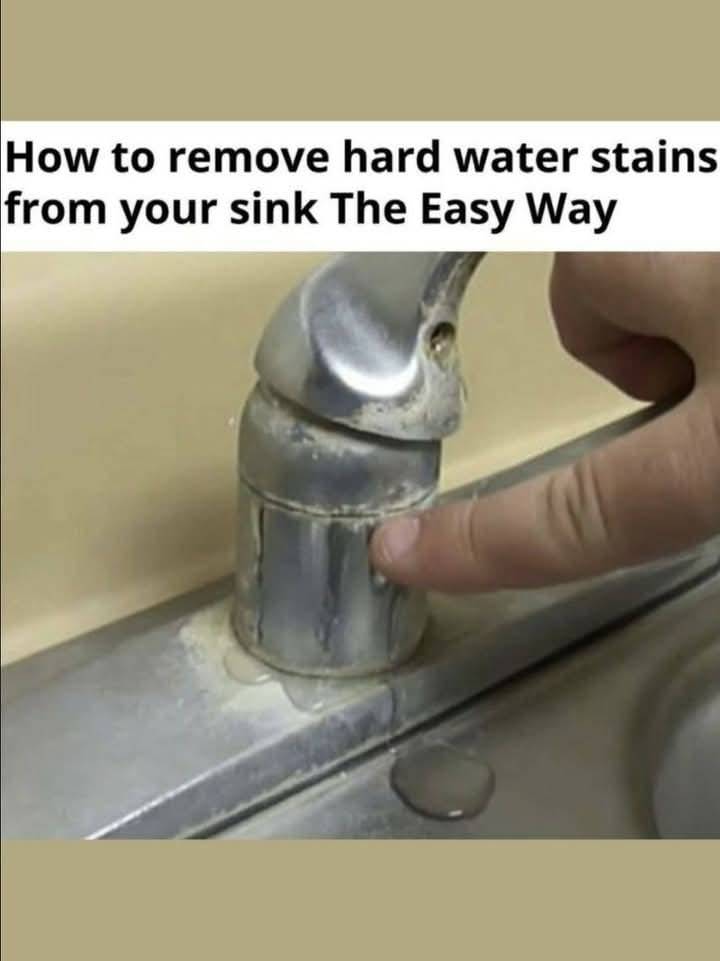
You wipe the sink.
You polish the faucet.
You step back…
And still — there they are.
White, chalky spots.
Cloudy film.
Stubborn rings around the drain.
These are hard water stains — mineral deposits left behind when water evaporates, rich in calcium, magnesium, and lime.
And if you don’t have a water softener, you’re not alone.
Millions of homes deal with this — and while the stains aren’t harmful, they make even the cleanest bathroom or kitchen look dull, dingy, and outdated.
But here’s the good news:
You don’t need harsh chemicals.
You don’t need expensive cleaners.
You don’t need to scrub for hours.
You just need distilled white vinegar — nature’s lime dissolver.
Let’s dive into the simple, foolproof method (inspired by YouTuber Crouton Crackerjacks) that brings your fixtures back to life — fast.

Why Vinegar Works Like Magic
Vinegar is a weak acid — but don’t let that fool you.
Its acetic acid content (around 5%) breaks down mineral deposits like calcium carbonate and magnesium hydroxide — the main culprits behind hard water stains.

It’s:
Non-toxic
Cheap
Biodegradable
Already in your pantry
And when used the right way, it’s incredibly powerful.
 What You’ll Need
Distilled white vinegar
The star of the show — do not use apple cider or balsamic
An old cloth, rag, or paper towel
To trap the vinegar against the stain
Green/yellow scrub sponge
The green side gently scrubs without scratching
Optional: Baking soda
For extra scrub power on tough spots
Pro Tip: Use distilled vinegar — it’s purer and more effective than filtered.
 Step-by-Step: How to Remove Hard Water Stains
Step 1: Soak the Stain
Pour distilled white vinegar onto a clean cloth or paper towel
Press the soaked cloth directly onto the stained area — faucet, sink rim, showerhead, or tile grout
Let it sit for 30–60 minutes
For light stains: 30 mins
For heavy buildup: 60 mins or more