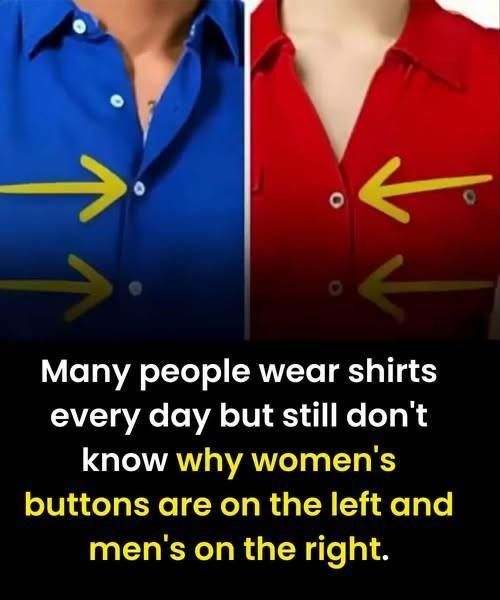
Why Women’s Shirts Button Differently from Men’s: A History Sewn Into Everyday Clothing
Most of us slip into a shirt without giving much thought to how it buttons. Yet that small detail, whether buttons fall on the right or the left, carries a long and surprisingly meaningful history. Women’s shirts typically close left over right, while men’s are designed to close right over left. This everyday difference reaches back hundreds of years and reflects social customs, class distinctions, and practical choices that once shaped daily life.
For older adults who have watched fashion evolve across decades, understanding the roots of this design can feel like uncovering a small but fascinating piece of cultural history.
How Women’s Clothing Took Shape
The tradition of women’s shirts buttoning on the left began to take form during the 18th and 19th centuries, an era when clothing could be elaborate and layered. Women of higher social standing rarely dressed alone. Instead, they relied on maids to help fasten hooks, ties, and tiny buttons that were often part of more intricate garments.
Because most people were right-handed, it made sense for a maid to stand facing the person she was dressing. Buttons placed on the left side of the garment made the fastening process quicker and more comfortable for the helper, not necessarily the wearer. This simple bit of convenience gradually became a widespread standard.
Over time, left-side buttons became more than a practical decision. They quietly signaled refinement and privilege, suggesting that a woman belonged to a household where assistance was available. Even as fashion changed and the need for staff diminished, the design stayed. What began as a functional choice became an enduring symbol of elegance, passed from one generation of clothing design to the next.
Why Men’s Shirts Button the Opposite Way
Men’s fashion followed a very different path. Centuries ago, men often carried tools or weapons, such as swords or early firearms, which were typically worn on the left side. This placement allowed a right-handed person to reach for the weapon quickly. Because that movement required speed and freedom, it was helpful for the right hand to be able to open the garment easily.
Placing buttons on the right side made it simpler for men to unfasten their clothing in urgent situations, especially in moments that required swift movement or defense. What originated as a practical necessity eventually became the accepted standard for men’s clothing of all kinds.