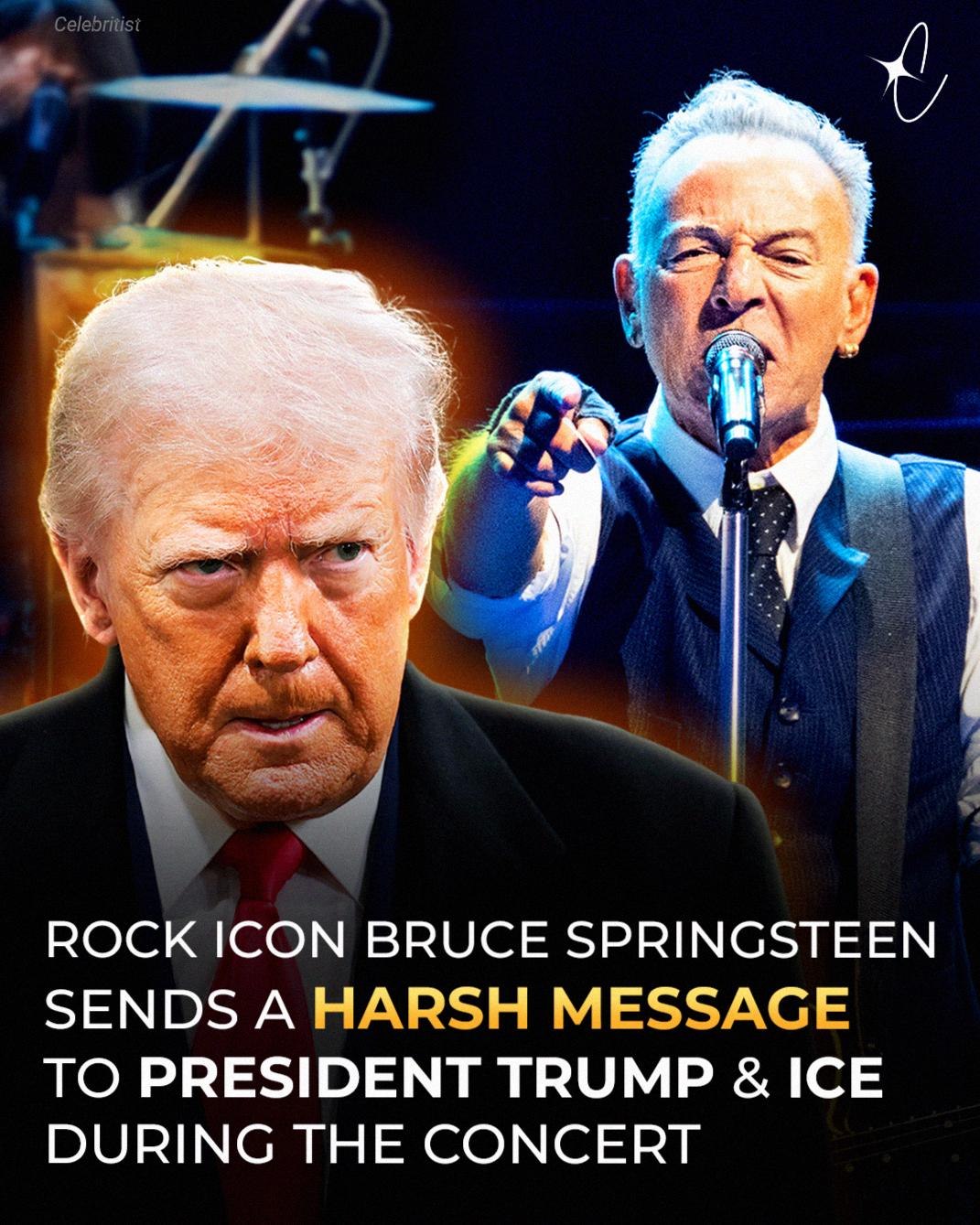
Bruce Springsteen Makes Comments about ICE during New Jersey Performance
Speaking directly to the audience, Bruce Springsteen criticized the militarized federal response in Minneapolis following a deadly Immigration and Customs Enforcement operation. He expressed deep concern over the presence of armed federal agents in American cities and framed the situation as a troubling example of government overreach. According to Springsteen, the tactics used against civilians represented a dangerous departure from the principles of freedom and accountability that define the nation.
He urged fans to actively oppose what he called oppressive measures being used against American citizens. In doing so, he echoed statements made by Minneapolis Mayor Jacob Frey, who had publicly called for ICE agents to leave the city after tensions escalated. Springsteen’s message was clear and emotional, emphasizing that dissent and protest should never be met with deadly force.
Before launching into the song, Springsteen dedicated the performance to both the audience in attendance and to Renee Nicole Good, the woman who lost her life during the federal operation. The dedication drew a powerful response, with the crowd erupting in applause. For many in attendance, the moment reinforced Springsteen’s long reputation as an artist willing to stand alongside ordinary people during moments of national crisis.
The remarks came amid growing unease across the country. Reports surfaced shortly afterward that the Pentagon had placed National Guard units on standby in anticipation of potential civil unrest related to protests over federal enforcement actions. While officials emphasized that the move was precautionary, it added to the sense of heightened tension surrounding the incident and intensified public debate.
Springsteen’s comments were not an isolated event but part of his long history of political engagement. Over the years, he has repeatedly criticized Donald Trump, openly opposed his policies, and endorsed Democratic candidates in national and local elections. Springsteen has frequently described Trump’s leadership style as a threat to civil rights, democratic norms, and social cohesion. His Winterfest speech continued this pattern, placing him once again at the center of America’s political and cultural divide.
The White House responded through Press Secretary Abigail Jackson, who defended ICE operations and stressed that federal agents have the right to protect themselves while carrying out their duties. While Trump did not personally address Springsteen’s comments, the administration’s response underscored its firm stance on immigration enforcement and law and order. Supporters of the administration argued that federal officers face increasing risks, while critics accused the government of escalating conflicts unnecessarily.
The clash amplified broader conversations about the balance between federal authority and local governance, as well as the limits of protest and enforcement in a democratic society. It also reignited debate over the role of artists in political discourse. Supporters praised Springsteen for using his platform to speak out, while detractors argued that entertainers should avoid political commentary.
Ultimately, the incident highlighted the growing polarization within the country. As prominent cultural figures like Springsteen continue to challenge federal policies from the stage, and the administration maintains a hard line on immigration and enforcement, the divide over America’s political direction appears deeper than ever.