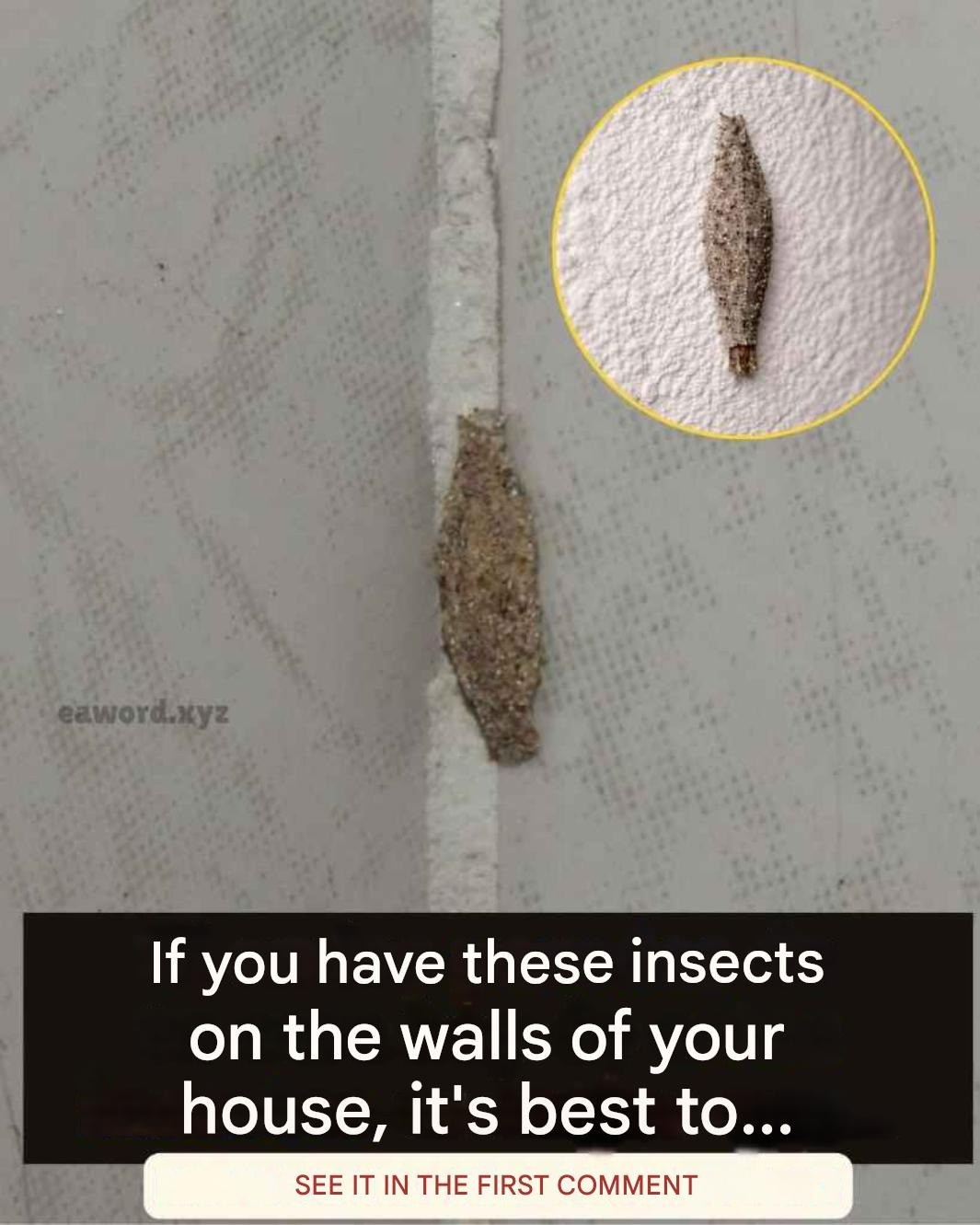
I didn’t know what this was
Many people have come across this type of capsule in their homes without really knowing what it is; they are quite tiny, inconspicuous, and hardly move, and they usually appear attached to walls, ceilings, or little-used corners of the home.
At first glance, they might be mistaken for accumulated dust or small bits of dirt, but the little-known truth is that they belong to a very unique insect: the case-bearing moth. Although their presence might give the impression that the space is unclean, their behavior is more curious than dangerous.
The most distinctive feature of this species is observed during its larval stage. Unlike other house moths, its larva moves around carrying a kind of case or sheath, which serves a dual purpose: protection and a food source.
This case is not something foreign that they find, but a structure that the larva itself builds using materials it finds in the environment.
Its production may contain traces of hair, textile fibers, plant remains, threads of clothing, grains of sand, dust and tiny fragments of animal or plant origin.
That is why the appearance of the case varies depending on the location: it can be lighter or darker, rough or smooth, blending in with the surface where it is located and easily going unnoticed.
These small cases are usually found in areas that they identify as protected in the home, such as corners, behind furniture, in high ceilings, or in areas where cleaning is not done frequently.
There, the larva moves slowly, barely showing part of its body to move and immediately retreating into its refuge. This behavior has sparked the interest of experts and observers, as it represents an extremely effective survival strategy.
The life cycle of the case-bearing moth begins when the adult female lays between 35 and 50 eggs near food sources.
Approximately one week later, the eggs hatch and the larvae emerge, almost immediately beginning to build their characteristic case. From that moment on, their main objective will be to feed and grow until they complete their development.
Their diet consists of materials containing keratin, a protein found in animal products. Therefore, they can feed on wool, feathers, fur, insect remains, paper, and even organic particles present in household dust. Their consumption is quite small, so they rarely cause harm.
Unlike other moths associated with clothing or food, the case-bearing moth is not considered a pest. Its presence does not imply a dangerous infestation nor does it represent a risk to human health. It generally appears in environments where dust, fibers, and organic debris accumulate, something common in any home.
For this reason, controlling it does not require the use of chemicals or drastic measures. Thorough and consistent cleaning is usually enough to reduce its presence.