Why Placing a Glass Upside Down in the Sink Before Vacation Could Save You Trouble
When planning a vacation, most people remember to check off the obvious items on their pre-trip checklist: unplugging small appliances, turning off unnecessary electronics.
Locking doors and windows, putting valuables in a safe spot, and sometimes even shutting off the water supply. However, one area of the home that is often overlooked is the sink.
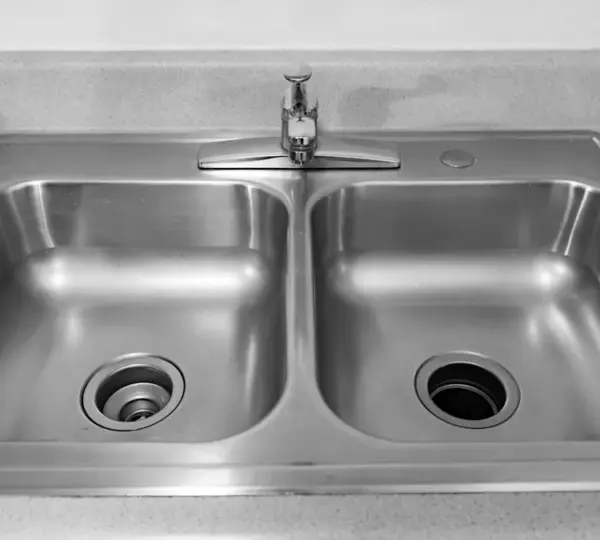
Both in the kitchen and the bathroom. At first glance, this might seem like a minor detail, but ignoring your sinks before leaving home can lead to a host of problems: musty odors, moisture buildup, and even small insect infestations.
In this guide, we’ll explore why sinks matter when your home is empty, the risks associated with neglecting them, and practical, inexpensive ways to keep them clean, fresh, and pest-free while you’re away.
By following these steps, you’ll return to a home that smells pleasant, is hygienically safe, and avoids unwelcome surprises.
Why Sinks Become a Problem When the House is Empty
Even though it might seem counterintuitive, a sink that isn’t used for a week or more can become a breeding ground for minor nuisances or odors. The reasons are primarily connected to the plumbing system and the natural movement of air and water within your home.
1. Plumbing Systems Dry Out
Most sinks are connected to a series of U-shaped traps known as P-traps, which are designed to hold a small amount of water at all times. This water acts as a barrier to prevent sewer gases from entering your home.
Sewer gases are produced naturally by bacteria breaking down waste in the plumbing system. Normally, the water in the trap keeps these gases contained, but if a sink goes unused for days or weeks, the water can evaporate.
Without this water barrier, gases may escape into your kitchen or bathroom, causing unpleasant smells and potentially triggering headaches or irritation if exposure is prolonged.
2. Damp, Stagnant Conditions Attract Pests
Sinks that aren’t used can also create an environment that attracts pests. Moisture in drains, combined with leftover food particles in kitchen sinks or soap residue in bathroom sinks, can serve as a food source or habitat for insects. Common culprits include:
Gnats and fruit flies: Tiny flies that thrive in damp organic matter.
Ants: Some species are drawn to sugary residues in drains.
Cockroaches: These pests seek out moisture and shelter, often entering through drains.
Even if you think your home is pest-free, long periods of vacancy make it easier for small insects to enter unnoticed.
3. Odor Accumulation
When a sink sits idle, bacteria in the drain and the P-trap can begin to produce sulfur-like odors or a musty, damp smell. In the kitchen, leftover grease or food particles in the drain exacerbate the issue.
In bathrooms, soap scum and skin oils can contribute to a sour or stale scent. By the time you return from vacation, your home might greet you with something far less pleasant than the memories of your trip.
A Simple, Inexpensive Trick to Prevent Odors and Pests
Many people rely on traditional sink stoppers or rubber plugs to seal drains before leaving. While these can be effective in the short term, they come with limitations:
Stoppers can shift or fall off, leaving the drain exposed.
Rubber can warp or lose elasticity, reducing the seal over time.
Suction-based devices sometimes fail in older sinks or uneven surfaces.
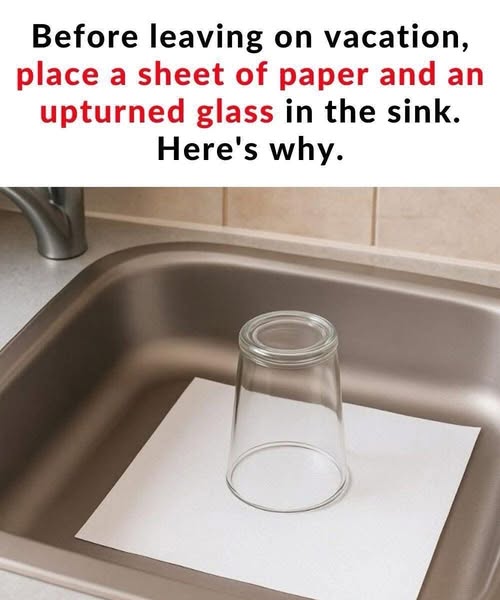
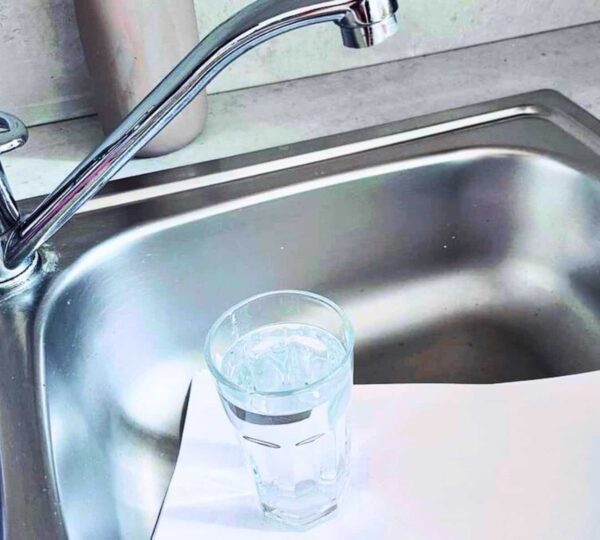
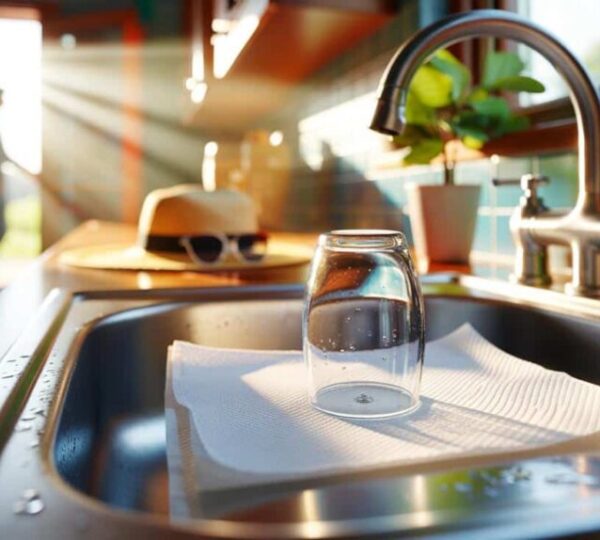
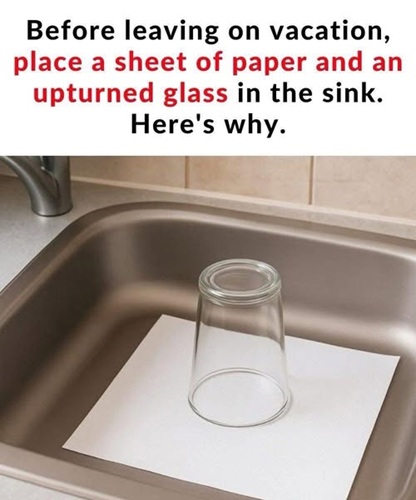
A surprisingly simple solution that requires no special equipment involves covering the drain with a paper towel and placing an upside-down glass over it. This creates a temporary physical barrier that helps block:
Sewer gases
Insects attempting to enter from the drain
Dust and other small debris
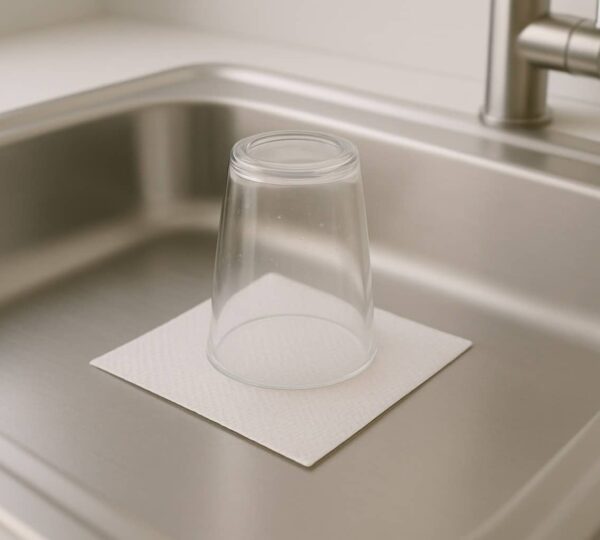
This method is particularly reliable for longer absences, even up to several weeks, because the glass is heavy enough to stay in place and doesn’t rely on suction or a perfect fit.
Step-by-Step Guide to Preparing Your Sink
Taking a few extra minutes before your trip can save you a lot of inconvenience later. Here’s how to properly prep your sinks:
1. Clean the Sink Thoroughly
Before leaving, ensure the sink is completely clean:
Remove any dishes, sponges, or debris.
Scrub the sink with a mild detergent and warm water. Pay special attention to the drain area, where food particles or soap residue accumulate.
Rinse thoroughly to remove all soap.
This prevents leftover organic material from decomposing in your absence, which can contribute to odors or attract pests.
2. Break Down Buildup with Hot White Vinegar
Pouring hot white vinegar down the drain helps dissolve minor clogs, soap scum, and grease:
Heat about a cup of white vinegar until it is hot but not boiling.
Pour it slowly down the drain.
Allow it to sit for 1–2 hours, letting it break down any residual buildup.
Vinegar is non-toxic, inexpensive, and safe for most types of plumbing, making it an ideal choice for regular drain maintenance.
3. Rinse with Warm Water
After the vinegar has sat for a few hours, flush the drain with warm water. This ensures that any loosened debris is washed away, leaving the drain clean and clear. A properly rinsed drain reduces the likelihood of stagnant odors developing while you’re away.
4. Freshen the Sink with Lemon
Rubbing a lemon wedge around the drain provides both cleaning and deodorizing effects:
Lemon juice contains natural acids that help remove minor mineral deposits.
The natural citrus scent acts as a mild deodorizer, leaving a fresh aroma.
Even though this might seem like a small step, it contributes significantly to the freshness of your home upon return.
5. Dry the Sink Completely
Before covering the drain, dry the sink thoroughly with a clean towel. A dry surface ensures:
The paper towel will not stick to wet surfaces.
Moisture does not accumulate underneath the glass, which could encourage mold or mildew.
6. Place a Paper Towel Over the Drain
Fold a paper towel into a size that fully covers the drain opening. This creates an initial barrier against:
Sewer gases
Small insects
Dust or debris
Make sure the paper towel lies flat and completely seals the drain.
7. Cover with an Upside-Down Glass
Select a glass heavy enough to stay in place, and invert it over the paper towel. The glass should:
Fully cover the paper towel and drain area
Sit securely without wobbling
Avoid tipping over if accidentally bumped
This final step ensures that your drain is physically sealed, preventing odors and insects from entering while you’re away.
Extra Tips for Vacation Preparation
In addition to prepping your sinks, consider these supplementary steps to maintain a fresh home:
Run Water Briefly Before Leaving: Running each faucet for a few seconds ensures that P-traps are filled.
Check Garbage Disposal: If you have one, run it briefly with water to flush any residual food particles.
Drain Bathroom Drains: Bathtubs and shower drains can be treated the same way, especially if they are seldom used.
Maintain Ventilation: Ensure the home is ventilated properly, or leave a ceiling fan running on low to reduce stagnant air.
Avoid Leaving Wet Towels or Sponges: These can foster mold and odor.
Use a Small Amount of Baking Soda: Sprinkling baking soda in kitchen drains can neutralize odors naturally.
By combining these strategies with the paper towel and glass method, you create a comprehensive defense against odors, moisture, and pests while your home is unoccupied.
Why This Works
The paper towel and glass method works for several reasons:
Physical Barrier: Prevents gases, insects, and debris from escaping the drain.
Low Maintenance: Unlike stoppers that rely on perfect fit or suction, the glass is stable and effective even in older sinks.
Affordable: Requires items most households already have—no extra purchases needed.
Environmentally Friendly: Uses natural cleaning agents like vinegar and lemon instead of harsh chemicals.
This technique is ideal for both short vacations of a few days and long-term absences of several weeks.
Common Questions
Q: Can this method damage my sink?
A: No. Paper towels and glasses are non-invasive and safe for all types of sinks.
Q: How long can I leave the glass in place?
A: The method is effective for several weeks. Check periodically if possible, but for most vacation periods, it will hold up fine.
Q: Can I use plastic cups instead of glass?
A: Yes, but heavier glasses tend to stay in place better and are less likely to tip over if accidentally bumped.
Q: Do I need to use lemon and vinegar every time?
A: Ideally, yes. These natural agents keep your drains clean, fresh, and free of buildup. However, if you regularly clean your drains, occasional use may suffice.
Conclusion
Preparing your sinks before leaving for vacation might seem like a small chore, but it has a significant impact on your home environment.
By taking the time to clean your sinks, pour vinegar, freshen with lemon, dry thoroughly, and cover drains with a paper towel and glass, you:
Prevent unpleasant odors from forming
Reduce the risk of pest infestations
Ensure a clean, fresh-smelling home upon your return
Avoid potential plumbing issues caused by stagnant water
In essence, this simple routine transforms your vacation return from a stressful, odor-laden experience into a peaceful and pleasant homecoming. Your sink, often overlooked, plays a vital role in maintaining the hygiene and comfort of your living space.
So next time you pack your bags, don’t forget your sink. It’s one small step that makes a big difference—and ensures that your home is ready to welcome you back, fresh, clean, and worry-free.