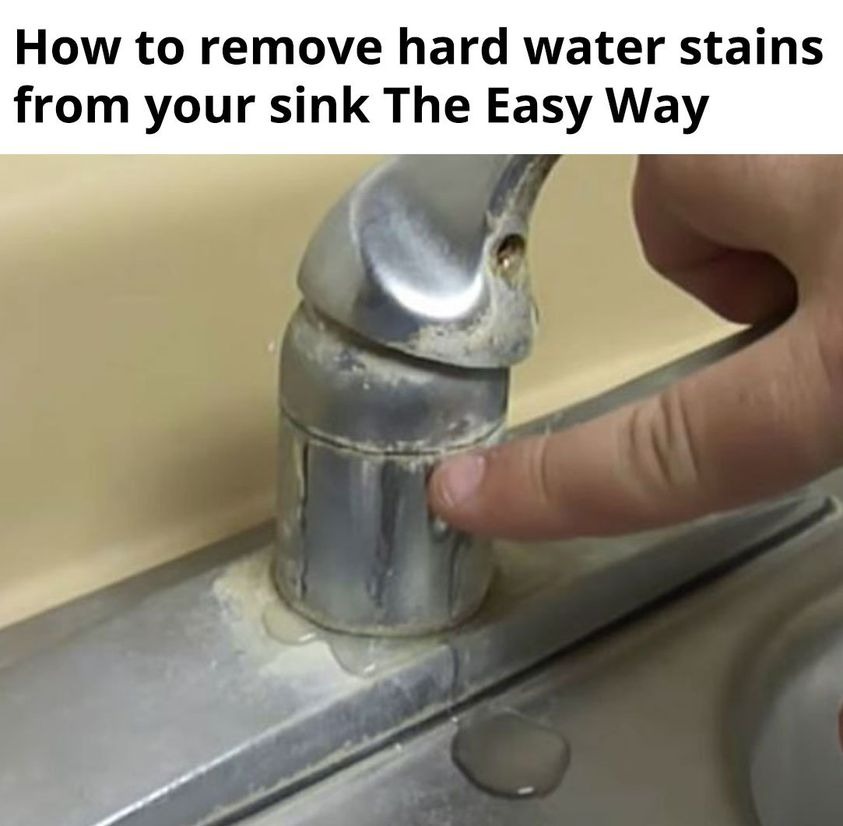
How to Clean Hard Water Stains From a Sink or Faucet — Fast, Easy, and Chemical-Free!
Step-by-Step Instructions
1. Soak the Stain
For faucets: Soak a cloth or paper towel in vinegar, then wrap it around the stained area. Let sit 15–30 minutes.
For sinks: Pour vinegar directly onto stains or soak a rag and lay it over the affected area.
✨ Stubborn buildup? Use a plastic bag filled with vinegar, secured around the faucet with a rubber band—let it soak for 30+ minutes.
2. Scrub Gently
Use the yellow (soft) side of your sponge for most areas.
For thick limescale on aerators or base plates, use the green (scrubby) side lightly—never on brushed finishes!
Wipe in the direction of the metal grain (especially on stainless steel).
3. Rinse & Buff Dry
Rinse thoroughly with water.
Buff dry with a clean microfiber cloth to prevent new water spots.
⚠️ Never use: Steel wool, bleach, or abrasive cleaners—they scratch surfaces and worsen staining long-term.
Pro Tips for Different Fixtures
Chrome faucets: Vinegar + soft cloth = perfect shine. Avoid prolonged soaking (can dull finish over time).
Stainless steel sinks: Always wipe with the grain. Follow up with a drop of olive oil on a cloth for extra luster.
Porcelain sinks: Vinegar removes rings without scratching.
Aerators: Unscrew and soak in vinegar overnight to clear clogs and restore flow.
Prevent Future Buildup
Wipe fixtures dry after each use—water spots form when droplets evaporate.
Weekly maintenance: Spray with vinegar, let sit 5 minutes, then rinse.
Install a water softener if hard water is severe (long-term solution).
When Vinegar Isn’t Enough
For extreme limescale (common in well water areas), try:
Citric acid solution (1 tbsp powder + 1 cup hot water)
Commercial lime remover (like CLR)—but always spot-test first!
The Bottom Line
You don’t need expensive cleaners or back-breaking scrubbing to banish hard water stains. Distilled vinegar does the heavy lifting while you step away—leaving your sink and faucet gleaming like new.
So grab that bottle, wrap that rag, and watch mineral magic happen. Because a sparkling kitchen starts with clean fixtures—and smart, simple solutions.
“The best cleaners aren’t the strongest—they’re the smartest.”
Tried this hack? Did it work on your faucet? Share your before-and-after below—we’re all about clean homes and easy wins! 🧼✨