The Reason You Should Always Place a Coin in Your Freezer
Life is unpredictable, and household routines can be disrupted without warning. Power outages, natural disasters, severe weather, or even routine electrical maintenance that slips your mind can interrupt the freezing process in your home. When this happens, frozen food may partially or fully thaw before freezing again. This situation poses a serious health risk, particularly for meat, seafood, and dairy products, because bacteria can multiply rapidly once food enters unsafe temperatures. Unfortunately, after the power comes back on, it is often impossible to tell whether food has thawed and refrozen just by looking at it. This is where the coin in a cup method becomes surprisingly useful.
Imagine you are heading out of town for a weekend or even a longer vacation. If everything runs smoothly and your freezer stays powered the entire time, your food should be safe when you return. The problem arises if there is a power outage or a freezer malfunction while you are gone. Your frozen food may thaw completely and then refreeze once electricity is restored. When you open the freezer, everything may look normal, but the damage has already been done. Refrozen food can hide dangerous bacterial growth, making it risky to consume even if it appears solid again.
The coin in a cup method offers a simple way to know whether your freezer contents stayed frozen the entire time you were away. This clever trick has circulated online for years and was popularized by Sheila Pulanco Russell, who shared it on Facebook as a helpful tip for people who might need to evacuate their homes during storms or emergencies. The method requires only a cup, water, and a coin, yet it can provide valuable peace of mind.
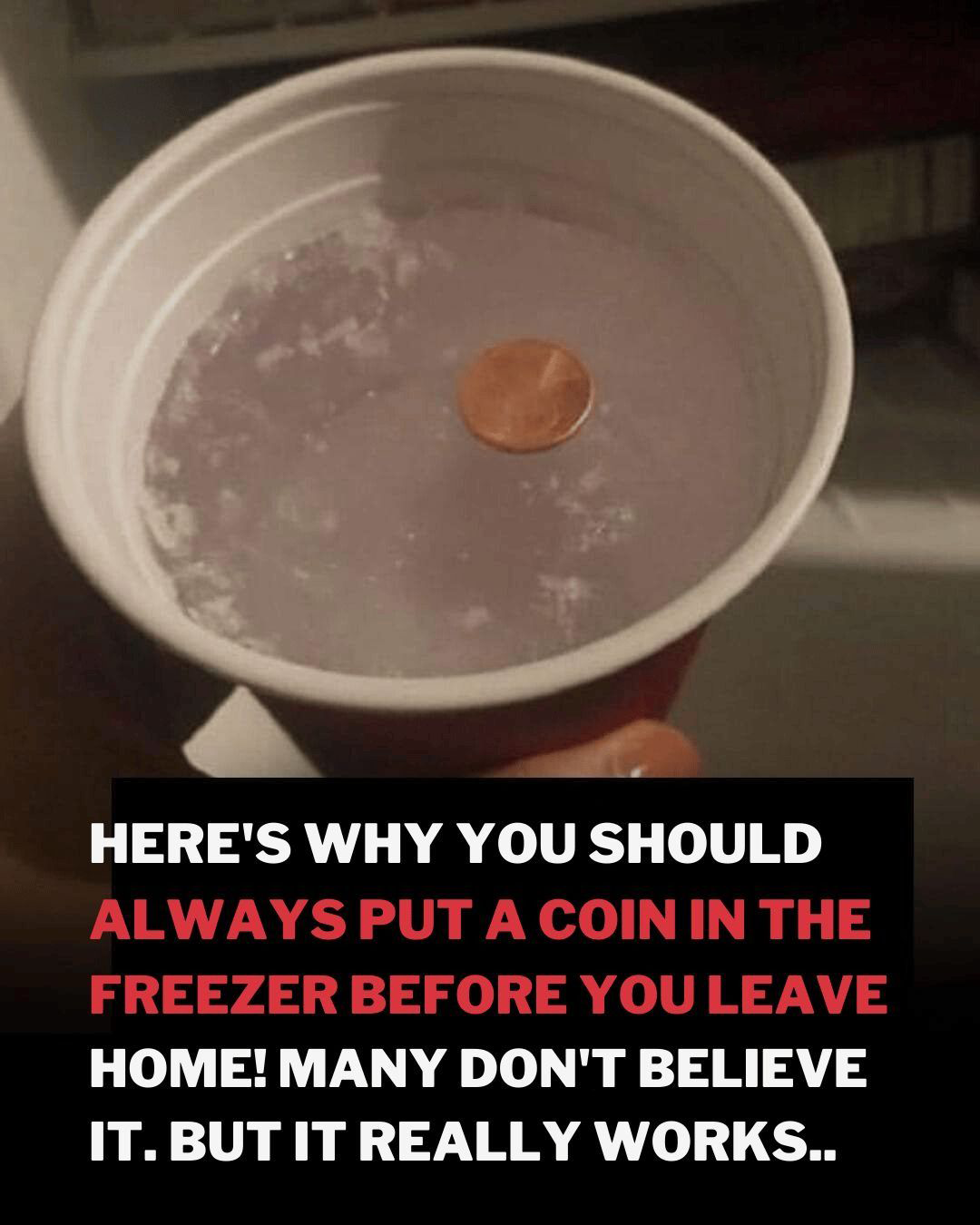
To use this method, fill a cup with water and place it in your freezer until the water is completely frozen solid. Once frozen, place a coin on top of the ice and return the cup to the freezer. Leave it there permanently. If your freezer loses power for a short time but does not fully thaw, the coin will remain on top of the ice. However, if the power goes out long enough for the ice to melt and then refreeze, the coin will sink into the water before freezing again.
When you return home or open your freezer after an outage, the position of the coin tells the story. If the coin is still on top, your food likely stayed frozen and is generally safe to eat. If the coin is partway down or at the bottom of the cup, it means the ice melted significantly, indicating that your food likely thawed. In that case, perishable items may no longer be safe and should be discarded to avoid foodborne illness.
This method is especially helpful because it removes guesswork. Instead of relying on smell, texture, or appearance, which can be misleading, you have a clear visual indicator of what happened while you were away. It is an easy precaution that takes only minutes to set up and can prevent serious health risks.
While the coin in a cup method is not a substitute for food safety guidelines or temperature monitoring devices, it is a practical backup tool. It works best when paired with proper freezer maintenance and safe food handling practices. In uncertain situations, it is always better to err on the side of caution. With this simple trick in place, you can leave home knowing you will have a clearer answer waiting for you when you return.