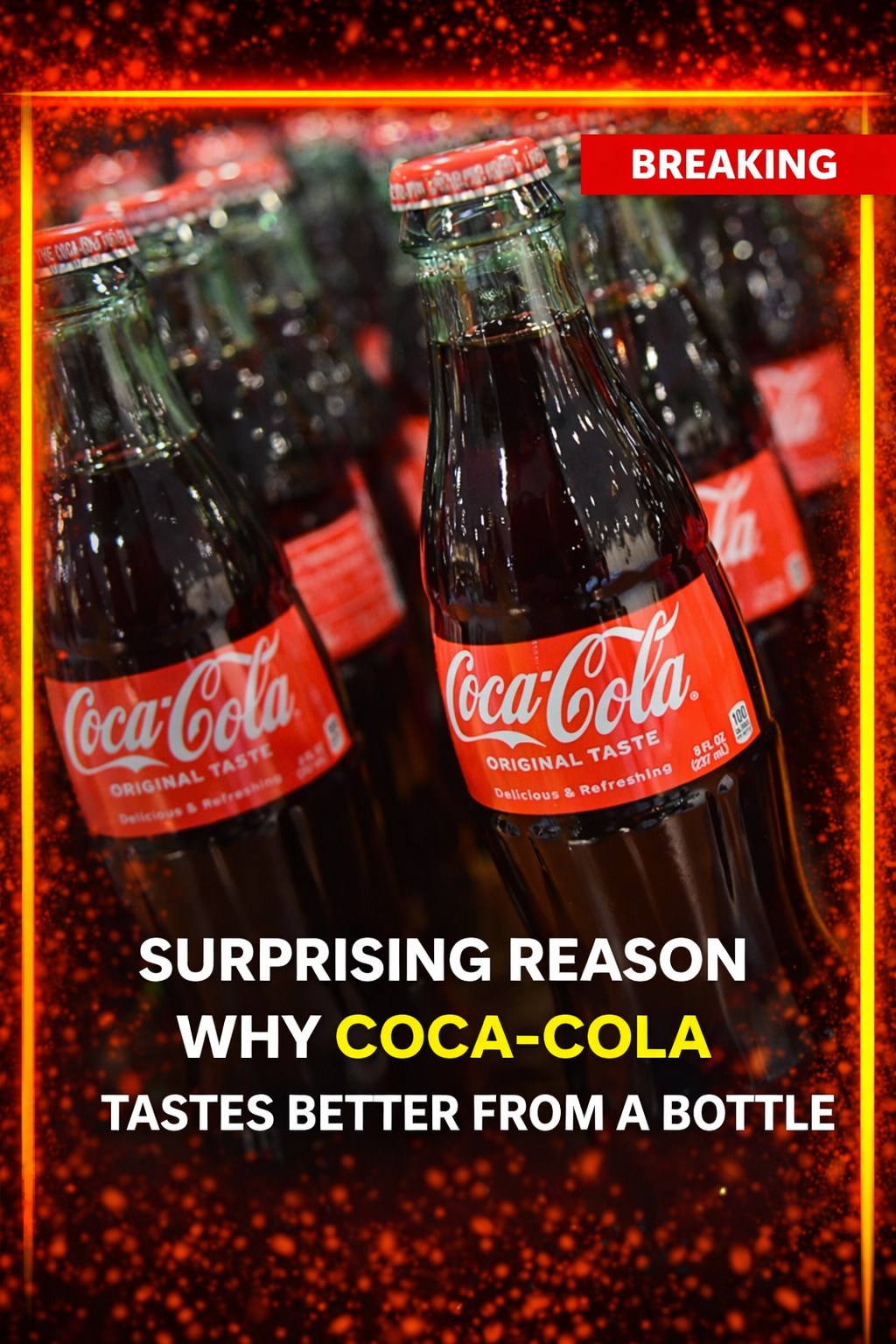
Surprising reason why Coca-Cola tastes better from a bottle
It is not just nostalgia doing the heavy lifting when you crack open a glass bottle. There are real physical and sensory reasons why drinks, especially soda, often taste better from glass. Glass is chemically inert and non porous, which means it does not react with the liquid inside and does not absorb or release flavors. Nothing leaches into the drink, and nothing escapes from it. What was bottled is almost exactly what reaches your tongue. That purity matters more than people realize, because flavor is fragile. Even tiny changes in aroma, carbonation, or texture can shift how a drink is perceived.
Plastic, by comparison, is slightly permeable. Over time it can allow carbonation to slowly escape, which dulls the bite and makes a soda feel flatter sooner. Plastic can also absorb surrounding odors and release them back into the liquid in trace amounts. Cans avoid some of those issues, but they introduce others. Aluminum cans require an internal lining to prevent corrosion, and while those linings are considered safe, they can subtly influence aroma. Aroma plays a huge role in taste, so even a faint difference can change the experience. Glass avoids all of this. It acts like a sealed vault for flavor and bubbles, locking everything in place until the moment you open it.
Carbonation is where glass really shines. Carbon dioxide pressure stays more stable in glass bottles, which means the bubbles remain sharper and more aggressive. When people say soda from a glass bottle feels like it just hits harder, they are reacting to that intact carbonation. The bubbles burst more energetically on the tongue, creating that prickly, almost electric sensation that defines a great soda. It is not imagined. It is physics and chemistry working together.
The shape of a glass bottle also plays an important role. The narrow neck does more than look iconic. It concentrates aroma and controls the flow of liquid. Instead of flooding your mouth all at once like a wide can opening, the soda arrives in a tighter stream. This gives your palate time to register acidity, sweetness, and carbonation in layers rather than all at once. Aroma is directed upward toward your nose as you sip, amplifying flavor before the drink even touches your tongue.
Temperature is another quiet advantage. Glass is thicker and heavier than aluminum or plastic, which helps it chill more evenly and stay cold longer. Cold suppresses excessive sweetness and enhances crispness. That balance is especially important for sugary drinks. When soda warms up too quickly, the sweetness becomes cloying and the carbonation feels weak. Glass slows that process down, keeping the drink in its ideal window for longer.
Then there is ritual, which matters more than people like to admit. The twist or pop of a metal cap, the sharp hiss as pressure releases, the clink of glass in your hand. All of these signals tell your brain that something deliberate is happening. Before the first sip, your expectations are already set. Your brain has decided that this version is special, authentic, and worth paying attention to. Taste is not just chemistry. It is perception, memory, and anticipation layered together.
When all of these factors combine, the result feels unmistakable. The flavor is cleaner. The bubbles bite harder. The temperature holds. The experience feels focused rather than disposable. Glass bottles do not just hold a drink. They protect it, frame it, and present it in a way that lets it be exactly what it was designed to be. That is why, long after the novelty should have worn off, people still reach for glass when they want the real thing.