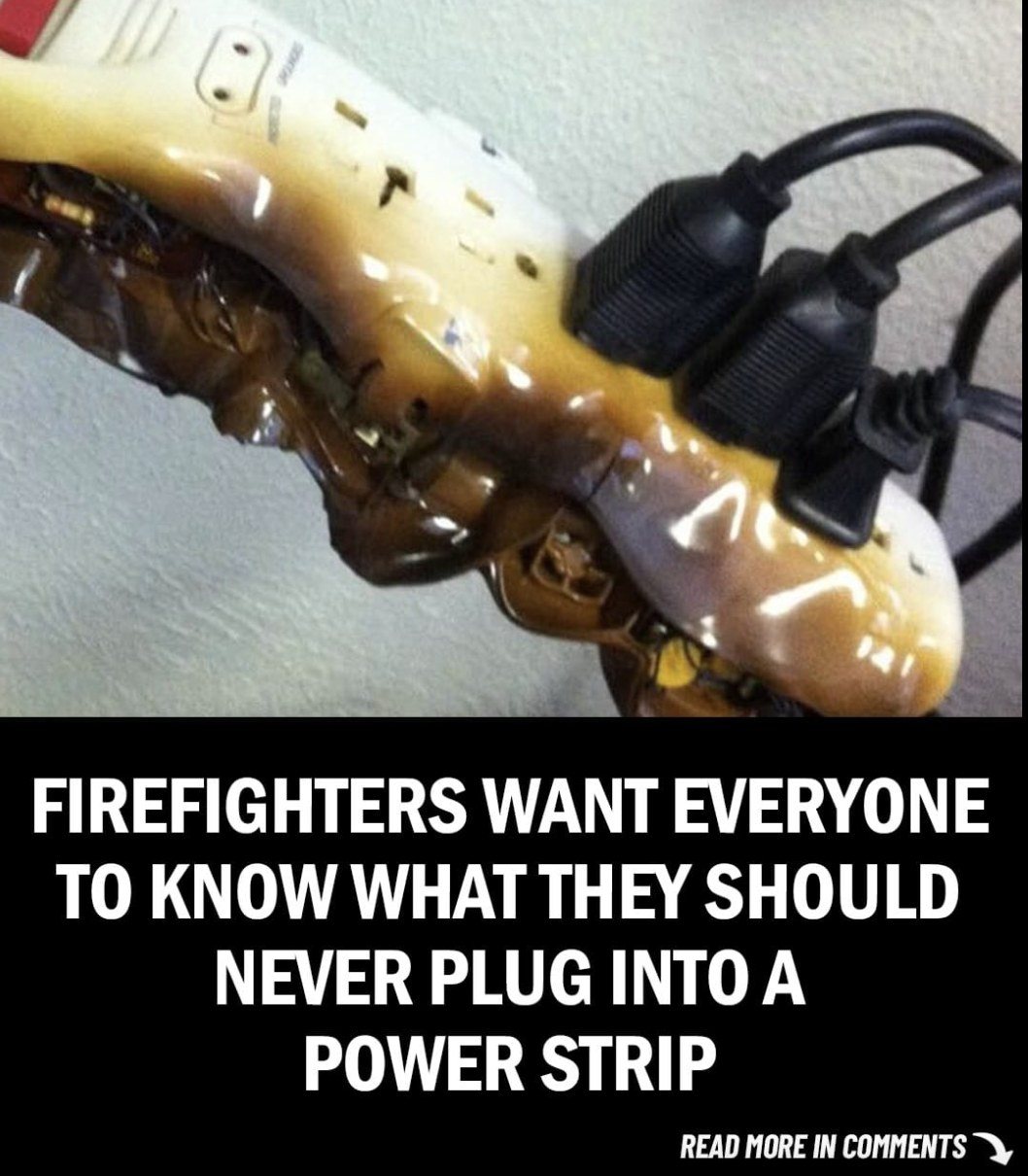
Firefighters Want Everyone To Know What They Should Never Plug Into A Power Strip
As winter settles in and temperatures drop, many people reach for space heaters to warm bedrooms, offices, or drafty corners of the home. Fire departments across the country support their use, yet they also repeat an urgent reminder. Never plug a space heater into a power strip.
This warning comes clearly from the Umatilla County Fire District #1 in Oregon. According to the department, power strips are not designed to handle the level of electricity that space heaters require. When overloaded, a strip can overheat. That heat can damage wiring or melt plastic housings. In the worst cases, it can trigger a fire.
These concerns are not just theoretical. In Toledo, Ohio, firefighters investigated a blaze caused by a heater that had been plugged into a strip instead of a wall outlet. Sparks from the overheated strip ignited a nearby couch. The fire spread quickly, filling the home with smoke and flames. Space heaters can reach temperatures as high as 600 degrees Fahrenheit, which means any nearby flammable material, such as furniture, curtains, or bedding, can ignite in moments if conditions align.
The safest approach begins with the most basic habit. Always plug space heaters directly into wall outlets. This allows the heater to draw power from wiring designed to manage higher electrical loads. If an outlet feels warm to the touch, the heater should be turned off and the outlet inspected by a professional.
Location matters as well. Fire officials recommend keeping at least three feet of clear space around every heater. Items like blankets, clothing, sofas, and paper products should never rest against or near a running unit. Children and pets also need to be kept clear since accidental contact can cause burns or tip the heater toward something combustible.
Monitoring is another essential practice. A heater should never run unattended. It should be turned off before leaving a room or going to sleep. Modern heaters often include features such as tip over shutoffs and automatic temperature controls. While helpful, these protections are not substitutes for supervision.
Preventing electrical fires requires wider awareness. Homeowners are encouraged to unplug heat producing appliances when they are not in use. These include curling irons, irons, toasters, and coffee makers. Extension cords need to be used sparingly, and only for devices that specifically permit such use. Space heaters are not among them. If a cord appears frayed or damaged, it must be replaced.
Regular electrical system checks also add a layer of protection. Older homes may have wiring that cannot support modern electrical demands. A licensed electrician can evaluate outlets, breaker panels, and overall capacity, then recommend repairs or upgrades.
Winter weather brings comfort in the form of warmth and light, yet it also increases electrical and fire risks. By following common sense practices and heeding the advice of firefighters, households can stay safe. The message is simple. Treat every space heater with care, give it room to operate, plug it directly into the wall, and keep a close eye on it whenever it is running.