Behind the gown: Diana’s quiet goodbye to the woman who understood her pain
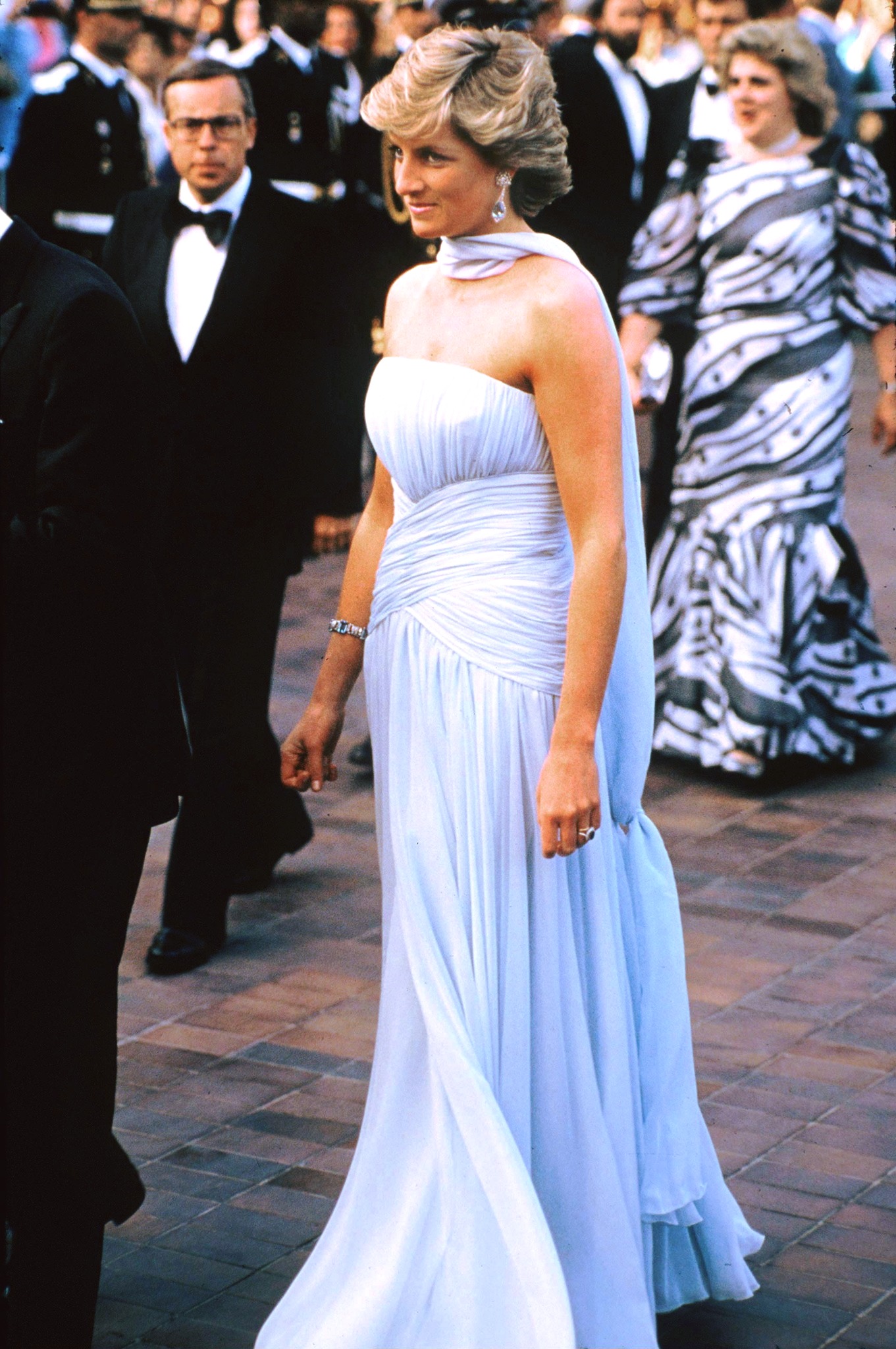
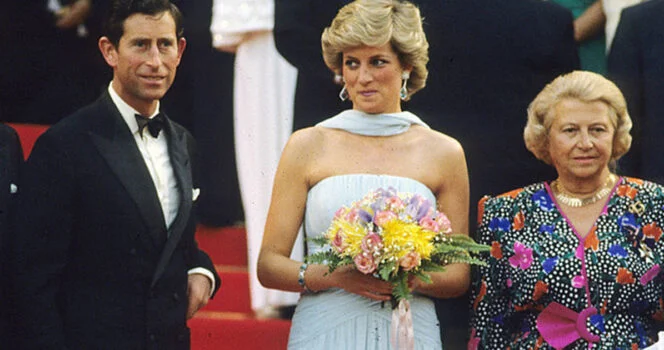 When Princess Diana stepped onto the red carpet at the 1987 Cannes Film Festival, the flash of cameras was deafening, the air thick with anticipation. She moved with quiet grace, her strapless, powder-blue gown trailing softly behind her, a chiffon scarf dancing in the warm evening breeze of the French Riviera.
To most spectators, she was simply breathtaking — the embodiment of modern royalty. But beneath the soft folds of her Catherine Walker gown lay a much deeper narrative — a visual tribute to a woman who had once whispered words of comfort to a frightened 19-year-old bride, and who had experienced the weight of the crown long before Diana ever would.
That woman was Princess Grace of Monaco.
 The Power of Appearance in the Life of Diana
Throughout her life, Diana used fashion as language. Each outfit, every color choice, every detail in her wardrobe was rarely left to chance. Often confined by royal protocol and the ever-watchful gaze of the media, she learned to speak through her style — sending messages of approachability, strength, compassion, or in rare moments like Cannes, grief and remembrance.
From her iconic “revenge dress” to her visits in hospitals wearing warm, soothing tones, Diana’s wardrobe was more than aesthetic — it was emotional armor, diplomatic strategy, and an ever-evolving symbol of her personal transformation.
By the mid-1980s, Diana had already cemented her reputation as a global fashion icon. The press scrutinized every outfit, designers clamored for her approval, and fans mimicked her wardrobe choices. But beyond the headlines and high fashion, Diana used her clothing to speak on her own terms.
Nowhere was that clearer than on the night of May 15, 1987, when Diana and Prince Charles made a rare royal appearance at Cannes.
Cannes 1987: Ten Hours of Glamour, One Timeless Statement
Their visit was fleeting — just ten hours in total. The royal couple had traveled to the French Riviera to attend a formal dinner and a film screening in honor of British actor Sir Alec Guinness, part of a broader effort to support the British film industry.
While the occasion was diplomatic in nature, the media buzz was anything but ordinary. The gala dinner became the most coveted ticket of the festival. Security was incredibly tight — even ticket holders were required to present passports to verify their identities. Yet all of that faded into the background the moment Diana appeared.
She didn’t need to speak. She never made a statement. But the visual said everything.
Her gown — a strapless, silk tulle creation in soft powder blue — floated as she walked. Designed by Catherine Walker, Diana’s trusted designer and friend, the dress featured delicate draping, an ethereal silhouette, and a light chiffon scarf that trailed behind her like mist. The look was elegant, restrained, and entirely unforgettable.
But it wasn’t simply a beautiful gown. For Diana, this was a tribute, a silent acknowledgment of another royal figure whose life had run parallel to her own in many ways.
Grace Kelly and Diana: More Than Princesses, More Than Fashion
Grace Kelly, the legendary Hollywood actress who became Princess Grace of Monaco, had passed away five years earlier in a tragic car crash. Like Diana, she had married into royalty under the blinding spotlight of the world. Like Diana, she had struggled beneath the expectations of monarchy and media. And like Diana, her life ended far too soon — in a car accident, on winding roads not far from where Diana now stood.
The similarities between the two women had long been noted, not just by royal watchers but by Diana herself.
In 1981, shortly after her engagement to Prince Charles was announced, Diana met Grace Kelly at a gala event in London. Diana, then only 19 and already overwhelmed by the pressures of royal life, had fled to the ladies’ room in tears. It was Grace who followed her. She embraced Diana and, with characteristic empathy, offered advice only someone who had lived through it could give.
“It will only get worse,” Grace whispered — a statement that, while perhaps dark, was deeply honest. It would stay with Diana for years.
It’s easy, then, to see why Diana’s gown at Cannes was more than fabric — it was a visual memory of that moment, a gesture of respect and connection to a woman who had once given her comfort when no one else could.
A Dress with a Message
The choice of color, style, and silhouette was no accident. Walker and Diana reportedly drew direct inspiration from Edith Head’s famous ice-blue gown worn by Grace Kelly in Alfred Hitchcock’s 1955 film To Catch a Thief — which, in a twist of fate, had been filmed along the very same French Riviera coast where Diana now stood.
That film, shot in Monaco, was pivotal in Grace’s life — not just for its success, but because it was during the Cannes Film Festival that same year that she met Prince Rainier III of Monaco, who would soon ask her to become his wife.
So when Diana wore her own icy-blue gown at the same festival, 32 years later, she wasn’t just echoing Grace Kelly’s fashion — she was walking in her footsteps. Quietly, gracefully, and with profound emotional intelligence.
Few recognized it at the time. The press focused on her beauty, her figure, the dress’s elegance — but the deeper meaning was largely missed. A few fashion historians and sharp-eyed royal watchers made the connection. But in the newspapers of 1987, there’s barely a mention of Grace Kelly.
That silence, too, was part of Diana’s strategy. She never needed to say it aloud. She let the fabric speak for her.
Revisiting the Gown: Rewear, Auction, and Legacy
Two years later, Diana wore the same blue gown again — this time at the London premiere of Miss Saigon, showing her appreciation for meaningful design and her refusal to treat fashion as disposable.
Then, in 1997, just months before her tragic death in Paris, she included the gown in her famous Christie’s charity auction, where she sold 79 dresses to raise money for AIDS and cancer causes. The Cannes gown sold for $70,700, with proceeds going to children’s charities.
Years later, in 2013, the gown reappeared at another auction, this time selling for over $132,000, a testament to its growing significance not just as a piece of fashion, but as a symbol of Diana’s life, compassion, and private thoughts.
In 2017, to mark the 20th anniversary of Diana’s passing, the gown was displayed behind glass at Kensington Palace as part of a commemorative exhibition. Visitors stood quietly, many unaware of the gown’s hidden meaning — but others, those who knew the story, recognized the silent connection it embodied.
A Legacy Sewn in Silk and Memory
Princess Diana’s appearance at Cannes was fleeting — just ten hours, no public speeches, no formal statements. And yet, those few hours remain etched into royal and fashion history, not just for the images, but for the message they carried.
She was honoring not just a princess, not just a movie star, but a woman who had once understood her loneliness, who had once reached across the royal divide to offer solace.
Today, that dress remains one of Diana’s most quietly powerful fashion moments — not because it dazzled, but because it remembered.
In a world where appearances often deceive, Diana used beauty to communicate something deeper: her respect for the past, her grief for a kindred spirit, and her understanding that true elegance isn’t just in how you look — but in how you feel, and who you honor.
On that windy evening in Cannes, the cameras captured the gown.
But it’s only now, years later, that we’re beginning to understand the full story it was telling.