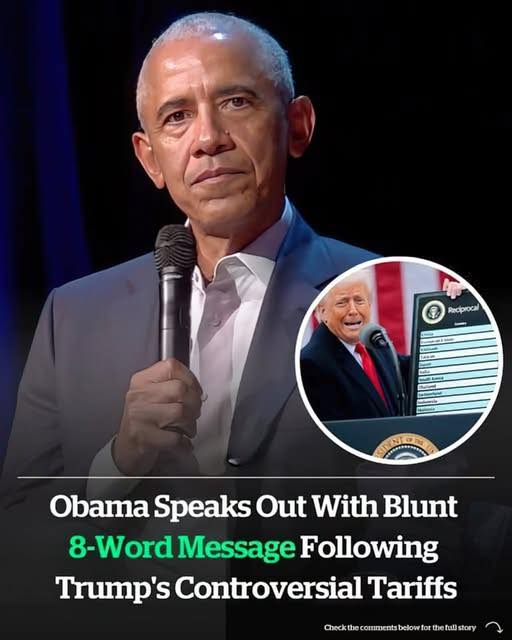
Obama Speaks Out on Tariffs and Their Impact on Everyday Americans
In a moment that has resonated far beyond the event itself, former President Barack Obama made headlines with a frank and thoughtful commentary on a new wave of import tariffs that are poised to significantly reshape the economic landscape in the United States. Speaking during a public address at Hamilton College in New York on April 4, 2025, Obama expressed concern over sweeping trade policies recently introduced by the current administration. His remarks, both analytical and cautionary, centered not only on the potential economic ramifications of these measures but also on their very real, tangible impact on everyday Americans.
Obama, known for his calm and deliberate approach to economic and policy issues, took the opportunity to lay out his perspective on how the tariffs might affect the nation’s working and middle-class families. He emphasized that decisions made in the name of national economic growth must also account for the lived experiences of consumers, many of whom are already grappling with rising costs in a post-pandemic, inflation-sensitive world. The former president offered a sobering view of how trade policy, while often debated in abstract political and business terms, ultimately lands on the shoulders of the average household.
Understanding the Policy Shift: What Are the New Tariffs?
The import tariffs recently announced by the White House represent a dramatic pivot in U.S. trade policy. Aiming to stimulate domestic manufacturing and economic self-reliance, the new regulations establish a baseline tariff of 10% on a broad array of imported products, many of which are staples in American homes—from clothing and household items to consumer electronics and kitchenware.
But that’s not where it ends. A separate list of 60 countries, including key trade partners such as Japan, South Africa, Vietnam, and others, are now facing even steeper tariffs, with rates climbing up to 46% on certain products. These countries were reportedly selected based on their current trade imbalances with the U.S. or because of strategic national interests. The White House announced the policy changes during a Rose Garden press conference, citing the need to rebalance trade relationships and protect domestic industries from what it described as unfair global competition.
Supporters of the new measures argue that by increasing the cost of imports, Americans will be encouraged to “buy American,” thereby boosting local businesses, creating jobs, and reviving manufacturing sectors that have suffered under decades of offshoring and global outsourcing.
Obama’s Concerns: The Risk to the Everyday Consumer
While the goals of the tariff policy may appear noble on paper, President Obama urged a closer examination of the broader implications. He pointed out that tariffs, particularly when implemented quickly and on a large scale, often trigger ripple effects throughout the economy that are not felt evenly.
At Hamilton College, he shared examples of how such measures can unintentionally result in higher prices at grocery stores, department stores, and online retailers, directly affecting families who are already struggling to make ends meet. Obama voiced concern that the policy might benefit certain industries while placing undue strain on low- and middle-income Americans who spend a higher percentage of their earnings on basic goods—many of which are imported.
“When policy is made in isolation from the people it’s going to affect,” Obama said, “we run the risk of building an economy that works well on paper, but not in real life.”
He also referenced the interconnected nature of global supply chains, explaining how even American-made products often rely on components sourced from other countries. When tariffs make those components more expensive, manufacturers often have no choice but to raise prices—or risk closing their doors altogether.
Global Repercussions and Supply Chain Disruptions
The effects of these tariffs aren’t limited to American wallets. Economists and trade analysts have pointed out that such aggressive trade measures can upend global supply chains, creating delays and uncertainty for international businesses and weakening trade alliances that have been carefully built over decades.
Obama highlighted how retaliatory tariffs—where affected countries impose their own duties on American exports—can lead to a trade war, resulting in a cycle of economic tension and mutual loss. Small and medium-sized businesses, which don’t have the global infrastructure to absorb such shocks, are particularly vulnerable.
“It’s not just about numbers on a spreadsheet,” Obama said. “It’s about real consequences for real people—entrepreneurs trying to get by, farmers trying to export their goods, families trying to stretch their paychecks.”
The Call for Balanced, Transparent Decision-Making
While Obama stopped short of completely denouncing the intent behind the new tariff policies, he stressed the need for transparency, strategic foresight, and inclusivity in economic decision-making. He encouraged lawmakers and policymakers to consult with a wide range of stakeholders, from economists to working-class families, before committing to sweeping changes that affect both the national economy and daily life.
He also emphasized the importance of international cooperation, suggesting that the U.S. should seek to reform trade relationships through negotiation, rather than blunt economic instruments.
“Trade doesn’t have to be a zero-sum game,” Obama stated. “We can protect American jobs and values while still embracing the benefits of global cooperation and innovation.”
What’s Next? Looking Toward a More Inclusive Economic Future
Obama’s comments serve as a timely reminder of the complex balance between protecting domestic interests and preserving global relationships. As businesses scramble to adjust to the new tariffs and consumers begin to feel the pinch, the former president’s words encourage thoughtful, people-centered policymaking that looks beyond short-term gains to consider long-term sustainability.
In the weeks and months ahead, both the public and private sectors will be watching closely to see how these changes unfold. Whether the new tariffs will deliver on promises of revitalized American manufacturing—or spark further inflation and trade retaliation—remains to be seen.
But for now, Obama’s message is clear: economic policy should uplift people, not just markets. And it should be guided by care, clarity, and compassion, not fear or haste.