White House Unveils a New, Darker Presidential Portrait
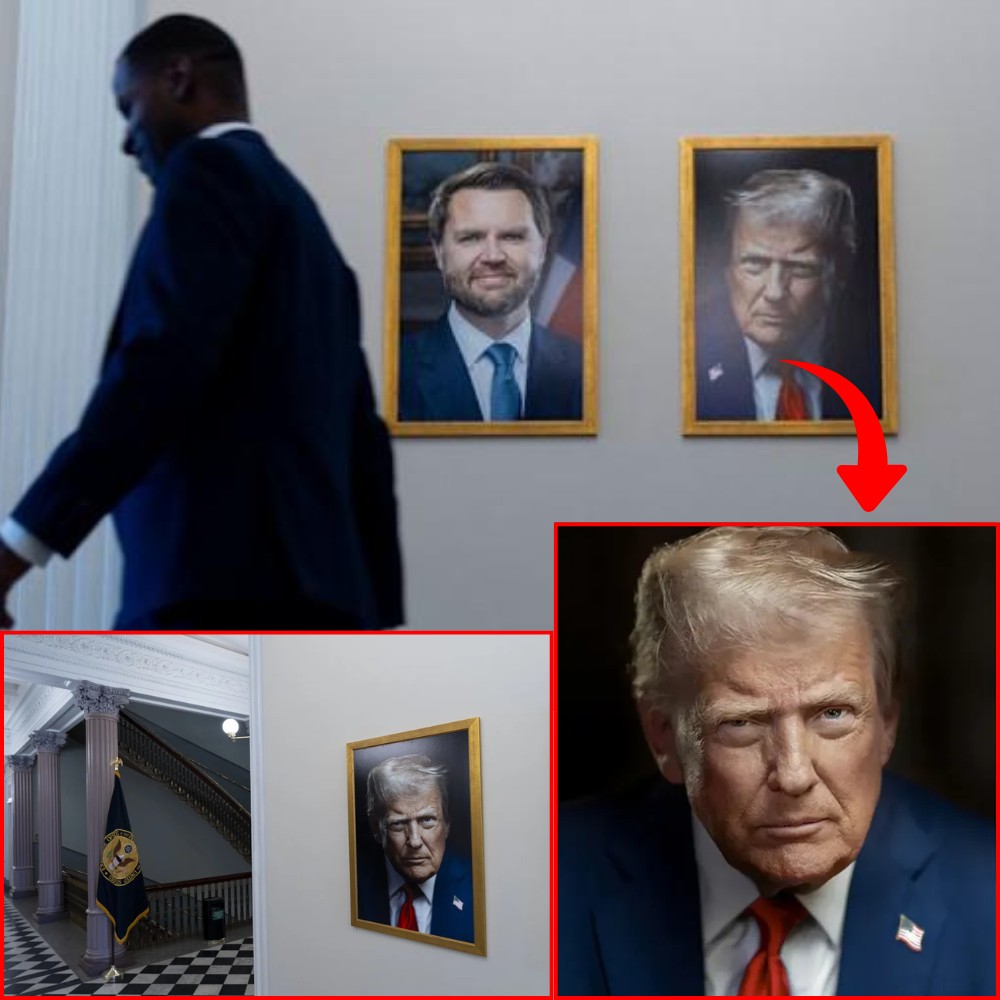
In a move that has captured both attention and analysis, the White House has officially unveiled a new portrait of President Donald Trump, replacing the earlier photograph that had been released at the beginning of his current term. The new image marks a notable shift in tone and style, sparking conversations about its symbolism and the messages it may convey.
The updated portrait, revealed in a brief video posted by the White House on Monday, presents Mr. Trump wearing a signature red tie, his expression serious and composed. The photograph’s most striking elements are its stark contrasts and deep shadows, set against a dark, almost austere backdrop. This approach diverges sharply from the more traditional, evenly lit portrait that accompanied Mr. Trump’s inauguration, in which he donned a blue tie and posed before a softly illuminated American flag.
This change has led many to reflect on the history of presidential imagery. Traditionally, official portraits are not frequently updated during a president’s term. While some presidents, like Barack Obama, commissioned new photographs between their first and second terms, others have relied on a single official image throughout their time in office. The portrait released for Mr. Trump’s inauguration closely adhered to this custom, presenting him as confident and approachable. However, the new portrait departs from that norm in subtle but significant ways.
One of the most discussed differences is the absence of the American flag in the background. Since President Gerald Ford’s administration in 1974, the inclusion of the flag has been a consistent feature in official presidential photographs, serving as a visual symbol of the office’s connection to the nation. Although Mr. Trump still wears a small American flag pin on his lapel—maintaining at least one patriotic emblem—this minimalist backdrop has raised questions about the intentionality behind the aesthetic shift.
Experts have weighed in on the implications of the change. Paul Staiti, a professor of fine art at Mount Holyoke College who has extensively studied presidential imagery, offered insight into what this new photograph might represent. “What’s interesting is they’ve removed all references to the White House setting,” Staiti remarked. “It’s not unprecedented. And to be sure, this makes it more personal. But I do wonder whether this is suggesting that Trump is not exactly an office holder, or not to be seen solely as the current representative of the United States.” In historical context, before President Ford’s era, it was more common for official presidential portraits to feature plain, neutral backgrounds, much like the one chosen for Mr. Trump’s latest image.
While painted portraits of presidents are traditional and are typically commissioned toward the end of a president’s tenure, the official photograph serves a more functional role. These photographs are widely distributed and displayed in government buildings, U.S. embassies, military bases, and federal facilities across the country and abroad. They are also seen at points of entry into the United States, helping to visibly link the presidency to public institutions.
The change in Mr. Trump’s portrait comes at an interesting time and may reflect broader themes in his administration’s public presentation. His initial portrait, with its brighter lighting and American flag backdrop, conveyed an image of approachability and conventional patriotism. In contrast, the new photograph’s dark tones and stark composition suggest a more somber, perhaps more resolute mood—an image of authority, seriousness, and singular focus.
Already, the new photograph has been updated across official channels, including its prominent display on the White House’s website. It remains to be seen how this change will be received by the broader public, but it certainly adds a new chapter to the long history of presidential portraiture.
By stepping away from recent tradition while subtly nodding to older photographic styles, the latest portrait of President Trump invites discussion about how leaders choose to present themselves—and how they wish to be remembered.