Mom Thinks Her Baby Is Blowing Bubble In Ultrasound, Then Doctors Discover What It Really Is
A Mother’s Defiance: How One Woman Saved Her Baby from a Rare Tumor During Pregnancy
Note: We are republishing this story, which originally made headlines in June 2012.
What began as a routine prenatal checkup turned into a life-altering experience for one Florida mother—a story of hope, courage, and medical firsts.
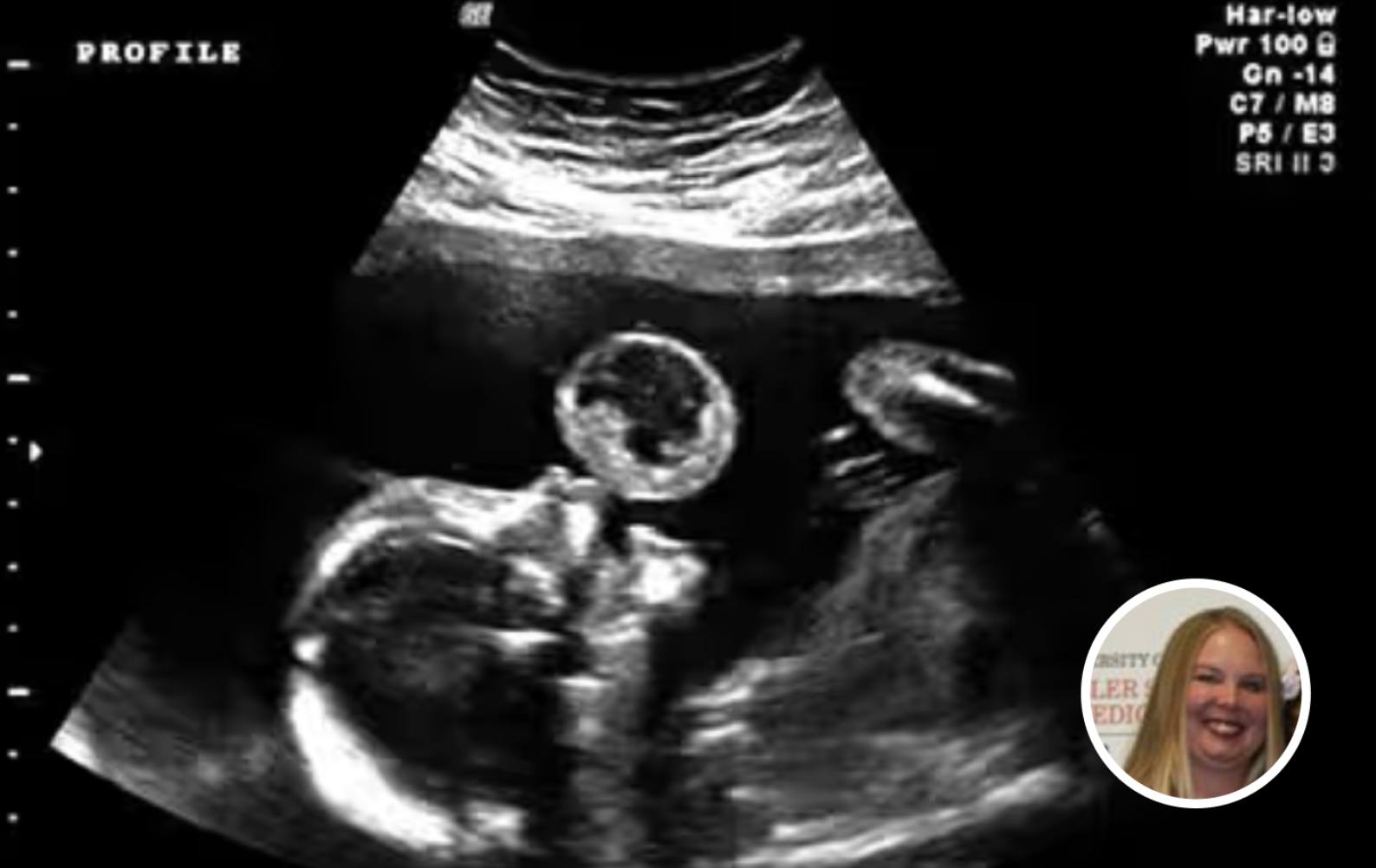
Tammy Gonzalez, a Miami resident, was expecting her baby when she went in for a standard ultrasound—a moment many mothers anticipate with joy, as they catch the first glimpse of their child. But during this appointment, doctors noticed something alarming. Hovering just above the baby’s mouth was what appeared to be a large, translucent bubble.
“Is that on me or the baby?” Gonzalez recalls asking the technician, trying to make sense of what she was seeing.
After further analysis, the bubble was diagnosed as a teratoma—a rare and often life-threatening tumor that can develop in utero. These tumors are seen in approximately 1 in every 100,000 births and can grow rapidly, threatening the baby’s ability to survive. The news was devastating. Doctors warned Gonzalez of the risks: not only could the tumor lead to miscarriage, but continuing the pregnancy could also endanger her own health. The medical recommendation was clear—termination.
But Gonzalez wasn’t ready to give up.
“I said, ‘There must be something we can do,’” she told ABC News, her voice unwavering in the face of fear. Despite the odds, she believed in a different outcome—one where her baby could live.
Her determination led her to explore endoscopic fetal surgery, an untested and experimental procedure that had never been performed for this condition. It was risky and uncertain, but Gonzalez was resolute.
“Let’s do this,” she said.
The procedure was led by Dr. Ruben Quintero, director of the Fetal Therapy Center at Jackson Memorial Hospital in Miami, who agreed to attempt the groundbreaking surgery. Using a quarter-inch incision, he threaded a small endoscopic camera and precise surgical instruments through Gonzalez’s abdomen and into the amniotic sac, allowing him to visualize the tumor in real time.
Gonzalez remained fully conscious during the operation, under local anesthesia.
“I couldn’t feel the incision, but I could feel the tube sliding in,” she remembered. “It felt like a balloon popping inside me.”
With the camera showing a close-up of the tumor, Dr. Quintero made a critical decision. Using tiny tools, he severed the tumor’s stem. The moment the tumor detached, it floated away from the baby’s face, its danger neutralized.
“It was a decisive moment,” Dr. Quintero later recalled. “We went ahead and cut the stem, and sure enough, the tumor fell right out.”
Gonzalez described the moment as deeply emotional. As she watched the ultrasound, the weight of weeks of anxiety and uncertainty melted away. “It was amazing,” she said. “It felt like a 500-ton weight had been lifted off me.”
Because the tumor was too large to remove safely through the incision, it was left inside the womb, floating in the amniotic fluid. Over the next four months, as Gonzalez carried her daughter to term, the tumor continued to shrinknaturally.
When Gonzalez gave birth, the tumor was safely removed, and her baby girl, Leyna, entered the world healthy and whole.
“She’s perfectly fine,” Gonzalez said joyfully. “She has a tiny scar on the roof of her mouth. She talks, she drinks. She’s my little miracle child.”
Leyna’s birth not only defied the odds—it also marked a medical milestone. Thanks to a mother’s unwavering belief and a doctor willing to take a chance, a once-impossible operation became reality, and a child was given the chance to live.
Their story remains a powerful testament to the strength of maternal love, the importance of medical innovation, and the hope that can emerge even in life’s most terrifying moments.