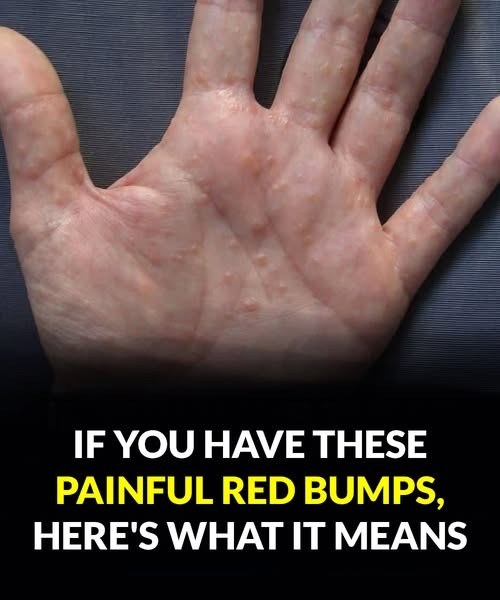
If You See These Painful Red Bumps, Here’s What It Really Means
Have you recently noticed painful red bumps appearing on your skin? Whether they show up on your legs, arms, back, or face, it’s important not to dismiss them as just another breakout or irritation. These seemingly harmless bumps might be trying to tell you something deeper about your health—and in many cases, they’re more than just a minor cosmetic issue.
One common culprit behind painful red bumps is folliculitis—a condition that occurs when hair follicles become inflamed. This inflammation is typically caused by bacterial or fungal infections, but it can also be triggered by physical irritation, such as shaving too closely, friction from tight clothing, or excessive sweating. Folliculitis can affect anyone, but it’s particularly common in people who shave regularly or wear non-breathable fabrics that trap heat and moisture.
At first glance, folliculitis might look like a collection of small red pimples, sometimes topped with whiteheads. These bumps can feel itchy, sore, or tender, especially when touched or rubbed. In mild cases, they may clear up on their own within a few days. However, if left untreated or if the infection worsens, the bumps can become pus-filled, crust over, or spread to larger patches of skin—sometimes requiring antibiotics or antifungal treatment.
But folliculitis isn’t the only possible cause. Other conditions can present with similar red, painful bumps, and it’s important to consider the context and symptoms:
-
Ingrown hairs: Common in areas where hair is shaved or waxed, ingrown hairs happen when the hair curls back into the skin, leading to inflammation and painful lumps.
-
Contact dermatitis: Caused by allergic reactions or irritation from skincare products, detergents, or fabrics. The skin may become red, itchy, and bumpy.
-
Shingles (Herpes Zoster): A more serious viral condition that causes clusters of painful blisters. It usually appears on one side of the body and is often preceded by a burning or tingling sensation in the area. This condition needs prompt medical treatment.
Regardless of the cause, it’s crucial to avoid scratching or picking at the bumps, as this can introduce more bacteria and lead to scarring or further infection. Keep the affected area clean and dry, and use warm compresses to ease discomfort. Over-the-counter hydrocortisone or topical antibiotics might help, but if the bumps are persistent, spreading, or especially painful, it’s time to consult a healthcare provider for an accurate diagnosis and treatment plan.
Your skin is often the first indicator of internal health imbalances—whether it’s stress, infection, or immune response. Paying attention to unusual changes, like painful red bumps, can help you catch issues early and avoid complications.
So the next time your skin breaks out in ways that feel unfamiliar or painful, don’t just reach for acne cream and hope for the best. Listen to your body. Sometimes, a bump is more than just a bump—it’s a message you shouldn’t ignore.