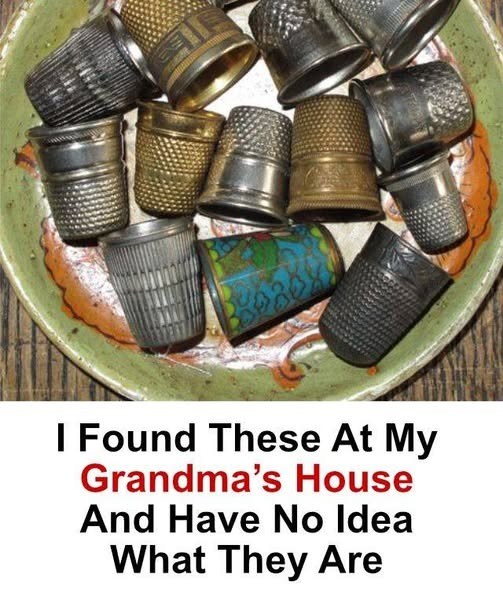
I Found These At My Grandma’s House And Have No Idea What They Are
Thimbles may be small enough to rest on the tip of a finger, but their story stretches across thousands of years, weaving together history, culture, craftsmanship, and even symbolism. At first glance, they appear to be nothing more than practical tools for protecting fingers from the sharp end of a sewing needle. Yet, over time, thimbles have evolved into decorative treasures, status symbols, and sought-after collectibles, each with a tale to tell.
The earliest known thimbles date back to the 1st century in Pompeii, where archaeologists uncovered bronze examples preserved in volcanic ash. These sturdy, utilitarian objects remind us of how essential sewing was to daily life in the ancient world—not just for making clothing, but also for repairing nets, bags, and other necessities. From these humble beginnings, the thimble’s journey would span continents and centuries, adapting to different materials, styles, and purposes.
During the Middle Ages, thimbles in Europe were often made from leather, wood, or simple metals. They were essential not only for household sewing but also for specialized trades like bookbinding, lace-making, and leatherwork. The 14th century saw a leap forward in quality and production when Nuremberg, Germany, became renowned for crafting high-quality brass thimbles. This reputation spread far and wide, making the city a hub for thimble manufacturing for generations.
By the 17th century, thimbles began to take on a new role—not just as functional tools, but also as luxury items. Wealthy owners commissioned thimbles made of silver and gold, often engraved or decorated with enamel, filigree, and even gemstones. These ornate versions were given as gifts, displayed as signs of refinement, or kept as cherished personal items. A finely made thimble could serve as a marker of social standing, much like jewelry or fine clothing.
The thimble also found its way into culture and symbolism. In J. M. Barrie’s Peter Pan, a thimble is offered as a kiss, turning the small object into a tender emblem of affection. In the early 20th century, the thimble became a household icon in a different way—by being one of the original playing pieces in the board game Monopoly, a nod to its presence in nearly every home at the time.
Collectors today value thimbles for their artistry and history. Vintage examples made from porcelain, bone china, ivory, and sterling silver are highly prized, especially those produced in limited editions or adorned with intricate designs. Some were created as commemoratives for events, exhibitions, or royal occasions, making them even more desirable. Museums such as the Fingerhut Museum in Creglingen, Germany, display thousands of thimbles, ranging from ancient workman’s tools to elaborate presentation pieces.
Even in the modern age, when sewing is no longer a daily necessity for most, thimbles have not disappeared. Contemporary artisans continue to make them in both traditional and experimental forms, sometimes repurposing them into jewelry, pendants, or art installations. They remain popular with crafters, heritage enthusiasts, and collectors, keeping their legacy alive.
From ancient bronze to modern art pieces, the thimble’s story is stitched together by centuries of human creativity and need. More than a simple sewing aid, it stands as a testament to craftsmanship, social history, and the enduring beauty found in even the smallest tools. In its unassuming form lies a record of how people across the ages have combined utility with artistry, turning a practical object into something worth cherishing.